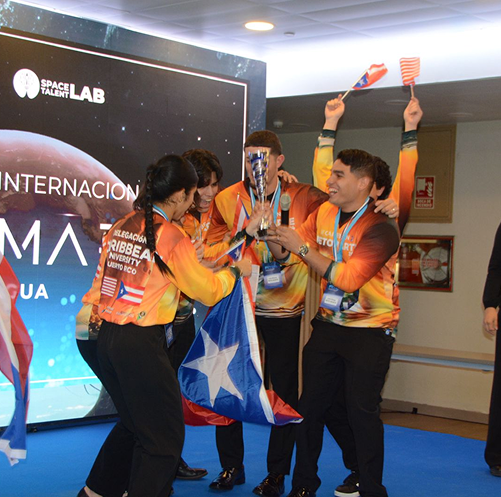

Connecting classroom learning to real-world challenges feels more important than ever, especially as your students face questions about Earth’s future and the possibility of life on Mars. You want to inspire curiosity and critical thinking, but bridging the gap between school lessons and pressing planetary issues can be tough. Practical strategies are needed to make learning truly meaningful and relevant for your students.
This list reveals how dual-planet education—linking Earth and Mars problem-solving—can transform your approach. You’ll discover ways to make science engaging, develop powerful meta-skills, spark collective innovation, and empower action on sustainability. Each insight is designed to help you create authentic, future-ready learning experiences your students will remember.
Table of Contents
- 1. Bridging Real-World Relevance Between Earth and Mars
- 2. Fostering Future-Ready Meta-Skills in Students
- 3. Building Ethical Intelligence for Global Impact
- 4. Enhancing Student Engagement Through Challenge-Based Learning
- 5. Nurturing Collective Innovation in Diverse Teams
- 6. Driving Practical Action for Sustainable Solutions
Quick Summary
| Takeaway | Explanation |
|---|---|
| 1. Connect Learning to Real-World Problems | Transform classroom lessons by linking them to challenges in space exploration and Earth sustainability, fostering deeper engagement and relevance. |
| 2. Foster Meta-Skills through Dual-Planet Learning | Encourage critical thinking and creativity by requiring students to solve problems related to both Earth and Mars, enhancing their adaptability and collaboration. |
| 3. Build Ethical Intelligence through Decision-Making | Help students understand the consequences of their decisions by addressing ethical dilemmas in planetary challenges, promoting accountability and awareness. |
| 4. Engage Students with Challenge-Based Learning | Shift focus from rote memorization to addressing authentic, unsolved problems, enhancing motivation and collaboration among students. |
| 5. Drive Action for Sustainable Solutions | Position students as active agents by implementing their solutions in real-world contexts, fostering a sense of agency and practical impact. |
1. Bridging Real-World Relevance Between Earth and Mars
Your students need to see the connection between what they learn in the classroom and the challenges humanity actually faces. Real-world relevance transforms abstract lessons into urgent, tangible problems worth solving.
Dual-planet learning creates this bridge by anchoring classroom instruction directly to actual space research and planetary challenges. When students work on problems that connect Earth’s life-support systems to Mars exploration, they stop viewing education as disconnected from reality.
Real-world space science research demonstrates how high school students can cultivate and sequence bacterial genomes from Mars analog sites while learning directly from funded space research. This approach transformed classroom learning into something culturally relevant and scientifically authentic.
Why This Matters
Students engage differently when they know their work matters beyond the grade book. They invest deeper thinking when the problem feels real.
Real-world relevance increases:
- Student motivation to tackle complex, ambiguous challenges
- Understanding of how planetary science connects to Earth systems
- Confidence in addressing global sustainability questions
- Engagement in collaborative problem-solving with genuine stakes
The key insight: Classroom learning becomes preparation for actual planetary challenges, not preparation for tests. Your students aren’t just learning about Mars or Earth separately. They’re learning to think across systems, navigate uncertainty, and design solutions under real constraints.
When students see their classroom work connected to actual space research and planetary survival, engagement transforms from passive to purposeful.
How to Implement This
Start by identifying one real challenge your students already find interesting. Then connect it explicitly to both Earth systems and Mars constraints. For example, a food production unit becomes a dual investigation: “How do we sustainably grow food here on Earth while also designing systems for Mars agriculture?”
This reframing invites students to think about the same problem from two contexts simultaneously. They consider Earth’s resource limitations, climate impacts, and cultural dimensions. Then they apply those insights to Mars conditions, which forces them to isolate the core principles that matter.
Pro tip: Start with one authentic research question that has no obvious answer, then require students to develop solutions addressing both Earth and Mars conditions simultaneously. This creates urgency and relevance naturally.
2. Fostering Future-Ready Meta-Skills in Students
Meta-skills are the abilities that matter across every field and challenge your students will face. These aren’t subject-specific competencies. They’re the thinking patterns and collaborative capacities that enable success in unpredictable situations.
Dual-planet learning develops meta-skills by forcing students to work across disciplines, navigate uncertainty, and solve problems with no predetermined answers. When students design solutions for both Earth and Mars simultaneously, they practice critical thinking, systems analysis, and creative problem-solving in authentic contexts.
The Core Meta-Skills
Research shows that foresight techniques and scenario planning develop essential skills like resilience and adaptability. Additionally, interdisciplinary STEM tasks enhance students’ ability to think across domains and tackle complexity.
These skills matter because the future demands people who can think in systems, not silos. Your students won’t face problems neatly labeled by subject area.
Key meta-skills developed through dual-planet learning include:
- Systems thinking: Understanding how Earth’s climate, food, energy, and water systems interconnect
- Adaptive reasoning: Adjusting solutions when constraints change between Earth and Mars contexts
- Collaborative intelligence: Working in deliberately diverse teams to synthesize different perspectives
- Uncertainty navigation: Making decisions with incomplete information under real planetary limits
- Ethical decision-making: Balancing human needs with planetary sustainability constraints
Meta-skills aren’t learned from lectures. They develop through struggle, collaboration, and repeated practice with genuinely complex problems.
Practical Implementation
Design team challenges where students must explain their reasoning, challenge assumptions, and iterate based on feedback. The dual-planet context naturally creates the productive struggle that builds these skills.
For example, ask students to design a water recycling system. First, they optimize for Earth’s climate variations and human populations. Then they redesign for Mars’ extreme conditions and isolation. This forces them to identify which principles transfer and which don’t—pure systems thinking.
Another approach: Have teams present competing solutions to the same problem. This develops critical evaluation skills and teaches students that complexity often has multiple valid approaches.
Pro tip: Require students to articulate their thinking process, not just their final answer. Ask them to explain what assumptions they made, what they changed when constraints shifted, and why different team members held different viewpoints. This metacognitive reflection cements meta-skill development.
3. Building Ethical Intelligence for Global Impact
Your students will inherit a world shaped by technology, climate decisions, and resource constraints they didn’t create. Ethical intelligence is their ability to make decisions under these conditions with awareness of consequences and accountability.
Dual-planet learning builds ethical intelligence because every decision students make involves trade-offs. Designing a Mars habitat means choosing between life support, research capacity, and resource efficiency. Solving Earth’s food crisis means balancing production with land preservation and cultural practices. There are no perfect answers, only reasoned choices.
What Ethical Intelligence Means
It’s not about following rules. It’s about understanding how your decisions affect others, recognizing when information is incomplete or biased, and acting with responsibility anyway.
Your students need to develop awareness of genuine ethical challenges:
- Fairness: Whose needs get prioritized when resources are limited?
- Transparency: Are the data and assumptions behind our solutions visible and challengeable?
- Privacy: What information do we collect and who controls it?
- Accountability: Who bears responsibility when solutions have unintended consequences?
- Bias recognition: How do our own perspectives shape what we see as “problems” or “solutions”?
Research on ethical AI education in K-12 settings shows that students need explicit practice navigating these tensions. Additionally, responsible AI use in education requires developing skills to identify and address bias, fairness, and accountability issues.
Ethical intelligence isn’t a values discussion. It’s a skill developed through wrestling with real constraints and defending your reasoning to skeptical teammates.
Building It Into Your Classroom
Create space for ethical disagreement. When student teams propose different solutions, ask them to articulate the values underlying each approach. What matters most to Team A? What does Team B prioritize differently?
This transforms ethics from abstract philosophy into concrete decision-making. Students learn that intelligent people can disagree because they weight ethical priorities differently.
Example activities that build ethical intelligence:
- Debate competing solutions where each team must argue the opposing view first
- Analyze how past decisions (historical or recent) created unintended consequences
- Design solutions, then identify potential harms for vulnerable populations
- Require students to acknowledge what they don’t know and how uncertainty affects their recommendations
Pro tip: Have students present their solutions to someone who will challenge them on assumptions and potential harms. Real ethical reasoning happens when your ideas face respectful opposition.
4. Enhancing Student Engagement Through Challenge-Based Learning
Traditional instruction struggles because students know they’re solving problems that teachers already solved. Challenge-based learning flips this by placing students in front of authentic, unsolved problems where their thinking genuinely matters.
Dual-planet learning amplifies this effect. When you ask students to design food systems for both Earth and Mars, they’re not rehearsing known solutions. They’re wrestling with real constraints, defending assumptions, and iterating based on feedback from peers and mentors who actually care about the outcome.
Why Challenge-Based Learning Works
Engagement isn’t about fun. It’s about purpose. Students engage deeply when they believe their work matters and when they see immediate feedback on their reasoning.
Challenge-based learning significantly enhances motivation and collaboration by centering instruction on real-world problems that demand student-centered problem-solving. Research across diverse settings shows that this approach develops critical thinking and creativity while improving academic performance.
When students work on genuine challenges, several things shift:
- Motivation increases because success or failure depends on their actual thinking, not on memorization
- Collaboration becomes essential because no individual has all the knowledge needed
- Feedback feels relevant because it connects directly to their solution’s effectiveness
- Creativity emerges when students must invent approaches because textbook answers don’t exist
- Ownership develops when students shape the direction of their own inquiry
Engagement happens when students stop asking “Will this be on the test?” and start asking “How do we actually solve this?”
Making It Real in Your Classroom
The challenge must be framed as genuinely open. Not “design a solution that matches the answer key I already have,” but “here’s what we’re trying to achieve. Show us your thinking.”
Dual-planet constraints create natural challenge complexity. A water recycling system for Earth must handle variable climates and diverse human populations. The same system for Mars must operate in isolation with no resupply and extreme environmental conditions. This forces students to distinguish between nice-to-have features and essential principles.
When running innovation challenges for youth teams, structure matters. Clear challenge statements, defined constraints, and explicit time for iteration help students focus their energy on solving rather than wandering.
Key elements that sustain engagement:
- Real stakes (presentations to actual stakeholders, not just teachers)
- Structured iteration cycles with feedback between attempts
- Deliberately mixed teams bringing different expertise
- Freedom to fail and learn without grade penalties
- Visible progress toward a meaningful outcome
Pro tip: Connect your challenge to something students already care about. If they’re worried about climate or space exploration or food security, anchor your challenge there. Relevance precedes engagement.
5. Nurturing Collective Innovation in Diverse Teams
Innovation rarely happens in isolation. It emerges when people with different perspectives collide, challenge each other’s assumptions, and build on ideas together. Your job is creating conditions where this collision produces creativity rather than conflict.
Dual-planet learning naturally demands diverse teams because Mars and Earth problems require multiple expertise areas. A food system needs agronomists, engineers, ethicists, and artists. No single discipline solves it alone. This built-in diversity is where collective innovation lives.
How Collective Innovation Works
It’s not brainstorming where everyone shouts ideas. Research on collaborative practices in learning environments shows that collective innovation develops through specific interactions: joint planning, shared resource navigation, and sustained effort over time.
When diverse teams work together on genuine challenges, innovation emerges through:
- Perspective collision: Different backgrounds surface assumptions others didn’t see
- Resource pooling: Combining knowledge from multiple disciplines creates solutions no single person could design
- Iterative refinement: Ideas improve when multiple people test them against different criteria
- Accountability to peers: Team members push each other toward better thinking
- Creative friction: Disagreement, when handled well, generates novel combinations
Collective innovation isn’t consensus. It’s respectful conflict where different perspectives strengthen the final solution.
Creating the Conditions
Diversity alone isn’t enough. You need structures that actually use it. Research on team teaching in innovative spaces reveals that physical environment and deliberate interaction patterns matter significantly.
Design your teams deliberately. Don’t let students self-select into comfort groups. Mix disciplines, backgrounds, and thinking styles intentionally. A team needs someone who questions everything, someone who sees connections, someone who focuses on execution details.
Structure interaction patterns that force real collaboration:
- Assign roles that rotate so everyone leads and listens
- Create decision points where the team must justify choices to each other
- Build in “explain to someone outside our discipline” moments
- Require written documentation of differing opinions before moving forward
- Schedule regular reflection on how the team is functioning, not just on the solution
When addressing innovation in sustainability challenges, teams with genuine diversity outperform homogeneous groups because they spot unintended consequences others miss and generate more creative approaches.
Pro tip: Assign someone the role of “idea challenger” for each meeting. Their job is to poke holes in proposals, ask “what could go wrong,” and demand clearer thinking. This role prevents groupthink and makes collective innovation actually happen.
6. Driving Practical Action for Sustainable Solutions
Learning about sustainability problems without acting on them creates despair, not empowerment. Your students absorb climate data, resource scarcity, and planetary limits. Then they return to passive consumption. The disconnect destroys motivation.
Dual-planet learning flips this by positioning students as active agents with real agency. Their designs for Mars habitats inform Earth solutions. Their prototypes get tested. Their ideas get presented to stakeholders who actually implement them. This transforms learning from abstract to consequential.
Moving From Study to Action
Action-oriented pedagogy means students don’t just understand sustainability problems. They plan interventions, test solutions, and measure impact. This shift from passive knowledge to active citizenship changes everything.
Action-oriented pedagogies for sustainability position students as agents imagining preferred futures, planning co-produced impact, and taking concrete action. This approach fosters genuine hope and empowerment because students see their thinking producing real change.
The difference matters psychologically. When students only study problems, they feel helpless. When they propose solutions, test them, and iterate based on results, they develop agency. They own the challenge.
Sustainable solutions emerge when students stop asking “What should be done?” and start asking “What will we do?”
Structuring Real Action
Your challenge must have consequences beyond the classroom. Partner with actual organizations working on sustainability. Connect student prototypes to real implementation. This isn’t extra credit. It’s the core of the learning.
Practical actions students can drive:
- Design water systems and test them in actual community contexts
- Create food production models and share results with local farmers
- Develop energy solutions and present them to municipal planners
- Build climate adaptation strategies for neighborhoods facing specific threats
- Design waste reduction systems and implement them in your school
Educator training in sustainable development shows that when teachers embed real sustainability action into curriculum, student participation in community initiatives increases dramatically. Teachers worldwide report higher engagement when students see their work addressing actual challenges.
Structure the journey intentionally:
- Frame the problem using Mars and Earth perspectives
- Research existing solutions and their limitations
- Design prototypes addressing both contexts
- Test with actual users and gather feedback
- Present findings to stakeholders with implementation authority
- Reflect on impact and unexpected consequences
Pro tip: Connect student action to decision-makers before projects begin. If your mayor, school director, or nonprofit leader knows students are designing solutions, they’ll engage authentically. Real feedback from real stakeholders creates urgency and relevance that no teacher can manufacture.
Below is a comprehensive table summarizing the concepts, strategies, and steps discussed in the article regarding designing educational frameworks around Earth and Mars challenges to promote student engagement, meta-skills, ethical awareness, and sustainability.
| Topic | Description | Purpose and Benefits |
|---|---|---|
| Bridging Real-World Relevance | Connecting classroom instruction to planetary challenges and space research. | Enhances student motivation and applicability by aligning education with tangible, global problems. |
| Meta-Skills Development | Promotes critical thinking, systems analysis, and interdisciplinary problem-solving through dual-planet contexts. | Prepares students for complex, ambiguous real-world challenges requiring diverse competencies. |
| Ethical Intelligence Formation | Addresses trade-offs in planetary problem-solving, emphasizing fairness, inclusion, and accountability. | Encourages sustainable decision-making and awareness of indirect effects of choices. |
| Challenge-Based Engagement | Focuses on real, unsolved problems relevant to both Earth and Mars contexts. | Motivates students by demonstrating the significance and impact of their efforts. |
| Collective Innovation in Teams | Employs diverse, interdisciplinary teams to co-design innovative solutions. | Combines perspectives for creative lifecycle processes and strengthens collaborative practice. |
| Driving Action for Sustainability | Implements student proposals with measurable impact in real-world contexts. | Empowers learners by transitioning knowledge into active problem-solving for global issues. |
Empower Your Classroom with Next-Level Dual-Planet Learning
The article highlights the urgent challenge educators face in making learning real, relevant, and future-ready by connecting Earth and Mars problem solving. Your students need to develop critical meta-skills like systems thinking, ethical intelligence, and collaborative innovation while engaging deeply with authentic, unsolved problems. These goals can feel daunting without the right frameworks and support.
Mars Challenge offers a proven, global platform that brings this dual-planet approach to life through team-based innovation challenges. Using the Next Human Learning methodology, students collaborate in diverse teams to tackle high-impact sustainability issues affecting both Earth and Mars. This hands-on model builds resilience, ethical reasoning, and adaptive problem-solving needed for your students to thrive in uncertain futures.
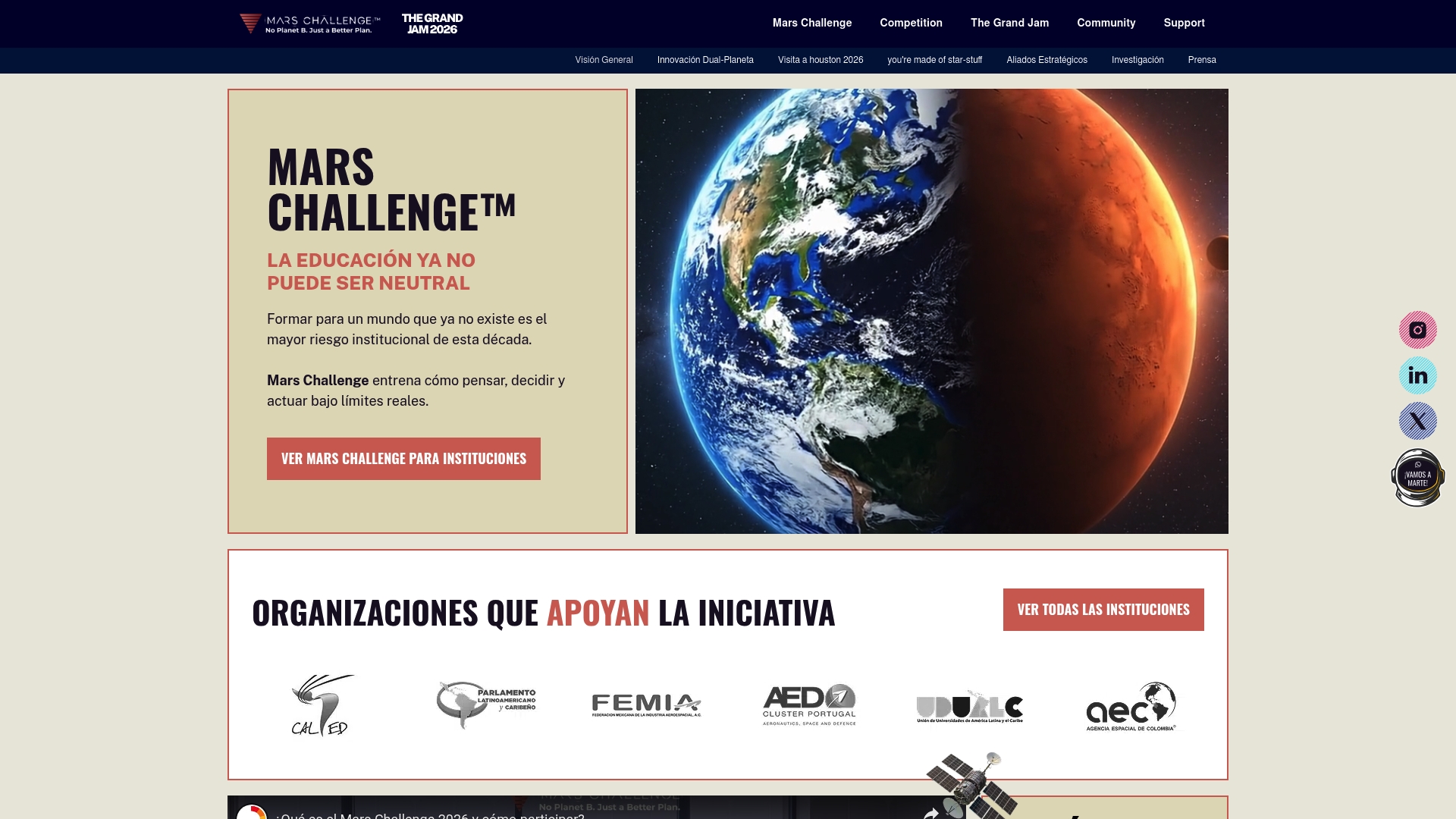
Take the next step now to transform your classroom into a hub of purposeful learning and action. Discover how to engage your students in designing real-world solutions that matter by visiting Mars Challenge. Join a worldwide learning movement empowering youth to innovate humanity’s survival on two planets. Learn more about the program to bring lasting impact and motivation to your educational environment today.
Frequently Asked Questions
What is dual-planet learning?
Dual-planet learning is an educational approach that connects classroom instruction to real-world challenges faced on Earth and Mars. To implement it, start by identifying an engaging, real-world problem that students can explore from both planetary perspectives.
How does dual-planet learning enhance student engagement?
Dual-planet learning enhances student engagement by placing students in front of authentic challenges where their contributions truly matter. Encourage students to approach these problems as active agents, which can significantly increase their investment in the material and their desire to learn.
What meta-skills can students develop through dual-planet learning?
Students can develop critical meta-skills such as systems thinking, creative problem-solving, and adaptive reasoning through dual-planet learning. Facilitate team challenges that require students to apply these skills as they tackle complex, interdisciplinary problems across both Earth and Mars contexts.
How can I create real-world relevance in my lessons?
To create real-world relevance, connect your lesson topics to current challenges in space exploration and Earth’s sustainability. Start by rephrasing a traditional lesson to incorporate both Earth and Martian constraints, allowing students to explore solutions that are relevant to both environments.
What actions can I take to assess students’ understanding during dual-planet projects?
To assess students’ understanding, incorporate presentations where teams justify their solutions to real-world scenarios. Require students to articulate their reasoning and the ethical considerations behind their choices, which can provide insight into their critical thinking skills and engagement.
How do I ensure diverse perspectives in dual-planet learning activities?
To ensure diverse perspectives, mix students from varying backgrounds and disciplines into project teams. Assign each member specific roles that require collaboration, allowing them to challenge each other’s assumptions and enrich the problem-solving process.