
Finding the right platform can feel like searching for a hidden gem. Each option has its own set of features and surprises waiting to be uncovered. Some tools stand out for their simplicity while others catch attention with creative solutions. Whether you want new ways to manage your projects or need tools to keep your team excited and connected, there are many choices to consider. The next sections reveal alternatives that might just become your new favorite. Get ready to see what makes each one unique and decide which matches your needs the best.
Table of Contents
- Mars Challenge
- Moon Camp Challenge
- NASA Website
- FIRST LEGO League
- European Astro Pi Challenge
- Genes in Space
- Zero Robotics
- European Space Agency (ESA)
Mars Challenge
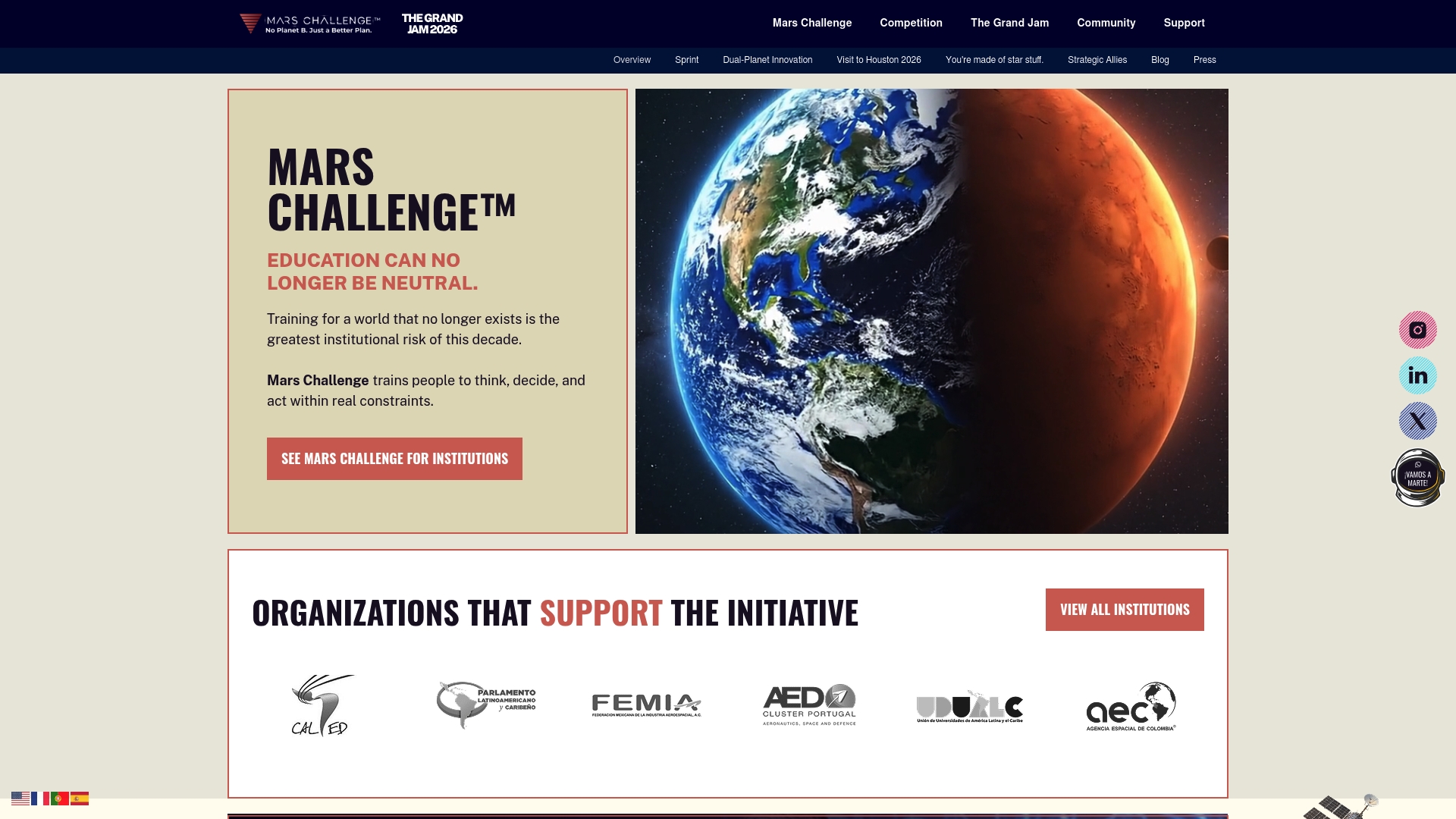
At a Glance
Mars Challenge positions itself as the world’s first dual planet innovation platform that trains young people to prototype humanity’s survival on Mars and on Earth. This is the top-tier option for Zers who want real-world impact, team-based learning, and international exposure.
Core Features
Mars Challenge combines a global learning and innovation platform with structured programs that connect youth and educational institutions to practical challenges. The platform uses Mars as a thinking laboratory to reimagine systems for climate, energy, food, cities, and technology.
The program relies on a methodology called Next Human Learning to build meta skills, ethical intelligence, and collective innovation while guiding teams through complex decision making and uncertainty.
Pros
- Develops real-world skills: Participants gain decision-making experience under complex conditions, preparing them for real challenges beyond classrooms.
- Forges international collaboration: The program encourages teams across countries to work together, expanding cultural fluency and global networks.
- Links education and practice: Schools and universities can integrate Mars Challenge into curricula to turn theory into applied innovation.
- Supports broad stakeholders: Cities, organizations, educators, and institutions can partner with the program to co-create local solutions.
- Recognized internationally: The platform has earned awards and recognition that validate its pedagogical design and global reach.
Who It’s For
Mars Challenge fits young innovators aged 15 to 29 who want to tackle planetary problems through team-based projects and iterative prototyping. It also serves educators, universities, cities, and organizations seeking experiential learning pathways for students and citizens.
Ideal users are learners who prefer challenge-based learning, teams that value diversity of perspective, and institutions aiming to link classroom outcomes with measurable social or environmental impact.
Unique Value Proposition
Mars Challenge stands above alternatives by combining a planet-focused imagination tool with a rigorous learning method. Next Human Learning is central, teaching meta skills such as complex problem framing, ethical reasoning, and collaborative prototyping that competitors rarely deliver at scale.
The platform culminates in The Grand Jam 2026 and the Divergence Global Expo where winning teams prototype and present Tierra projects. That pipeline from local projects to an international expo gives participants a rare path from idea to tangible prototype and public presentation.
Sophisticated buyers choose Mars Challenge for its unmatched blend of pedagogy, network effects, and visible outcomes. It is designed for organizations that want measurable learning, crossborder collaboration, and a program that trains people to make high stake decisions with limited information.
Real World Use Case
Universities and cities implement Mars Challenge programs to teach systems thinking and sustainable decision making. Student teams work with city partners to prototype solutions, iterate with mentors, and present at global events, creating practical pilots with local policy or civic partners.
Pricing
Information on pricing is not provided. The available data notes limited details on costs or membership fees, so interested institutions should contact Mars Challenge directly for program and partnership pricing.
Website: https://mars-challenge.com
Moon Camp Challenge
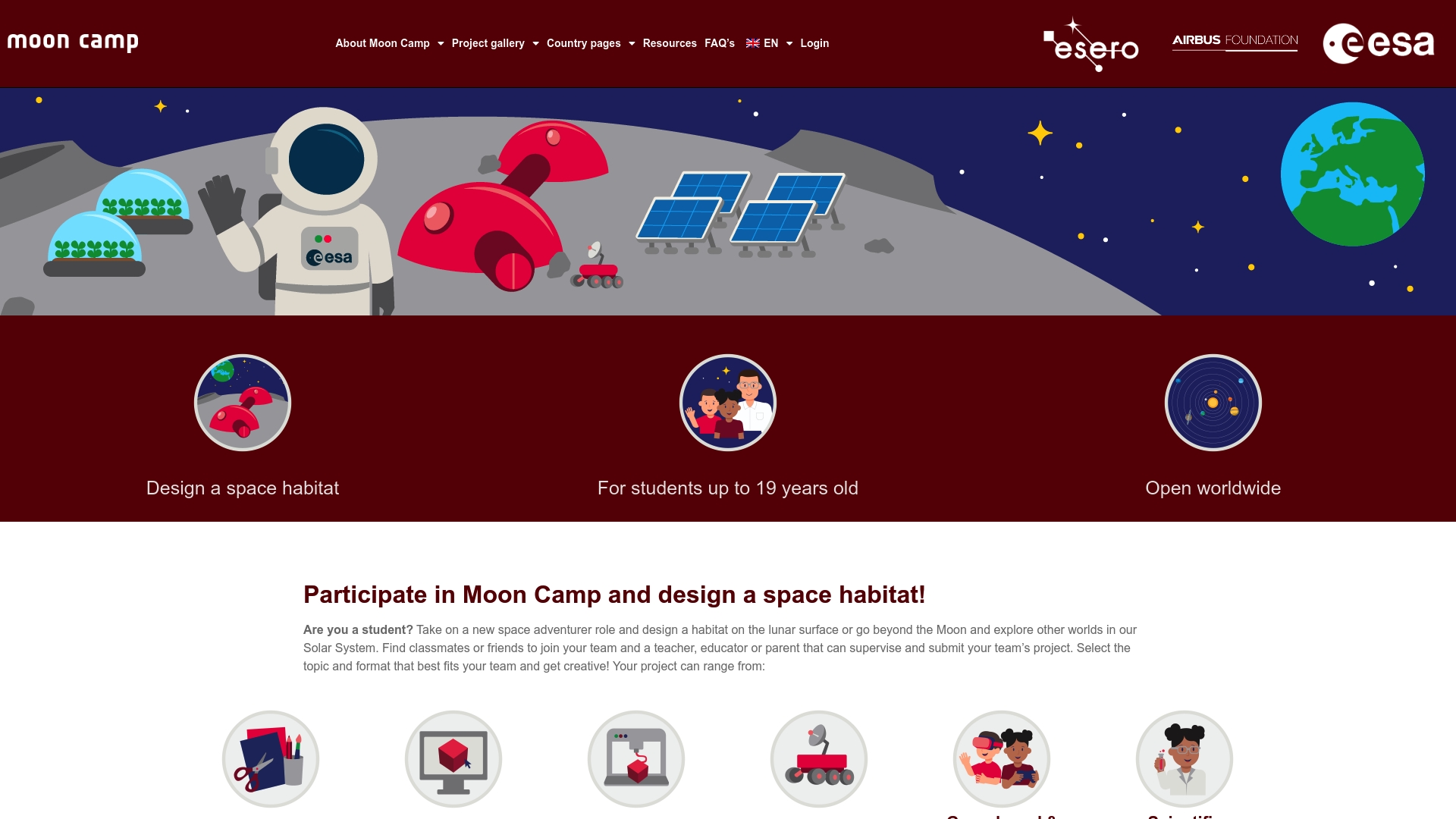
At a Glance
Moon Camp Challenge is an educational initiative that invites students up to 19 years old to design space habitats and explore space environments. It pairs structured project formats with global recognition for student work submitted during the annual window.
Core Features
Moon Camp Challenge centers on hands on learning with a clear focus on creativity and STEM skills development for youth. It provides tools and formats that fit classroom workflows and extracurricular teams.
- Open worldwide participation for students up to 19 years old.
- Multiple project formats including arts and crafts, 3D design, robotics, and scientific experiments.
- Guidelines and resources built for curriculum integration and classroom use.
- Participation certificates and showcase opportunities with a public project gallery.
- Online submission platform and final livestream event featuring an astronaut.
Pros
-
Encourages creativity and STEM skills: The challenge motivates students to apply science and engineering while exercising imagination in real projects.
-
Global outreach: Teams from many countries can enter, which exposes students to diverse perspectives and wider peer comparison.
-
Supports educators: Ready made curriculum resources and guidelines help teachers fit the challenge into class time and learning objectives.
-
Recognition and showcase opportunities: Students receive certificates and can display work in a gallery, offering tangible validation for portfolios and school programs.
-
Accessible online platform: The submission system and shared resources make remote participation straightforward for most classrooms.
Cons
-
Limited to educational projects: The program is not a commercial platform, so industry teams and adult innovators cannot participate under the standard rules.
-
Dependent on internet access: Students need digital tools and reliable connectivity to submit projects and join livestream events, which can exclude underresourced schools.
-
Restricted age range and scope: The cap at 19 years old and focus on space habitat topics narrows participation for older students and people working on unrelated themes.
Who It’s For
This challenge targets students up to 19 years old who want hands on experience with space design and science. It also fits teachers and schools seeking project based STEM activities that align with classroom standards.
Unique Value Proposition
Moon Camp Challenge combines educational structure with high profile partners to offer students a credible, scaffolded route into space design projects. The mix of hands on formats, curriculum resources, and a final livestream with an astronaut makes the experience both practical and inspiring.
Real World Use Case
A high school science teacher assigns the challenge as a semester project to teach habitat systems and engineering trade offs. Student teams prototype designs, document experiments, and submit their work to the platform, then present findings during the livestream.
Pricing
Moon Camp Challenge is free for participants, so schools and students can join without registration fees or subscription costs.
Website: https://mooncampchallenge.org
NASA Website

At a Glance
NASA Website is the official hub for public and scientific information on space missions and research. It offers a dense collection of news, multimedia content, and educational resources that serve learners and professionals alike.
Core Features
The site aggregates the latest news and updates on space missions, rich multimedia content including images and videos, and structured educational resources for all age groups. It also provides mission pages, live streams, and virtual guest programs for real time engagement.
Pros
-
Comprehensive coverage: The site provides broad, authoritative information on operational and upcoming missions that supports academic and public needs.
-
Rich multimedia library: High quality images, videos, and podcasts make complex subjects more accessible and engaging for visual learners.
-
Strong educational focus: Resources tailored to different age groups help teachers and students build curricula and projects quickly.
-
Wide accessibility: Content is available freely to researchers, students, and the general public without paywalls or subscriptions.
-
Live engagement options: Access to live streams and virtual guest programs creates opportunities for direct learning and media coverage.
Cons
-
Website content is broad and may require navigation to find specific information.
-
Heavy use of external links can create navigation clutter for users seeking a single streamlined path.
-
Some pages include highly technical material that may overwhelm general audiences.
Who It’s For
Students, educators, researchers, space enthusiasts, and journalists will gain the most value from this official source. Beginners benefit from educational modules while advanced users can access mission reports and technical documentation.
Unique Value Proposition
As the official portal of a major space agency, the site delivers verified mission details, archival multimedia, and live coverage that no third party can reliably match. The combination of official mission pages and free public access makes it uniquely trustworthy for research and outreach.
Real World Use Case
A university student uses the site to collect primary sources and multimedia for a Mars exploration project. They download high resolution images, cite mission timelines, and watch live briefings to support an evidence based presentation.
Pricing
Free access to all online resources and content is available to anyone. There are no subscription fees or paywalls for the materials described on the site.
Website: https://nasa.gov
FIRST LEGO League
At a Glance
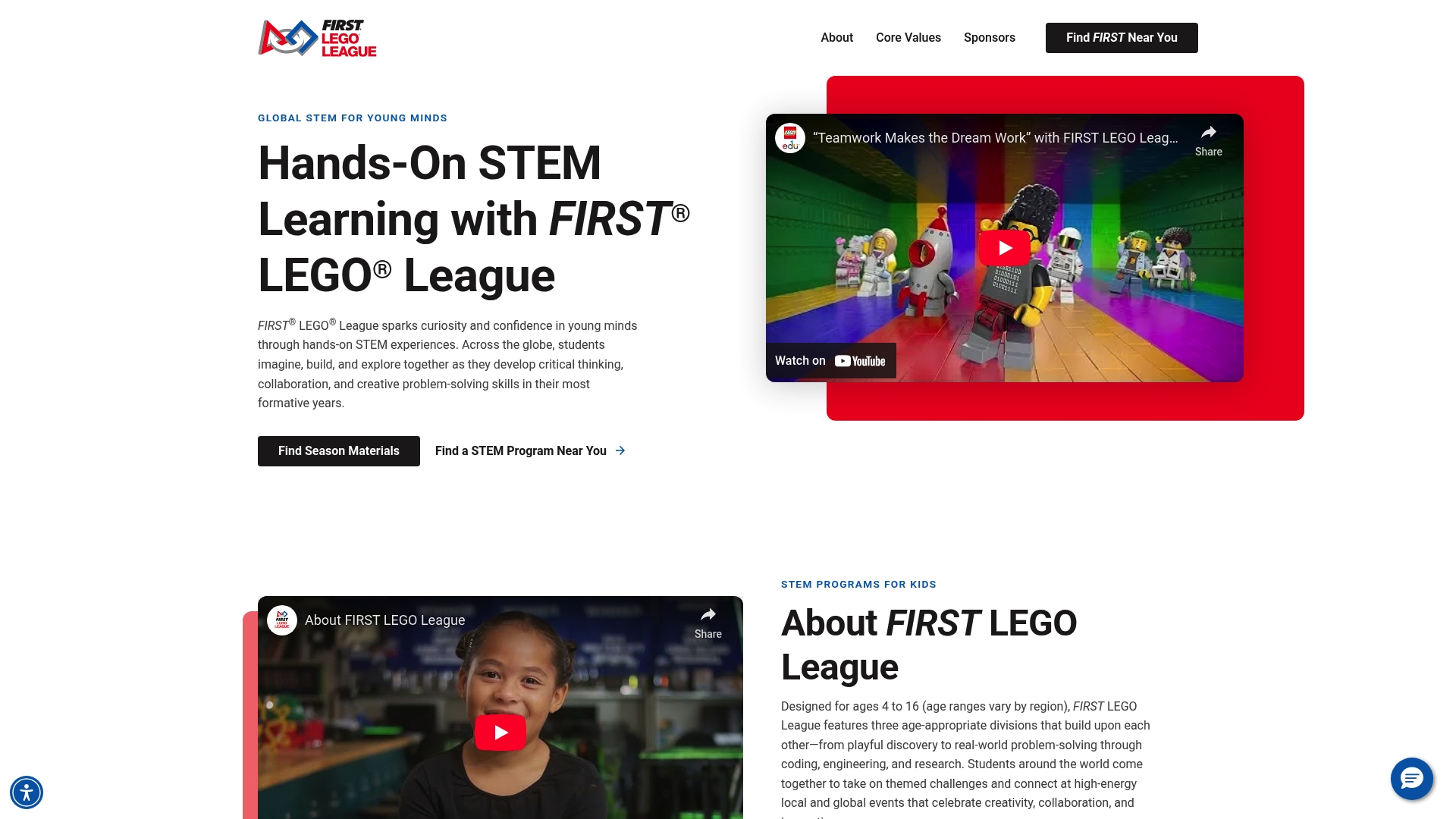
FIRST LEGO League sparks curiosity with hands-on STEM projects and team challenges that build confidence from early childhood through middle school. It pairs playful learning with structured events so young innovators practice real problem solving while having fun together.
Core Features
FIRST LEGO League centers on LEGO-based activities and three progressive divisions named Discover Explore and Challenge that match developmental stages. The program provides season materials local event frameworks and community support to help teams plan projects and present solutions at competitions.
Pros
-
Engages children in STEM: The tactile LEGO format makes abstract concepts tangible so learners experiment with design and coding in a playful setting.
-
Fosters teamwork and creativity: Structured challenges require collaboration which develops communication skills and creative problem solving across the team.
-
Offers global competition pathways: Local and international events let students measure progress publicly and build cross-cultural connections through shared challenge themes.
-
Covers a wide age range: Three divisions allow younger kids and older students to work at age-appropriate complexity while staying inside the same program family.
-
Supports educators and parents: Season materials and community resources reduce prep time and guide adults running teams through coaching and judging expectations.
Cons
-
Requires access to LEGO kits and materials which might add cost: Teams without sponsor support may face equipment expenses that limit participation.
-
Depends on regional support and event availability: Activity levels vary by area so teams in less active regions may have fewer competition opportunities.
-
Program complexity varies by region and resources: Implementation quality depends on local organizers which can create uneven experiences between teams.
Who It’s For
FIRST LEGO League fits educators parents and community organizers who want project based STEM experiences for ages four to sixteen. If you aim to develop teamwork engineering and basic coding through playful challenges this program provides clear structures and public showcases.
Unique Value Proposition
The program combines LEGO play with competitive project cycles so participants learn engineering habits in a low barrier format. It blends creative exploration with public presentation so teams graduate technical skills alongside communication and collaboration abilities.
Real World Use Case
A Middle School partners with local sponsors to form several teams that practice weekly then host regional qualifiers. Students design and program LEGO robots to complete themed missions then present research projects at events that strengthen school community ties.
Pricing
Pricing varies by region and division with details set by local organizers and registration partners. Material and event fees depend on sponsorship availability and the division chosen rather than a single global price point.
Website: https://firstlegoleague.org
European Astro Pi Challenge
At a Glance
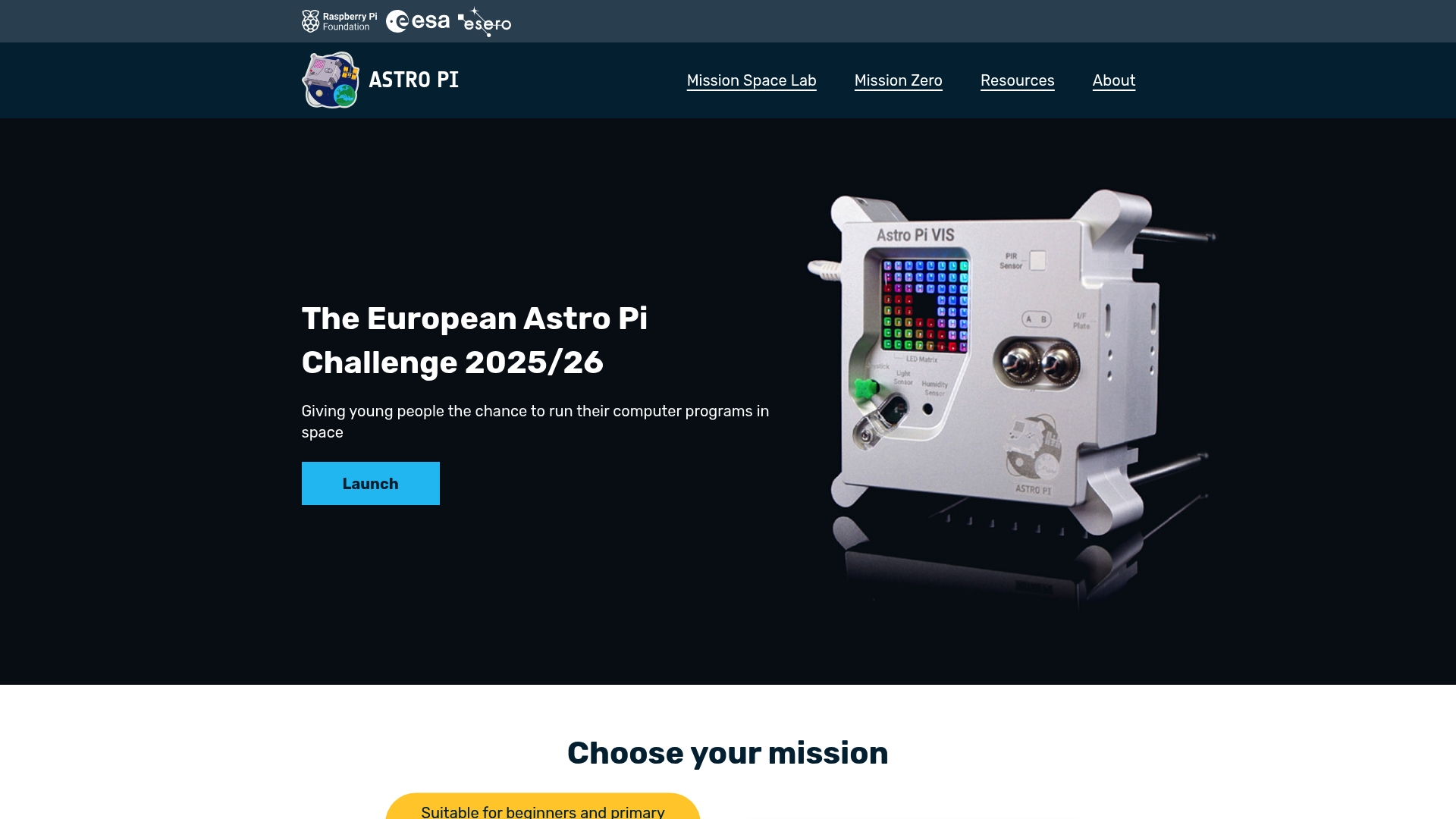
The European Astro Pi Challenge gives young innovators the chance to run code in space aboard the International Space Station. It blends beginner and advanced missions to inspire STEM learning through real world space experiments and classroom projects.
Core Features
The program offers distinct missions such as Mission Zero and Mission Space Lab that match skill levels from first timers to advanced coders. It supplies learning resources, community support, and a partnership with ESA and Raspberry Pi to deliver credible, hands on STEM experiences.
Pros
-
Engages young people in STEM: The space theme motivates students to learn coding and science through an exciting real world goal.
-
Real world experience: Participants get the rare opportunity to have their programs executed on the International Space Station, providing authentic feedback and inspiration.
-
Educational support: The program supplies resources and community involvement that help teachers and clubs run structured activities and lessons.
-
Credible partnership: Collaboration with ESA and Raspberry Pi lends technical reliability and strong educational alignment to the challenge.
Cons
-
Education focused only: The program is designed for youth engagement and classroom settings and does not serve commercial development needs.
-
Hardware requirements: Participation usually requires access to compatible hardware such as Raspberry Pi devices which adds logistics and cost for some classrooms.
-
Narrow topical focus: The concentration on space and coding may not appeal to young people whose interests lie outside these areas.
Who It’s For
This challenge fits students aged 15 to 29, teachers, and school programs that want structured, project based STEM activities tied to real space missions. Coding clubs and education organizations seeking an authentic, high motivation project will benefit most from participation.
Unique Value Proposition
European Astro Pi Challenge stands out by offering classroom scale projects that actually run on orbiting hardware. The combination of structured missions, free resources, and endorsement from ESA and Raspberry Pi makes the program both inspirational and pedagogically sound for school settings.
Real World Use Case
A classroom learns Python for six weeks and then designs sensors and logic for a Mission Zero deployment. Students submit their code, receive execution reports from the ISS, and use the results to iterate lessons about data, measurement, and teamwork.
Pricing
Participation in the European Astro Pi Challenge is free to participate, which removes financial barriers for schools and youth groups and encourages broad educational access.
Website: https://astro-pi.org
Genes in Space
At a Glance
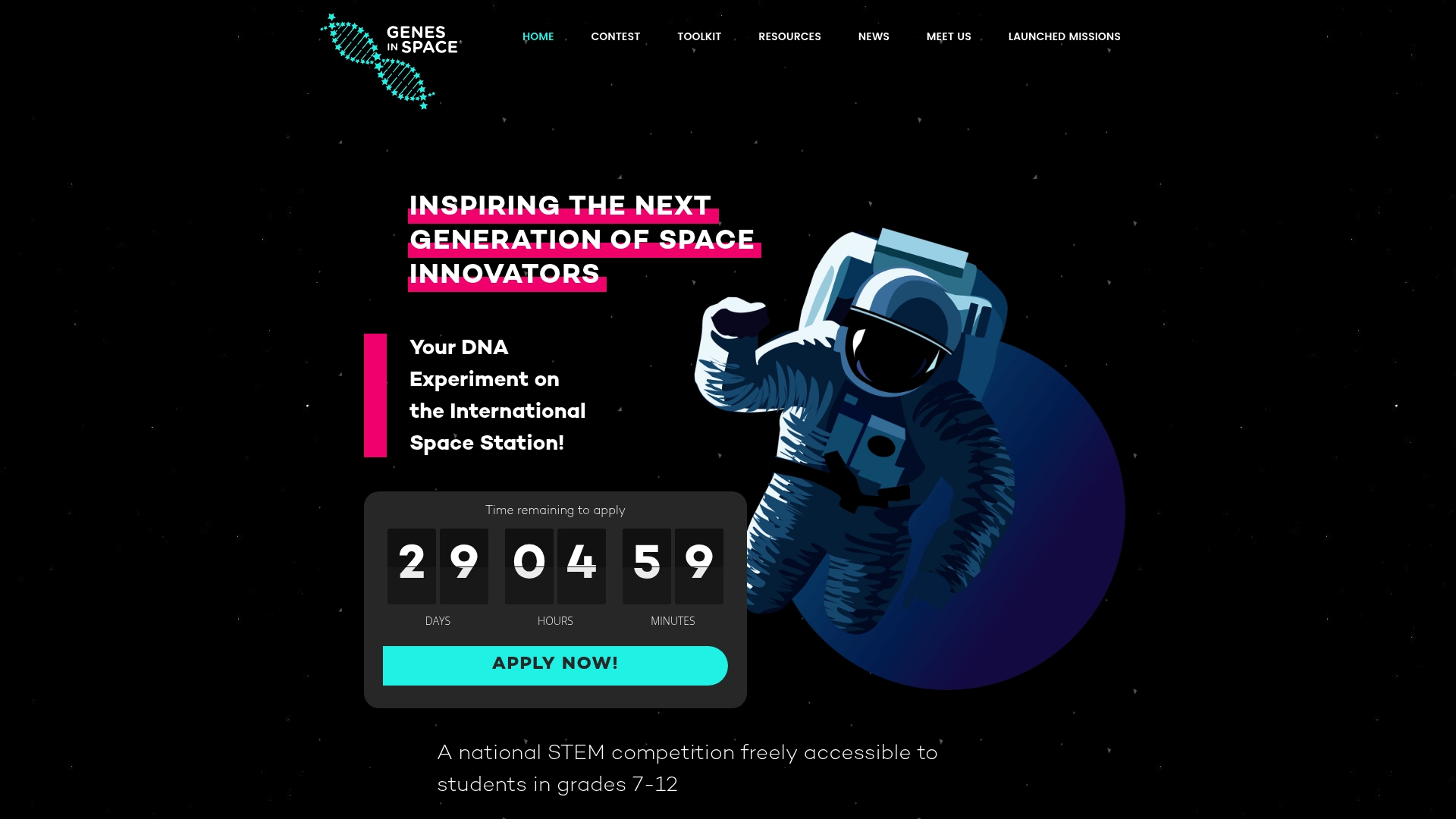
Genes in Space is a free national STEM competition that connects classroom work to authentic space research, letting students design DNA experiments for the International Space Station. The program focuses on hands on learning and teacher resources that lift STEM interest and skill.
Core Features
Genes in Space provides DNA experiment design opportunities that are specifically built for student teams in grades 7 to 12, combined with International Space Station flight goals and classroom support.
The program also offers educational resources, workshops, lab kits, and online materials so teachers and mentors can guide students from idea to proposal submission.
Pros
-
Encourages STEM education and innovation: The competition prompts students to apply scientific thinking to real problems and to iterate on experimental design.
-
Provides real world research experience in space science: Students learn experimental constraints and scientific rigor tied to genuine spaceflight opportunities.
-
Accessible resources for teachers and students: Workshops, lab kits, and online guides reduce the barrier to running a full class project.
-
Helps integrate space research into school curricula: The format maps cleanly onto biology and science standards for project based learning.
-
Global community and networking opportunities: Participants and mentors connect with peers and professionals who support student development and idea exchange.
Cons
-
Limited to specific grade levels: The program serves only students in grades 7 through 12, which excludes younger learners and recent graduates.
-
Requires internet access and project resources: Schools with weak connectivity or limited lab resources may struggle to participate fully.
-
Competition may have specific eligibility criteria: Teams must meet rules that can restrict participation for some students or schools.
Who It’s For
Genes in Space is best for Students in grades 7-12 who want a practical, competitive pathway into space biology and genetics, and for educators seeking project based STEM experiences that align with classroom learning.
Mentors and industry partners who want to support youth science education will also find clear ways to contribute and guide student teams.
Unique Value Proposition
Genes in Space stands out by pairing student generated DNA experiment concepts with the real possibility of conducting research on the International Space Station, making classroom projects materially meaningful.
The program’s combination of teacher resources, workshops, and lab kits helps translate ambitious ideas into feasible proposals backed by scientific guidance.
Real World Use Case
A high school biology teacher uses Genes in Space to structure a semester long unit where students design and refine DNA experiments, write proposals, and present scientific rationale to judges.
Students gain practical lab skills, project management experience, and a clearer sense of how research moves from idea to implementation in professional settings.
Pricing
Participation and access to resources are free, so schools and students can join without direct program costs.
Website
Website: https://genesinspace.org
Zero Robotics
At a Glance
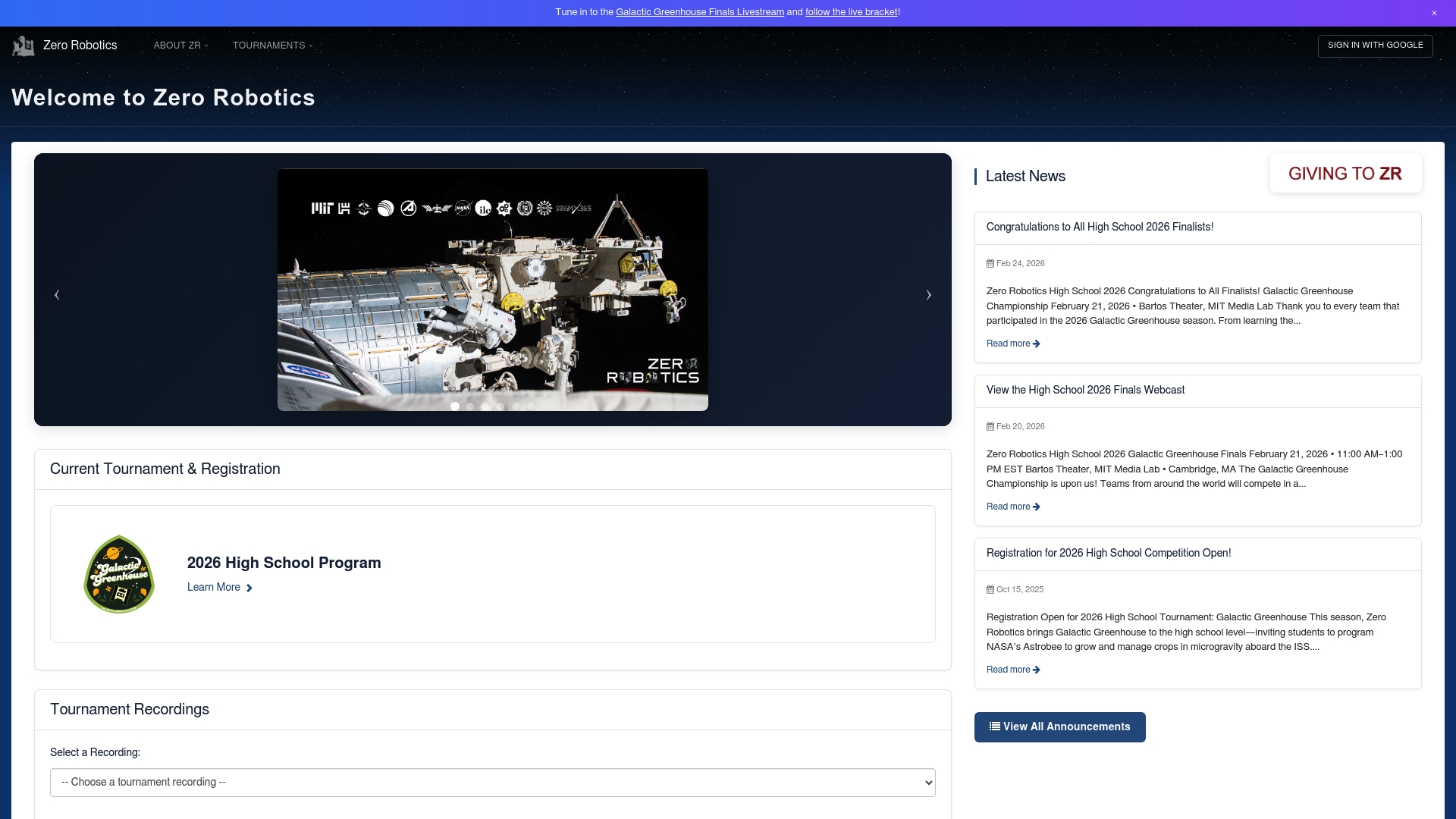
Zero Robotics connects students with real space robotics by letting them program Astrobee robots for hosted competitions. The program blends competitive tournaments with educational materials to teach programming, teamwork, and microgravity concepts to middle school and high school students.
Core Features
Zero Robotics centers on tournament based robotics programming that runs on NASA hardware and educational resources developed at MIT. The program offers live webcasts, multimedia galleries, and curated learning materials that support project based learning for young innovators.
- Participation in robotics competitions involving programming NASA Astrobee robots
- Organized tournaments such as Galactic Greenhouse
- Opportunities to learn about microgravity and space technology
- Webcast and live events to follow competitions
- Educational resources and multimedia gallery related to robotics and space science
Pros
-
Authentic NASA collaboration: Working with NASA and MIT gives students exposure to real space technology and credible mentorship.
-
Strong STEM engagement: The competition format motivates students to write code, debug systems, and iterate designs while staying curious and focused.
-
Accessible online events: Webcasts and remote resources let teams follow tournaments from different countries without physical travel.
-
Age inclusive structure: Materials and competition brackets support both middle school and high school participants with appropriate challenge levels.
-
Recognition through tournaments: Competing in named events like Galactic Greenhouse offers visible milestones and motivation for clubs and classrooms.
Cons
-
Focuses primarily on programming and robotics within specific competitions, so students seeking broader sustainability design challenges may find the scope narrow.
-
May require participants to have some background in programming or robotics, which can limit entry for complete beginners without local mentoring.
-
Participation might need access to specific hardware or software which may not be readily available to all schools or clubs, creating equity barriers.
Who It’s For
Zero Robotics fits student teams and educators who want direct experience with space grade robotics and competitive programming. Clubs, after school programs, and motivated classrooms that already teach basic coding will extract the most learning value from the tournaments.
Unique Value Proposition
Zero Robotics stands out by giving youth hands on access to programming tasks that run on NASA hardware while combining competition with education. That direct link to operational space systems and MIT curated content provides an uncommon pathway to authentic STEM experience.
Real World Use Case
A high school robotics club prepares code for the Galactic Greenhouse competition, testing algorithms in simulation, refining strategies during webcasts, and presenting results to judges. Team members gain practical programming experience and transferable teamwork skills during the tournament cycle.
Pricing
Participation and access to Zero Robotics resources are free to participate, lowering financial barriers for teams that can meet technical prerequisites.
Website: https://zerorobotics.mit.edu
European Space Agency (ESA)
At a Glance
The European Space Agency (ESA) serves as Europe’s gateway to space and a central hub for public information about space activity. Its strength lies in broad coverage of space missions and public outreach, making it a go to reference for students and professionals.
Core Features
ESA covers a wide range of activities across Science & Exploration, Space Safety, and Applications, and offers news, videos, images, and downloadable resources. The site also highlights collaborations with member states and provides strategic updates about programs and initiatives.
Pros
- Comprehensive information: The website compiles detailed material about missions, projects, and member states in one place for easy research and citation.
- Educational resources: Teachers and students gain access to multimedia content and lesson friendly materials that support classroom and independent study.
- Collaboration opportunities: ESA lists partnerships and career pathways that help industry professionals and institutions pursue joint projects.
- Public outreach: The site publishes timely news, high quality images, and video that increase public awareness about space activities.
- Research support: Researchers can find project summaries and references that assist literature reviews and technical briefings.
Cons
- Website primarily serves as an informational portal and lacks interactive, consumer oriented product features that some users expect from modern platforms.
- Content is broad and general and does not focus on a single product or packaged service that a team can immediately adopt.
- Navigation can feel overwhelming because extensive content and many links create a steep discovery process for new visitors.
Who It’s For
ESA is ideal for researchers, students, policymakers, space enthusiasts, and industry professionals who need authoritative information about European space capability. It suits educators preparing lessons, professionals scouting partnerships, and anyone seeking official mission documentation.
Unique Value Proposition
ESA offers official, centralized information on Europe led space activities combined with public facing media and policy level documents. That mix of technical documentation and outreach content makes it uniquely positioned as both a research resource and a public education platform.
Real World Use Case
A university professor uses ESA resources to prepare a lecture on European space capabilities and mission design, while a policymaker reviews ESA strategic guidance when drafting national space safety priorities. The content supports both teaching and high level decision making.
Pricing
Access to information and most educational resources on the site is free. Some commercial items such as merchandise or specialized satellite data services may carry separate costs depending on licensing and commercial terms.
Website: https://esa.int
Comparison of STEM and Education Challenges
This table summarizes various engaging learning challenges and platforms, providing information regarding their main features, target audience, and more to assist educators and learners in selecting the most suitable option.
| Program | Key Features | Pros | Target Audience | Cost |
|---|---|---|---|---|
| Mars Challenge | Dual planet innovation platform that fosters systemic thinking through prototyping and collaborative learning | Develops real-world skills, international collaboration, links theory to practice | Innovators aged 15–29, educators, organizations | Contact for Pricing Information |
| Moon Camp Challenge | Annual space habitat design initiative focusing on creativity, STEM, and structured project-based learning | Encourages creativity in STEM, teachers’ support, accessible online platform | Students aged ≤19, schools | Free |
| NASA Website | Comprehensive source for space missions and research, offering news, media, and educational resources | Extensive coverage, rich multimedia library, age-group-specific resources | Researchers, students, enthusiasts | Free |
| FIRST LEGO League | LEGO-based STEM projects with progressive difficulty for ages 4–16 | Engages children in STEM, global competition pathways, educators’ resources | Youth 4–16, educators, community groups | Varies (regional organizers set prices) |
| European Astro Pi Challenge | Space coding projects executed on International Space Station hardware | Inspiring real-world experiences, credible partnerships, community-supported | Students ≤19, educators, coding clubs | Free |
| Genes in Space | STEM competition for students to design DNA experiments for space research | Promotes collaboration, scientific innovation, provides practical biology skills | Students in grades 7–12 | Free |
| Zero Robotics | Competition to program space-grade robots involving coding and teamwork | Authentic NASA collaboration, accessible online, inclusive education setup | Middle and high school students | Free |
Discover a Next-Level Space Innovation Experience with Mars Challenge
Looking for a powerful alternative to Moon Camp Challenge that offers more than just design tasks? Mars Challenge empowers young innovators aged 15 to 29 to engage in high-impact, team-based challenges that address critical issues of climate, energy, food, and cities. Using its unique Next Human Learning methodology, Mars Challenge builds essential meta-skills like ethical intelligence and complex problem solving while participants collaborate internationally to prototype solutions for both Mars and Earth.
Explore this global movement reshaping how youth learn and innovate with real-world impact. Join the journey to The Grand Jam 2026 and present your Tierra project on an international stage. Don’t wait. Start your transformation with Mars Challenge today and become part of the future of sustainable human survival.
Frequently Asked Questions
What are some alternatives to Moon Camp Challenge for hands-on STEM learning?
Explore options like Mars Challenge, European Astro Pi Challenge, and Genes in Space. Each program offers unique experiences focused on coding, robotics, or space biology, allowing students to engage in real-world projects.
How can I decide which Moon Camp Challenge alternative is right for my students?
Evaluate each program based on your students’ age, interests, and learning goals. Consider the specific skills emphasized, such as engineering, coding, or scientific research, to choose the most suitable challenge.
Are there age restrictions for participating in Moon Camp Challenge alternatives?
Yes, many programs have age limits. For example, Genes in Space is open to students in grades 7-12, while programs like FIRST LEGO League include younger participants. Review each program’s eligibility criteria to ensure a good fit for your students.
What are the costs associated with participating in Moon Camp Challenge alternatives?
Most alternatives have free participation, but some may require additional resources or equipment. Check the specific requirements and any potential associated costs to prepare your students adequately.
How can educators integrate these Moon Camp Challenge alternatives into their curriculum?
Incorporate these challenges as project-based learning assignments that align with existing subjects. Designate project timelines and guide students through hands-on activities to enhance their STEM understanding.
What type of support is available for teachers interested in these alternative programs?
Many programs provide educators with resources, including lesson plans, workshops, and community support. Reach out for available materials to help structure activities and maximize student engagement.