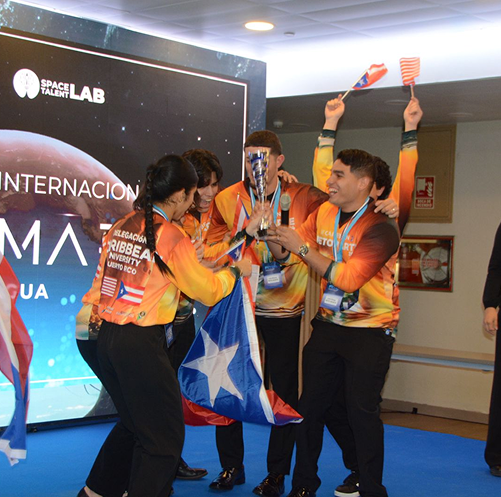


Opportunities for innovators are growing as new platforms focus on turning big ideas into real solutions. The search for fresh ways to launch projects and connect with supportive communities is more exciting than ever. Different options now offer unique paths and resources for visionaries ready to shape the future. Some open more doors for funding while others provide mentorship or international exposure. Choosing the right platform can make all the difference. Which ones stand out and what sets them apart from the rest
Table of Contents
Mars Challenge
At a Glance
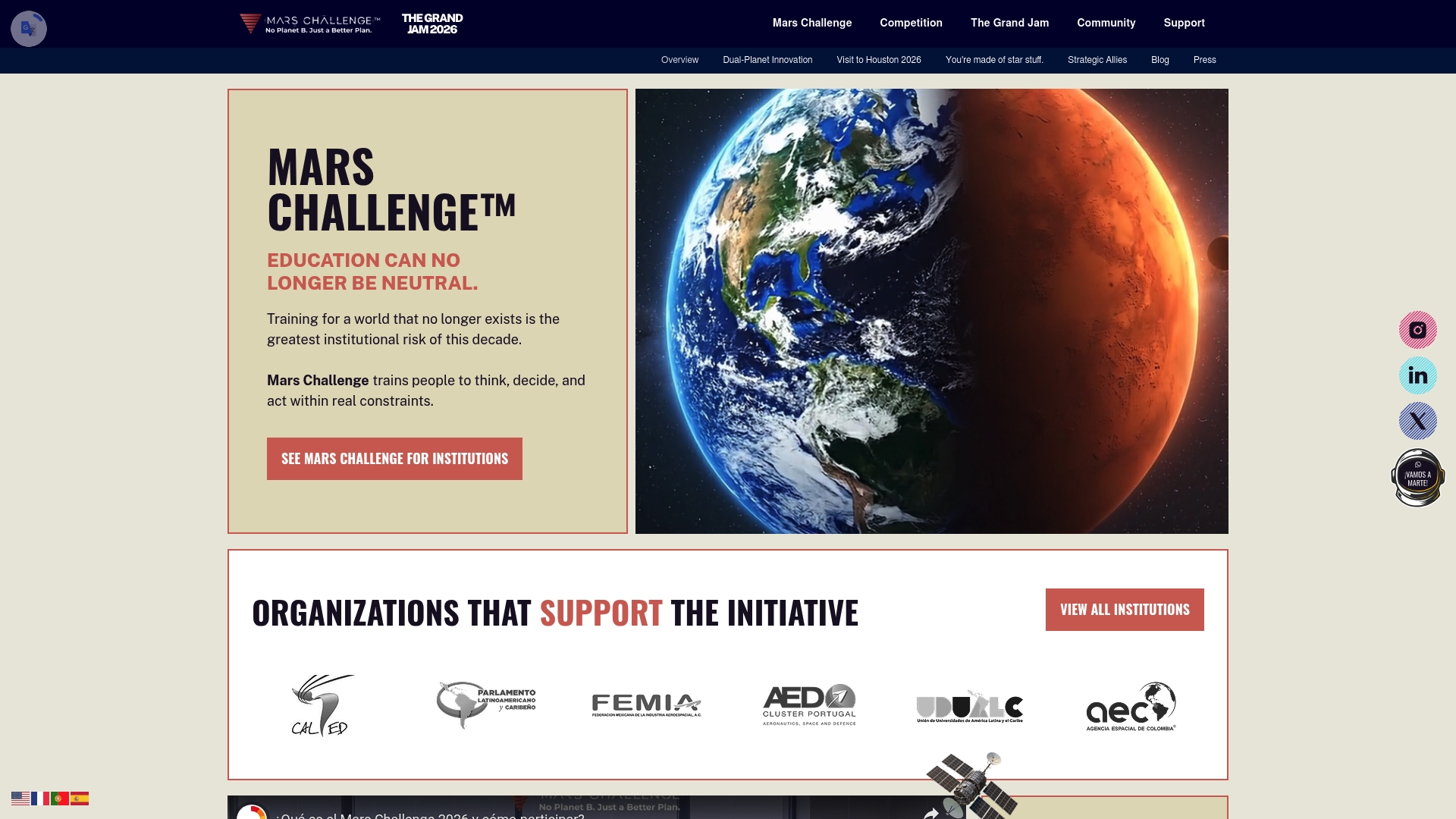
Mars Challenge is a leading global learning and innovation platform that uses Mars as a thinking laboratory to generate practical solutions for Earth. It combines team based project work with global connections to build agency and responsibility in young people.
Core Features
The platform delivers a global learning and innovation platform that connects youth with educational institutions and organizations to work on real projects. It uses Mars as a thinking laboratory to reframe Earth challenges and supports projects through competitions and expos.
Mars Challenge also fosters a global community of learners, educators, and institutions where collaboration, cross cultural exchange, and applied problem solving are central to the experience.
Pros
-
Promotes innovative thinking and problem solving skills: The program trains participants to approach complex problems with exploratory design and systems thinking in team settings.
-
Connects youth with real world challenges and international communities: Participants work across institutions and geographies to tackle measurable sustainability goals and share outcomes.
-
Encourages responsibility and agency in young learners: Students gain ownership of projects and practice decision making under realistic constraints.
-
Supports a variety of roles including students, educators, cities, and organizations: The format adapts to classroom use, institutional partnerships, and municipal collaborations.
-
Recognized internationally with awards and recognitions: External recognition helps institutions validate student outcomes and attract collaborators.
Who It’s For
Mars Challenge is designed for young people aged 15 to 29, educators, and educational institutions seeking immersive, project based learning that ties curriculum to planetary scale problems. Cities and organizations that want to engage youth in sustainability initiatives will find practical partnership pathways.
Educational leaders and curriculum developers will value the platform when they need a structured way to connect classroom learning to global projects and public showcases.
Unique Value Proposition
Mars Challenge stands out because it intentionally frames Earth problems through a Martian lens to spark original design choices and tight constraints thinking. That approach produces solutions that are robust, resource aware, and transferable to Earth contexts. The platform pairs this mentality with institutional matchmaking, community building, and project pathways that lead to public expos and competitions. For sophisticated buyers looking for measurable student agency, cross institutional collaboration, and a narrative that motivates engagement, Mars Challenge delivers an unmatched blend of practical project work and global visibility.
Real World Use Case
Universities and schools integrate the Mars Challenge framework into curriculum to train students in decision making under planetary boundaries. Teams iterate on prototypes and then present their work at international expos where institutions judge outcomes and form follow up collaborations.
Pricing
Pricing is not specified on the website. Interested institutions should contact Mars Challenge directly to discuss program options, partnership models, and potential institutional support structures.
Website: https://mars-challenge.com
Hult Prize
At a Glance
Hult Prize channels student energy into large scale social ventures by running an annual global student startup competition that awards $1 million USD to a winning team. It pairs funding with exposure and mentorship so promising teams can scale practical solutions aligned with UN SDGs.
Core Features
Hult Prize centers on a year long competition model that combines pitching, incubation, and global finals to accelerate student led social enterprises. The program also offers structured opportunities for mentorship and sponsorship, a platform for building scalable ventures, and broad participation across over 130 countries.
Pros
- Significant funding: The competition awards a single team $1 million USD which can materially advance product development and market entry for a social startup.
- Global reach: Participation from more than 130 countries brings cultural diversity and networking that expose teams to varied markets and perspectives.
- Mentorship and networking: Organized mentor connections and sponsor involvement give teams practical guidance and access to experienced advisors.
- Focus on social impact: The program directs effort toward measurable outcomes tied to UN SDGs, which helps teams align with global funding and policy priorities.
- Platform for scale: The structure supports teams moving from campus proof of concept to international pilots and partnerships.
Cons
- Competitive application process may exclude capable teams: The selection model favors highly polished proposals which can disadvantage teams with limited pitch experience or resources.
- Limited clarity on long term support after the prize: Information about sustained incubation, follow on funding, or alumni services is not comprehensive which can leave winners navigating next steps alone.
- Geographical and resource barriers exist for some participants: Teams in regions with limited travel budgets or weak local ecosystems face higher barriers to accessing mentorship and live events.
Who It’s For
Hult Prize suits student entrepreneurs and educational institutions that want to embed social entrepreneurship into curriculum and extracurricular programs. Mentors, sponsors, and campuses seeking high profile experiential learning and global exposure will find it directly relevant.
Unique Value Proposition
Hult Prize combines a large cash prize with a global showcase and mentor network which creates a powerful launchpad for student led social enterprises. The scale and prestige of the finals deliver visibility that typical campus programs cannot match.
Real World Use Case
A university team developing a renewable energy social startup uses Hult Prize to validate a business model, win mentorship on scaling, and secure the exposure needed to attract pilot partners in multiple countries. The competition accelerates fundraising and partnership conversations.
Pricing
Participation in Hult Prize competition rounds and related activities is free for students and campuses, removing fee barriers to entry while keeping selection competitive.
Website: https://www.hultprize.org
Enactus
At a Glance
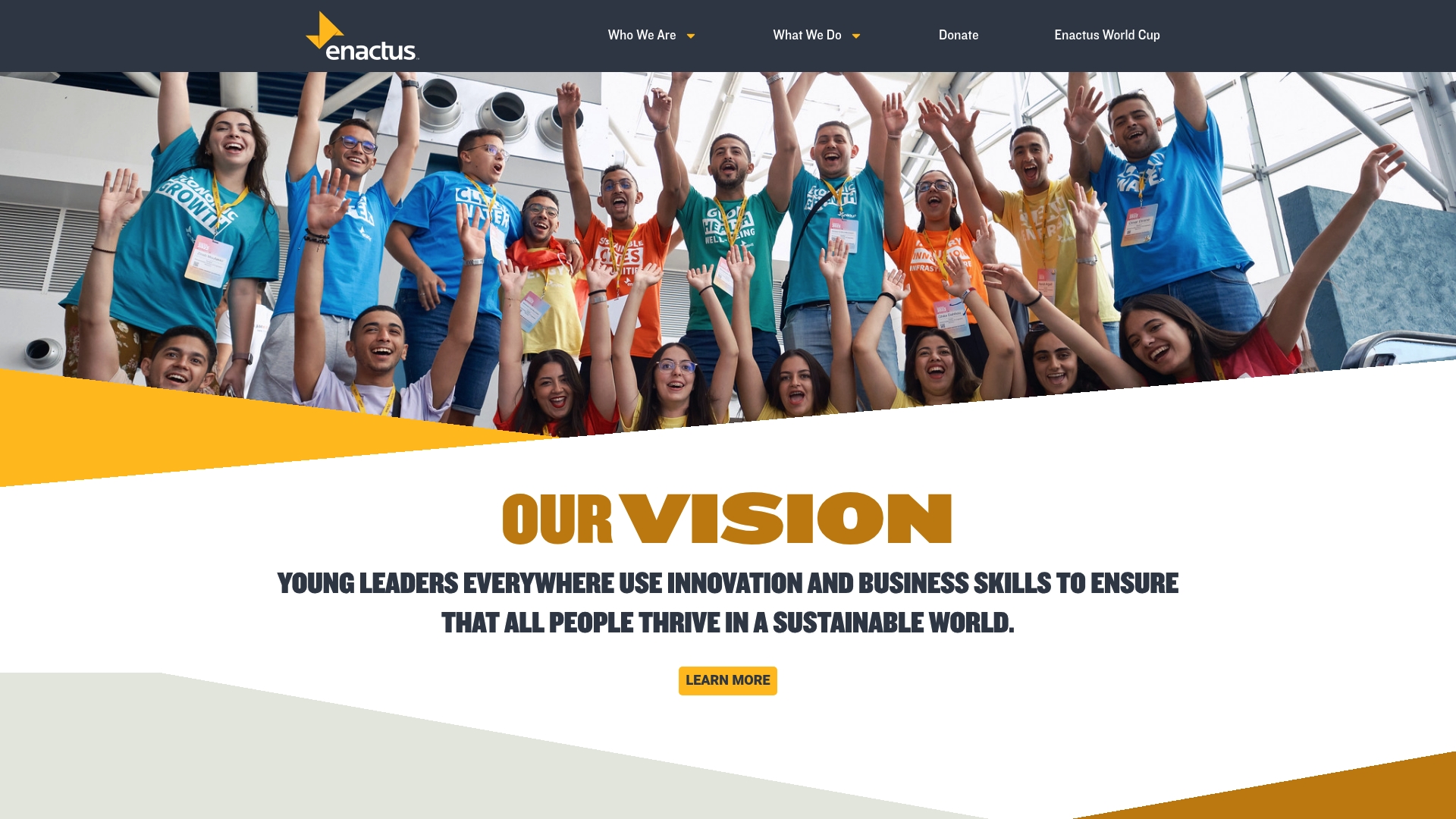
Enactus connects students, educators, and partners through a global network that prioritizes student leadership and sustainability in real projects. The organization blends competitive events and educational programs to convert classroom learning into measurable community impact.
Core Features
Enactus offers a Global network of country offices and partners, direct student team support and funding, and structured impact measurement and reporting. Educational programs and competitions create recurring opportunities for student engagement and leadership development.
Pros
-
International presence and recognition: Enactus provides wide geographic reach that helps student projects gain visibility and partner access across countries.
-
Focus on sustainability and social impact: The organization prioritizes projects that produce measurable community and environmental outcomes rather than theoretical exercises.
-
Opportunities for student leadership and development: Students receive practical leadership practice through team management, project delivery, and public presentations.
-
Supportive network for entrepreneurial action: Country offices and partners offer mentorship, resources, and occasional funding to help teams move from idea to implementation.
-
Organized events like the Enactus World Cup: Recurring competitions give teams a stage to test prototypes, receive feedback, and connect with potential collaborators.
Cons
-
Limited program detail on the website: Information on specific programs and offerings is sparse which makes program comparison and planning more time consuming.
-
No clear pricing or membership fee information: The lack of transparent cost details complicates budget planning for institutions and partners.
-
Primarily student focused: The emphasis on student engagement means fewer offerings tailored to individual professionals or nonacademic product deployment.
Who It’s For
Enactus suits Universities, Educators, and Students who want structured channels to launch social entrepreneurship projects and measure community impact. Partners and organizations seeking collaboration on youth led sustainability initiatives will also find aligned opportunities.
Unique Value Proposition
Enactus combines a broad international network with recurring competitive forums and impact reporting to turn student projects into real community outcomes. That combination of network reach and structured competition differentiates the organization from classroom only programs.
Real World Use Case
Universities implement Enactus programs to support student led social entrepreneurship projects that deliver local community benefits while developing leadership skills. Teams use Enactus frameworks to secure partners, prototype interventions, and present outcomes at national and global events.
Pricing
Pricing is not specified on the website which requires direct contact with country offices for membership or program cost information.
Website: https://enactus.org
Clinton Foundation
At a Glance
The Clinton Foundation is a large nonprofit organization that advances leadership and collaborates across sectors to tackle global health, economic, climate, and education challenges. Its strong reputation and network make it a go to partner for institutions seeking high profile collaboration.
Core Features
The Foundation runs leadership development programs and large scale initiatives in global health and security, economic development, and climate resilience. It also operates the Clinton Presidential Center as a hub for education and cultural programming.
- Leadership development programs designed for emerging leaders and professionals.
- Global health and security initiatives focused on disease prevention and systems strengthening.
- Economic development projects that link private sector investment with community needs.
- Climate resilience and environmental programs that support adaptation and policy dialogue.
- Educational and cultural offerings at the Clinton Presidential Center for students and educators.
Pros
- Wide program scope: The organization offers an array of initiatives that address interconnected global challenges in health, economy, and environment.
- Leadership emphasis: Programs place clear focus on developing leaders and practical skills for young people and professionals.
- Partnership driven approach: The Foundation brings together government, business, and civil society to mobilize resources and expertise.
- Extensive global network: Longstanding relationships with leaders and institutions increase credibility and partnership reach.
- Educational hub: The Clinton Presidential Center provides tangible learning experiences and public programming for schools and communities.
Cons
- Funding reliance: The nonprofit model depends heavily on donations and grants which can create variability in long term project support.
- Broad agenda trade offs: A wide scope of work can dilute attention on highly specific technical problems that some stakeholders prioritize.
- Perception risks: The political background of founders can create perception issues that affect neutral collaboration in certain contexts.
Who It’s For
The Clinton Foundation suits donors, universities, and educational leaders who want high profile partnerships and access to global networks. Curriculum developers looking for leadership modules or institutional collaborations will find credible programmatic partners here.
Unique Value Proposition
The Foundation connects large scale networks with on the ground programming and public facing learning spaces. This blend of convening power and program delivery makes it valuable for institutions seeking both visibility and measurable social impact.
Real World Use Case
A university or school district can partner on a leadership curriculum and host a student exchange or public event at the Clinton Presidential Center. A corporate sustainability team can co fund a climate resilience project and access technical partners through the Foundation.
Pricing
Not applicable because the Clinton Foundation operates as a nonprofit funded by donations and grants. Cost structures for partnerships vary by program and are negotiated case by case.
Website: https://clintonfoundation.org
Diamond Challenge

At a Glance
Diamond Challenge invites high school teams worldwide to build ventures that tackle social and environmental problems while joining a global community of young innovators. It combines competition, prize funding, and mentorship to convert student ideas into actionable projects.
Core Features
Diamond Challenge runs a global high school entrepreneurship competition that highlights student creativity and social impact. The program offers prize funding for top teams, topical innovation prizes in sustainability and technology, and structured networking opportunities with mentors and judges.
Pros
- Access to Funding and Mentorship: Participants gain prize funding and mentor connections that help move projects from concept to prototype in practical ways.
- Youth Focused Innovation: The program encourages student-led solutions and recognizes social impact as well as business viability, which strengthens civic engagement among participants.
- Global Community: Teams join an international alumni network that offers ongoing community engagement and peer learning beyond the competition cycle.
- Topical Prize Variety: Thematic prizes in sustainability, technology, and economic development broaden the types of projects that receive recognition and resources.
- Institutional Support: Schools and educators receive resources and a structured program to introduce entrepreneurship into curriculum and extracurricular activities.
Cons
- Restricted Age Range: The competition is limited to high school participants so adult entrepreneurs and older students will find it unsuitable for their needs.
- Competitive Pressure: The high stakes and competitive format can be intimidating for students who are new to public pitching or who prefer collaborative, noncompetitive learning paths.
- Entrepreneurship Emphasis: Projects that emphasize research, pure science, or nonmarket community interventions may not align well with the entrepreneurship oriented judging criteria.
Who It’s For
Diamond Challenge is designed for high school students passionate about entrepreneurship, teachers who want classroom aligned innovation projects, and organizations seeking to support youth leadership. It fits educators who want measurable student outcomes and clear pathways to mentorship and funding.
Unique Value Proposition
Diamond Challenge uniquely blends a youth centered competition with tangible follow up supports. Its combination of scholarships, topical prizes, and an active alumni network gives student teams both short term recognition and long term community resources.
Real World Use Case
A student team develops an eco friendly waste recycling solution, enters the sustainability prize, and wins funding plus mentor hours. The team uses the resources to pilot a prototype in their school district and continues engagement through the alumni network for next steps.
Pricing
Participation is free to enter based on public information, which lowers barriers for schools and students to take part. Schools can adopt the program without direct participant fees, making it accessible for a wide range of communities.
Website: https://diamondchallenge.org
MIT Solve
At a Glance
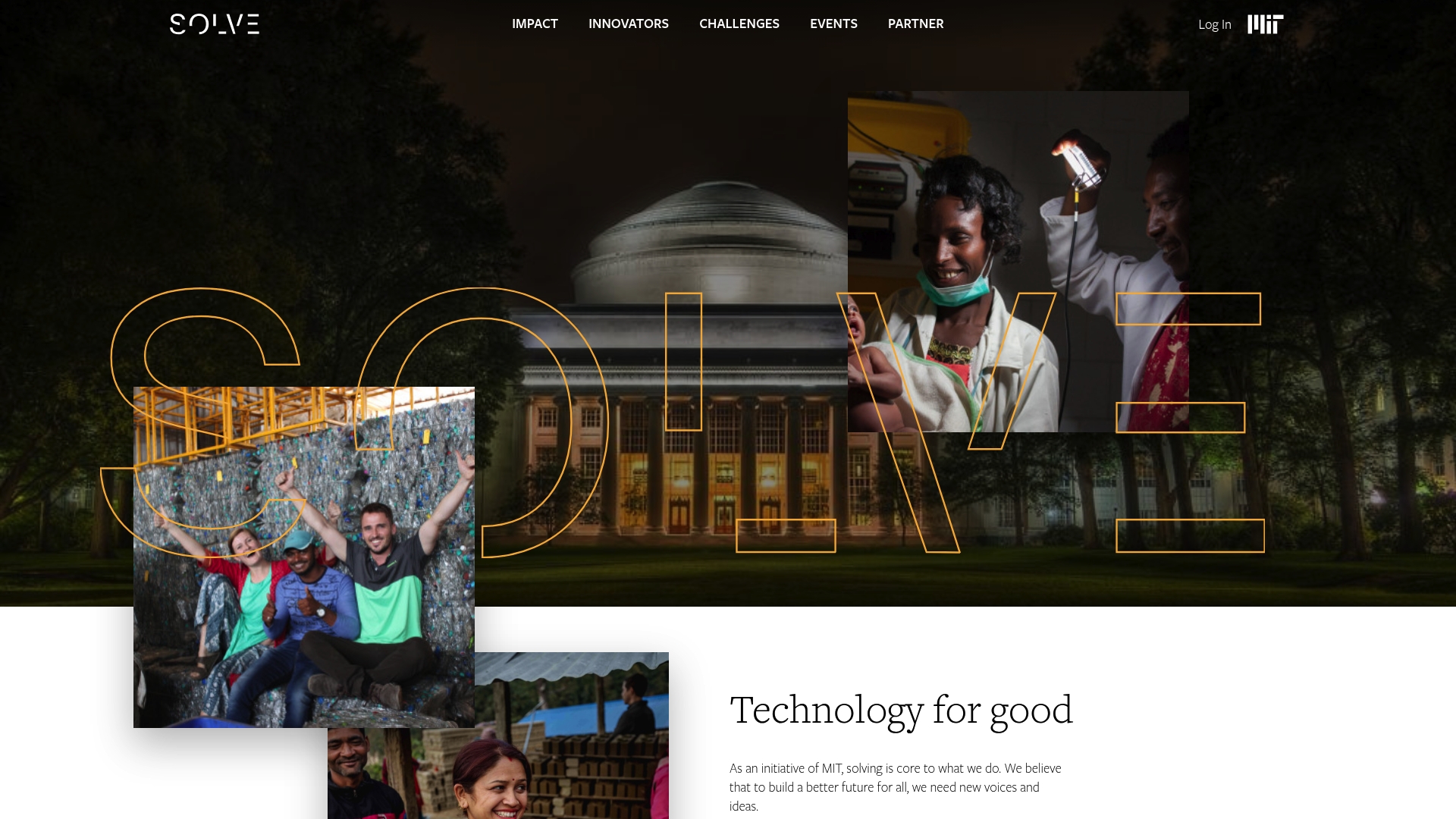
MIT Solve connects innovators to funding, partners, and visibility through open calls aimed at solving global problems with tech based solutions. It is strong for teams that want structured challenge support and access to a broad network of organizations.
Core Features
MIT Solve runs open calls that attract technology driven proposals across climate, health, learning, and other impact areas. It supplies funding and in kind resources, builds partnership pathways, and offers a customizable challenge process for organizations to launch and manage their own calls.
Pros
- Global Reach: MIT Solve supports innovators from multiple regions and impact areas, helping projects gain exposure beyond local networks.
- Funding and Resources: The platform pairs winners with monetary awards and in kind resources that help teams scale their solutions.
- Partnership Network: Solve facilitates collaboration by connecting teams to corporations, foundations, and community partners for mentorship and deployment.
- Structured Challenge Support: Organizations can use the platform to design, promote, and manage challenges with a reproducible process and expert guidance.
Cons
- Tech Focus May Exclude Non Tech Initiatives: The emphasis on technology driven solutions can make it harder for community led or low tech projects to compete on equal footing.
- Access Skewed to Certain Profiles: Applicants who lack experience with innovation ecosystems or formal proposals may find it difficult to gain traction within the Solve process.
- Platform Complexity for New Users: The structured nature and multiple partnership tracks introduce a learning curve for teams new to challenge based programs.
Who It’s For
Organizations, startups, and individual innovators developing technology driven responses to global challenges will find the platform most useful. Teams seeking external funding, partnership introductions, and a clear route to scale their solution should consider applying.
Unique Value Proposition
MIT Solve combines the credibility and convening power of the Massachusetts Institute of Technology with a repeatable challenge model that links winners to funders and deployment partners. That combination accelerates promising solutions from prototype to broader implementation.
Real World Use Case
A startup building an AI driven health tool applies to a Solve challenge focused on health and wins support. The team receives seed funding, mentorship from clinical partners, and introductions to regional NGOs that enable pilot deployment across multiple countries.
Pricing
Participation and solution submissions are free.
Website: https://solve.mit.edu
Educational Innovation Platforms Comparison
This table provides an overview of several educational and innovative challenge platforms, summarizing their features, target audiences, pricing, and unique aspects to aid decision-making.
| Platform | Core Features | Target Audience | Pricing | Unique Value Proposition |
|---|---|---|---|---|
| Mars Challenge | Global projects integrating sustainability | Youth, educators, institutions | Contact for pricing | Thinking through Mars framework to tackle Earth problems |
| Hult Prize | Annual $1 million USD startup competition | Students interested in scalable social ventures | Free participation | Combines funding, mentorship, and visibility for startups |
| Enactus | Network prioritizing student sustainability | Students, universities, educators | Contact for pricing | Focuses on leadership and community impact through projects |
| Clinton Foundation | Lead global initiatives in health, economy | Donors, institutions, global leaders | Nonprofit, donation-based | Structured programs integrating leadership and collaboration |
| Diamond Challenge | High school entrepreneurship competition | High school students, educators | Free participation | Prize funding and mentorship tailored for youth entrepreneurs |
| MIT Solve | Open calls for tech-driven solutions | Innovators, startups | Free participation | Links winners to funders and partners for scalable deployment |
Discover a Transformative Alternative to Hult Prize for Young Innovators
If you are seeking an immersive, global platform that empowers young people to tackle planetary challenges with innovative teamwork then Mars Challenge offers a compelling alternative to traditional student competitions. Unlike conventional startup contests that focus narrowly on entrepreneurship, Mars Challenge cultivates meta-skills, ethical intelligence, and systems thinking through diverse, team-based projects that prototype solutions for survival on both Mars and Earth. This unique method aligns closely with the ambition of Hult Prize participants who want meaningful, measurable impact tied to sustainability and real-world problem solving.
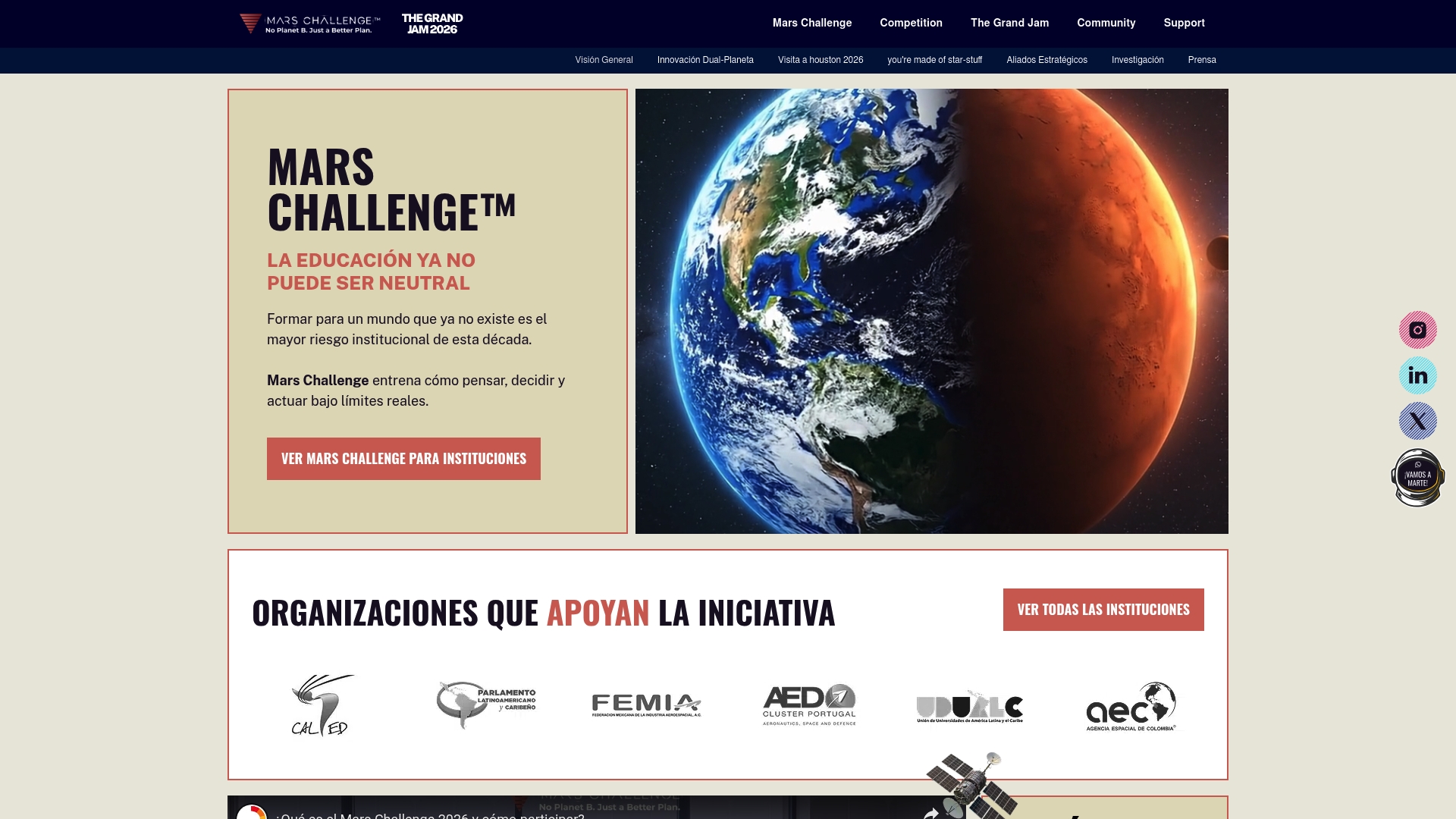
Join the global community of Zers aged 15 to 29 who are redefining what it means to learn, create, and lead in the age of complexity and AI. Immerse yourself in the Next Human Learning methodology and bring your ideas to life at The Grand Jam 2026 — an international expo that showcases bold solutions to Earth’s most urgent life-support system challenges. Get started today at Mars Challenge and explore more about this innovative program at Mars Challenge Website. Ready to step beyond traditional competitions? Visit Mars Challenge Official Site now and transform your impact on our shared future.
Frequently Asked Questions
What are some alternatives to Hult Prize for innovators in 2026?
Mars Challenge, Enactus, Diamond Challenge, and MIT Solve are notable alternatives that provide platforms for social entrepreneurship and innovation. Explore their specific offerings to find the best fit for your project goals.
How do I participate in the Mars Challenge?
To participate in the Mars Challenge, visit their website and register your team. Follow the outlined guidelines for project submission, and prepare to present your ideas at international expos.
What are the benefits of joining Enactus?
Joining Enactus offers access to an international network and the chance to work on sustainable projects that create measurable community impact. Engage with local teams to gain mentorship and develop leadership skills through hands-on experience.
Can I receive funding through the Diamond Challenge?
Yes, the Diamond Challenge provides prize funding for top teams implementing innovative solutions. After registering, focus on developing a strong project proposal to maximize your chances of winning funding.
How does MIT Solve support innovators?
MIT Solve connects innovators with funding, resources, and partnership opportunities to scale tech-driven solutions. Submit your proposal during their open calls to begin the process of securing support for your project.
Is there a participation fee for these alternatives?
Participation fees vary by platform, but many alternatives like Diamond Challenge and MIT Solve offer free entry. Check each platform’s website for specific details regarding costs and funding opportunities.