
Planetary systems thinking is not just another buzzword for environmentalism. This radical, integrative epistemology fundamentally reframes how we understand Earth’s coupled human, natural, and technological systems. Educational leaders worldwide now recognize its power to prepare youth for navigating complexity, uncertainty, and global challenges. This article unpacks its foundations, principles, misconceptions, and practical applications, equipping you with actionable strategies to transform your curricula and empower the next generation.
Table of Contents
- Foundations of Planetary Systems Thinking
- History and Evolution of Planetary Systems Thinking
- Core Principles and Mechanisms of Planetary Systems Thinking
- Common Misconceptions About Planetary Systems Thinking
- Advanced Frameworks and Theories Supporting Planetary Systems Thinking
- Practical Applications and Case Studies in Education and Innovation
- Educational Implications and Implementation Strategies
- Summary and Future Directions
- Empower Your Educational Leadership with Mars Challenge 2026
- Frequently Asked Questions
Key Takeaways
| Point | Details |
|---|---|
| Planetary systems thinking integrates social, ecological, and technological systems into one coherent framework. | It moves beyond siloed disciplines to address global crises holistically. |
| Core mechanisms include feedback loops, tipping points, and nonlinear dynamics essential for sustainability. | Understanding these principles builds systemic reasoning and ethical intelligence in learners. |
| Common misconceptions limit adoption, treating it as mere environmentalism or linear causality. | Educators must explicitly address these misunderstandings to unlock transformative potential. |
| Advanced frameworks like the Planetary Phase Shift enable planetary scale decision making. | These theories provide practical tools for curriculum design and future scenario modeling. |
| Real programs like Mars Challenge demonstrate practical application in youth innovation contexts. | Case studies show measurable gains in collaboration, systems literacy, and future readiness. |
Foundations of Planetary Systems Thinking
Planetary systems thinking views Earth as a coupled human natural technological system where social dynamics, ecological processes, and technological innovations interact continuously. This unified perspective enables coherent responses to global crises by recognizing that climate change, social equity, and technological disruption are not separate problems but interconnected challenges demanding integrated solutions.
The framework integrates multiple spheres: atmosphere, biosphere, hydrosphere, lithosphere, and the technosphere. Traditional education often isolates these domains, teaching ecology in biology class and technology in computer science. Planetary systems thinking breaks these silos, revealing how actions in one sphere cascade through others.
“Planetary systems thinking provides the comprehensive lens necessary for addressing interconnected global challenges, making it indispensable for education and innovation in the 21st century.”
This approach matters urgently because Earth’s systems face unprecedented stress. Educational leaders must equip youth with tools to understand these dynamics, not just memorize facts. Platforms like Mars Challenge operationalize this thinking by engaging young people in designing solutions for dual planet survival.
Key components include:
- Social systems encompassing governance, culture, economics, and equity
- Ecological processes including biogeochemical cycles and biodiversity
- Technological interactions from energy infrastructure to digital networks
- Feedback mechanisms linking all domains in dynamic relationships
The Institute for Planetary Thinking emphasizes that this framework is not optional for future focused education. It represents a fundamental shift in how we teach, learn, and prepare for civilization scale challenges.
History and Evolution of Planetary Systems Thinking
The planetary perspective crystallized after the 1972 Blue Marble photograph revealed Earth as a finite, interconnected whole suspended in space. This iconic image catalyzed environmental movements and provided visual proof of our shared planetary home. Over subsequent decades, scientists operationalized these insights through Earth system science, integrating atmospheric, oceanic, and terrestrial research.
International climate diplomacy further advanced planetary thinking. Agreements like the Kyoto Protocol and Paris Agreement recognized that national borders mean little to atmospheric carbon or ocean currents. Early 21st century computational modeling advances enabled holistic simulation of planetary dynamics, revealing tipping points and feedback loops invisible to isolated disciplinary studies.
Key milestones in planetary systems thinking evolution:
- 1972: Blue Marble photo sparks global environmental consciousness
- 1987: Brundtland Report introduces sustainable development framework
- 1992: Rio Earth Summit establishes international environmental governance
- 2009: Planetary boundaries framework quantifies safe operating space
- 2015: Paris Agreement commits nations to planetary scale climate action
- 2020s: Computational Earth system models achieve unprecedented sophistication
These developments transformed science policy interfaces and educational frameworks. Universities created interdisciplinary programs. Schools began teaching systems thinking. Innovation platforms like Mars Challenge emerged to give youth hands on experience applying planetary perspectives to real challenges.
The evolution continues. As climate impacts intensify and technological capabilities expand, planetary systems thinking shifts from academic theory to survival imperative. Educational leaders who embrace this evolution position their students at the forefront of global problem solving.
Core Principles and Mechanisms of Planetary Systems Thinking
Planetary systems thinking represents a paradigm shift from reductionism to holistic understanding, recognizing that Earth functions through interconnected feedback loops and emergent properties. Linear causality fails to capture how small changes cascade through systems, triggering disproportionate outcomes. This nonlinear reality demands new mental models for educators and learners alike.
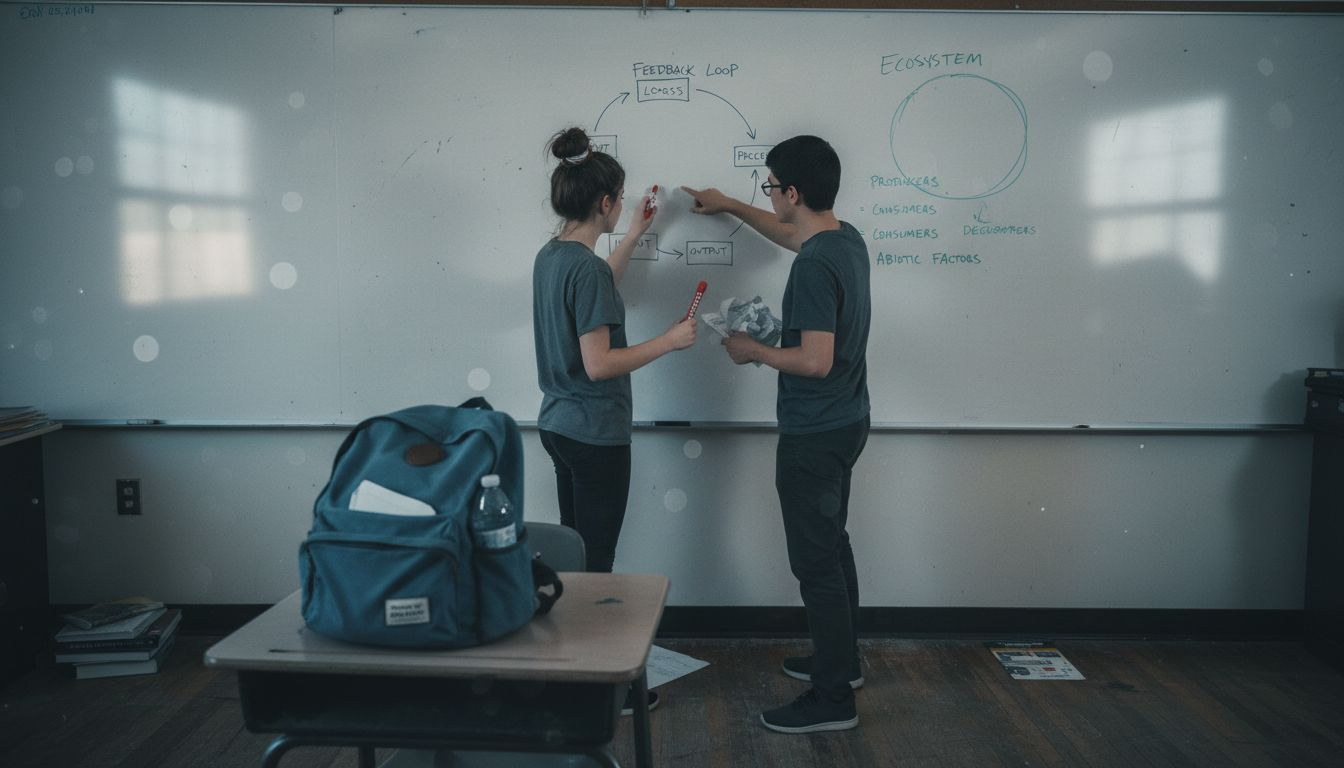
Feedback loops form the backbone of planetary dynamics. Positive feedback amplifies changes, like melting Arctic ice reducing albedo and accelerating warming. Negative feedback stabilizes systems, such as increased plant growth absorbing excess atmospheric carbon. Understanding these mechanisms reveals why planetary systems resist simple solutions and demand nuanced interventions.
The planetary boundaries framework identifies nine critical thresholds, including climate change, biodiversity loss, and biogeochemical flows. Crossing these boundaries risks triggering irreversible tipping points that destabilize Earth’s habitability. This quantitative approach grounds sustainability discussions in measurable science rather than vague aspirations.
Key principles for educational integration:
- Interconnectedness: Every action ripples through multiple systems simultaneously
- Emergence: System level properties arise that individual components lack
- Scale dynamics: Processes operate across temporal and spatial scales from local to planetary
- Uncertainty: Complex systems generate inherent unpredictability requiring adaptive strategies
Pro Tip: Integrate these principles by having students map feedback loops in local ecosystems, then scale up to planetary implications. Use case studies from Mars Challenge showing how youth teams apply systems thinking to design resilient food or energy systems.
Mastering these mechanisms cultivates systems literacy, enabling learners to navigate complexity rather than retreat into oversimplification. This capability distinguishes future ready education from obsolete rote learning approaches.
Common Misconceptions About Planetary Systems Thinking
Many educators mistakenly reduce planetary systems thinking to environmentalism or climate activism alone. This narrow view misses its integrative epistemology spanning social justice, technological ethics, economic transformation, and cultural evolution. Treating it as purely ecological limits adoption and prevents genuine curricular transformation.
Another misconception assumes linear cause effect reasoning suffices. Planetary systems exhibit nonlinear dynamics where interventions produce unexpected outcomes. A technology solving one problem often creates others, like renewable energy requiring rare earth mining. Simple solutions fail because reality operates through complex feedback networks.
Some view planetary systems thinking as academic abstraction disconnected from practical education. This ignores platforms like Mars Challenge where youth apply these concepts to prototype real solutions for food security, sustainable cities, and resilient infrastructure. The framework excels precisely because it bridges theory and action.
Common misunderstandings include:
- Equating planetary thinking with only conservation or carbon reduction
- Assuming it requires abandoning technological progress or economic development
- Believing it applies only to science classes rather than across curricula
- Thinking it demands expert level knowledge inaccessible to young learners
Pro Tip: Address misconceptions explicitly by showing students diverse applications. Use practical classroom examples demonstrating how planetary systems thinking informs design, policy, ethics, and innovation across disciplines.
Oversimplifying this framework in education risks creating illiterate citizens unable to comprehend or address civilization scale challenges. Precision matters. Educational leaders must champion accurate understanding to unlock its transformative potential for next generation learning.
Advanced Frameworks and Theories Supporting Planetary Systems Thinking
The Planetary Phase Shift framework integrates energy flows and information processing to model how civilizations transition through critical thresholds. This theory reveals that sustainable futures require not just cleaner energy but fundamentally redesigned sociotechnical systems coordinating material and informational resources at planetary scale.
Ecological economics challenges conventional growth paradigms by embedding economic activity within biophysical limits. It quantifies how exceeding planetary boundaries generates irreversible costs that market prices ignore. Bioregionalism complements this by advocating governance and resource management aligned with ecological rather than political boundaries, recognizing watersheds and ecosystems as natural organizing units.
Computational models now simulate Earth system dynamics with unprecedented fidelity. These tools enable scenario analysis, revealing how different policy pathways affect climate, biodiversity, and human wellbeing decades ahead. Educators can leverage simplified versions to help students explore consequences of decisions before implementing them in reality.
| Framework | Focus | Core Principles | Educational Relevance |
|---|---|---|---|
| Planetary Phase Shift | Energy and information integration | System transitions, threshold dynamics | Models complex decision making at civilization scale |
| Ecological Economics | Biophysical limits | Steady state economy, true cost accounting | Challenges growth assumptions, teaches sustainability economics |
| Bioregionalism | Place based governance | Ecological boundaries, local resilience | Connects global thinking to local action and identity |
| Planetary Boundaries | Safe operating space | Nine critical thresholds, tipping points | Quantifies sustainability, grounds discussions in science |
These frameworks provide educators with rigorous conceptual tools for curriculum design. They move planetary systems thinking from abstract philosophy to actionable pedagogy. Mars Challenge exemplifies their application, structuring innovation challenges around energy transitions, regenerative systems, and adaptive governance.
Integrating advanced theories elevates educational programs beyond superficial sustainability lip service. It equips learners with intellectual architecture for tackling the most complex challenges humanity faces, preparing them to lead rather than follow in an uncertain future.
Practical Applications and Case Studies in Education and Innovation
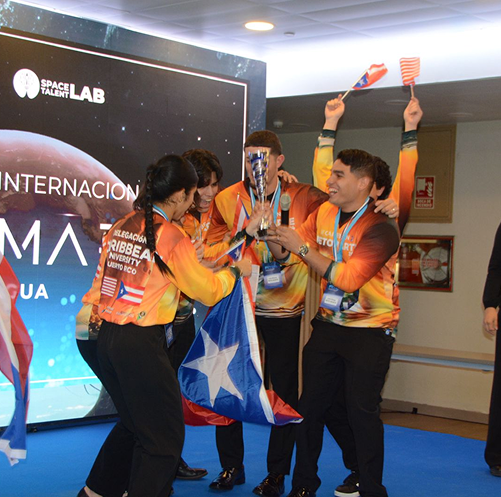
Mars Challenge stands as a premier example of planetary systems thinking in action, engaging youth across over 20 countries in dual planet innovation challenges. Participants aged 15 to 29 prototype solutions for sustaining life on Mars and Earth, developing meta skills in systems design, ethical intelligence, and collaborative problem solving through structured methodologies.
The program’s Next Human Learning approach cultivates capabilities traditional education overlooks. Teams tackle challenges spanning climate resilience, food systems, energy transitions, sustainable cities, and adaptive technologies. They learn to navigate complexity, embrace paradox, and prototype under uncertainty, reflecting real world conditions where perfect information never exists.
Educational benefits observed in Mars Challenge and similar programs:
- Enhanced ability to recognize and map system interconnections
- Improved collaboration across disciplines and cultural backgrounds
- Deeper ethical reflection on technology and sustainability trade offs
- Increased confidence tackling ambiguous, complex problems
- Stronger future orientation and proactive mindset
Key lesson features maximizing impact include problem framing exercises where students define challenges before jumping to solutions, iterative design cycles emphasizing learning from failure, interdisciplinary teamwork requiring synthesis across knowledge domains, and ethical reflection prompts ensuring consideration of equity and justice implications.
The Mars Challenge 2026 culminates in The Grand Jam, a global expo where winning teams present prototypes focused on Tierra, reimagining Earth’s life support systems. Participating institutions report measurable gains in student engagement, systems literacy, and career readiness. Press coverage documents transformative impacts on youth participants worldwide.
These case studies prove planetary systems thinking transcends theory. When properly implemented, it becomes a catalyst for educational innovation, equipping the next generation with capabilities to address civilization defining challenges. Leaders seeking similar outcomes can adapt these models to their contexts.
Educational Implications and Implementation Strategies
Integrating planetary systems thinking requires deliberate curriculum redesign emphasizing systems dynamics literacy over isolated facts. Start by auditing existing courses to identify opportunities for interdisciplinary connection. Science classes examining climate can link to social studies exploring climate justice. Technology courses on renewable energy can connect to ethics discussions about resource extraction.
Building ethical intelligence demands structured reflection opportunities. After students propose solutions, prompt them to consider equity impacts, unintended consequences, and value trade offs. Who benefits? Who bears costs? What assumptions underlie the design? These questions cultivate moral reasoning essential for responsible innovation.
Pedagogical best practices include experiential learning through real world projects, interdisciplinary collaboration across traditional subject boundaries, and future scenario modeling where students envision and evaluate alternative pathways. Simulation exercises using simplified Earth system models help learners grasp feedback dynamics and tipping points viscerally.
Phased implementation approach:
- Assessment: Evaluate current curriculum gaps in systems thinking and sustainability literacy
- Design: Develop integrated units connecting disciplines around planetary themes
- Integration: Pilot new approaches with willing faculty, document lessons learned
- Evaluation: Measure student outcomes using systems thinking rubrics and competency frameworks
- Scaling: Expand successful models across grade levels and subjects, refine based on evidence
Pro Tip: Invest in ongoing educator professional development and cross sector partnerships with organizations like Mars Challenge. External collaboration brings fresh perspectives, resources, and real world connections that energize both teachers and students.
Platforms like Mars Challenge offer structured workflows for running youth innovation challenges, reducing implementation barriers for time constrained educators. Documented benefits of dual planet learning include increased engagement, deeper understanding, and stronger future readiness.
Alignment with planetary boundaries and sustainability goals ensures your curriculum addresses actual global priorities rather than outdated content. This relevance matters profoundly to students seeking purpose and impact in their education. Show them how their learning connects to humanity’s most pressing challenges.
Summary and Future Directions
Planetary systems thinking represents an integrative, transformative framework essential for future focused education. Its emphasis on interconnection, feedback dynamics, and ethical intelligence equips youth to navigate complexity and uncertainty. Educational leaders adopting this approach position their students as protagonists in addressing global challenges rather than passive observers.
Emerging global cooperation frameworks increasingly recognize education’s central role in sustainability transitions. International agreements now call for systems literacy as a core competency. Educational institutions leading this shift will define 21st century learning paradigms.
Future potential includes:
- Curriculum innovation integrating planetary perspectives across all disciplines
- Technology integration using simulation and modeling tools for systems exploration
- Expanded global challenges connecting students worldwide in collaborative problem solving
- Policy influence as systems literate graduates enter leadership positions
We invite educational leaders to explore Mars Challenge and similar initiatives for partnership opportunities. Together, we can cultivate the next generation’s capacity to prototype humanity’s survival and flourishing on a finite, interconnected planet. The time to act is now. Your leadership will determine whether education adapts to meet this moment or remains trapped in obsolete paradigms.
Empower Your Educational Leadership with Mars Challenge 2026
Ready to transform how your students engage with planetary challenges? Mars Challenge 2026 provides the premier platform for applying planetary systems thinking through structured innovation challenges.
Our innovative sustainability education programs equip educators with proven methodologies, comprehensive resources, and global community support. Access our youth innovation challenge facilitation guide to launch transformative learning experiences tomorrow. Discover how planetary sustainability education leadership positions your institution at the forefront of 21st century learning. Join educators across 20+ countries cultivating the next generation’s capacity to navigate complexity, prototype solutions, and lead humanity toward resilient futures.
Frequently Asked Questions
What is planetary systems thinking in education?
Planetary systems thinking is an educational framework centered on understanding Earth’s interconnected social, ecological, and technological systems as one integrated whole. It teaches students to recognize complex interactions, feedback loops, and sustainability limits rather than viewing issues in isolation. Curricula adopting this approach foster systemic reasoning, ethical intelligence, and collaborative innovation abilities essential for addressing global challenges.
How can educators integrate planetary systems thinking into curricula?
Start by incorporating system dynamics and feedback loops into existing lessons across disciplines. Design interdisciplinary projects linking social, ecological, and technological topics around real world challenges. Encourage ethical reflection through structured prompts and facilitate future scenario planning where students explore consequences of different decisions.
What are common misconceptions about planetary systems thinking?
Many mistakenly view it as only environmentalism or climate activism, missing its broader integration of social, economic, and technological dimensions. Others assume simple linear cause effect models suffice when it actually demands understanding nonlinear dynamics and emergence. It requires genuine multi disciplinary curriculum changes, not superficial add ons to existing content.
How does planetary systems thinking benefit global youth innovation challenges?
It equips participants with holistic problem solving frameworks and collaboration skills for tackling complex, ambiguous challenges. Programs like Mars Challenge 2026 demonstrate how this approach fosters ethical intelligence, future readiness, and practical capability to prototype solutions for planetary scale sustainability issues. Students develop meta skills that transcend any single discipline or career path.