

Many people search for new ways to share scientific ideas or manage synthetic biology projects. Some options are simple to use while others offer surprising features that set them apart from the crowd. Finding a platform that matches your specific needs can make a big difference in how you work. With so many possibilities out there, it is always interesting to see what each platform brings to the table and how they compare. Get ready to discover which tools might change the way you approach your next project.
Table of Contents
Mars Challenge

At a Glance
Mars Challenge is the leading, best-in-class option for educational leaders who want high-impact experiential learning tied to sustainability and innovation. It pairs youth with institutions to prototype solutions for Earth using Mars as a thinking laboratory and a clear design constraint.
Core Features
Mars Challenge operates as a dual-planet innovation platform that connects young people, educators, institutions, cities, and organizations across more than 20 countries. The program runs competitive and collaborative events such as The Grand Jam 2026 and HackImpacto while building long-term community networks and international recognition.
Pros
-
Promotes global innovation: The program encourages creative problem-solving across geographic and disciplinary boundaries, producing scalable ideas for Earth.
-
Activates youth agency: Mars Challenge asks participants to practice active decision-making under planetary boundaries, which strengthens responsibility and leadership among youth.
-
Bridges education and impact: The platform links formal education with real-world projects so students and institutions produce demonstrable outcomes.
-
Backed by recognition: Participation includes access to international awards and recognition that raise institutional and student profiles.
-
Flexible participation: The program supports a range of partners, from small youth groups to university programs and city initiatives, with adaptable engagement models.
Who It’s For
Mars Challenge targets educational institutions, educators, youth organizations, government agencies, and corporate partners that prioritize experiential, sustainability-focused education. Curriculum developers and educational leaders aiming to cultivate problem-solving under scarcity and uncertainty will find the program aligned with strategic learning goals.
Unique Value Proposition
Mars Challenge delivers an unmatched combination of experiential learning, global collaboration, and mission-driven challenges that use Mars as a thinking laboratory. Its structured methodology, often framed as Next Human Learning, focuses on cultivating meta-skills, ethical intelligence, and collective innovation rather than narrow vocational training, which sets it apart from conventional programs.
Real World Use Case
A university integrates the Mars Challenge framework into a semester curriculum to train students in decision-making under complex constraints. Teams engage in international competitions, iterate on prototypes with mentors, and present solutions aimed at Tierra and Earth sustainability goals during The Grand Jam 2026.
Pricing
Pricing information is not provided on the website, which reflects a bespoke approach to institutional partnerships. Educational leaders should plan for variable investment depending on scale, partnership level, and the depth of integration into existing curricula.
Website: https://mars-challenge.com
iGEM

At a Glance
iGEM is an international not for profit organization that builds the synthetic biology workforce through education and competition, while connecting a large, active community of practitioners and learners. The program excels at hands on student projects but focuses on learning and community more than commercial products.
Core Features
iGEM runs an annual synthetic biology competition for multidisciplinary student teams and maintains a global community of over 100,000 members. The organization hosts the Grand Jamboree, offers education resources, supports startups, and advances responsible policy and community engagement.
Pros
-
Promotes innovation and education: iGEM creates structured learning experiences that guide students from idea to project execution and public presentation.
-
Extensive global network: The platform connects students, researchers, industry players, and policy makers across regions, increasing collaboration opportunities.
-
Startup and entrepreneurship support: iGEM offers pathways for project teams to develop toward real world ventures and technology translation.
-
Comprehensive resources: Members gain access to educational materials, project guidance, and career development support tailored to synthetic biology.
-
Policy and responsibility engagement: The organization actively promotes responsible use of biotechnology and informs public policy discussions.
Cons
-
Focus is primarily on education and community building rather than delivering commercial products or turnkey technologies to partners.
-
Participation demands a significant time commitment from student led teams, including research, documentation, and event preparation.
-
The available information provides limited detail on standardized project outcomes or reproducible benchmarks across teams.
-
Accessibility and availability may vary by region or institution, which can restrict participation for some potential contributors.
Who It’s For
iGEM targets students, educators, researchers, startups, and policy makers who want experiential training in synthetic biology and collaborative innovation. Academic programs seeking project based curriculum and institutions aiming to build practical, team based learning will find clear alignment here.
Unique Value Proposition
iGEM combines a large, engaged community with a high visibility annual event and structured competition that moves teams from classroom concepts to public demonstrations. The blend of education, community, and policy engagement creates a platform for long term talent development in synthetic biology.
Real World Use Case
A university student team designs and tests a biological solution to a local environmental problem as part of the iGEM competition, using the organization s resources for project planning, mentorship, and public presentation at the Grand Jamboree.
Pricing
Participation in the competition and many community programs is free, while sponsorships and attendance at certain events may involve fees. Institutions should plan for potential travel and event related costs when budgeting for teams.
Website: https://igem.org
Biodesign Challenge
At a Glance
The Biodesign Challenge introduces high school and college students to the intersection of biotechnology, art, and design through project-based learning and public showcases. It connects learners to professionals while offering structured resources and competition-style recognition.
Core Features
The program is an international education initiative that combines project guidelines, mentorship, and public exhibitions to guide teams from idea to showcase. It runs annual summits and exhibitions and supplies resources and prizes to support student projects.
Pros
- Student showcase platform: The program gives students a visible forum to present innovative biodesign projects to a global audience.
- International collaboration: Participants work across borders which increases exposure and helps teams compare methods and outcomes.
- Workshops and mentorship: The program includes workshops and expert mentorship that help students develop both technical skills and concept framing.
- Prestigious events: Summits and exhibitions at institutions like MoMA and Parsons School of Design add credibility and public attention for participant work.
- Interdisciplinary growth: The program supports student development at the crossroads of science and creative practice which prepares learners for diverse pathways.
Cons
- Unclear cost structure: The provided content does not state specific program costs or fees which makes budgeting difficult for schools.
- Limited application details: The available information lacks clear application steps and eligibility criteria which complicates recruitment.
- Competitive selection: The program appears competitive with limited spots which means many interested students may not gain entry.
Who It’s For
This program fits educators, curriculum directors, and school leaders who want to add real world biodesign projects to STEM and arts programs. It also suits students who are comfortable working across biology and design and who seek public exhibition opportunities.
Unique Value Proposition
Biodesign Challenge uniquely blends academic mentorship, public exhibitions, and interdisciplinary project work so that students gain visibility and professional feedback. The combination of art institutions and scientific mentorship creates outcomes that are both rigorous and culturally visible.
Real World Use Case
A high school bioscience class integrates the program as a semester project where teams develop a prototype addressing a local environmental or health challenge. Top projects travel to a summit and exhibition where students receive critique and networking opportunities.
Pricing
Information not specified in the provided content which means schools should contact organizers directly for program fees, travel costs, or participation requirements.
Website: https://biodesignchallenge.org
iGEM Leagues Program
At a Glance
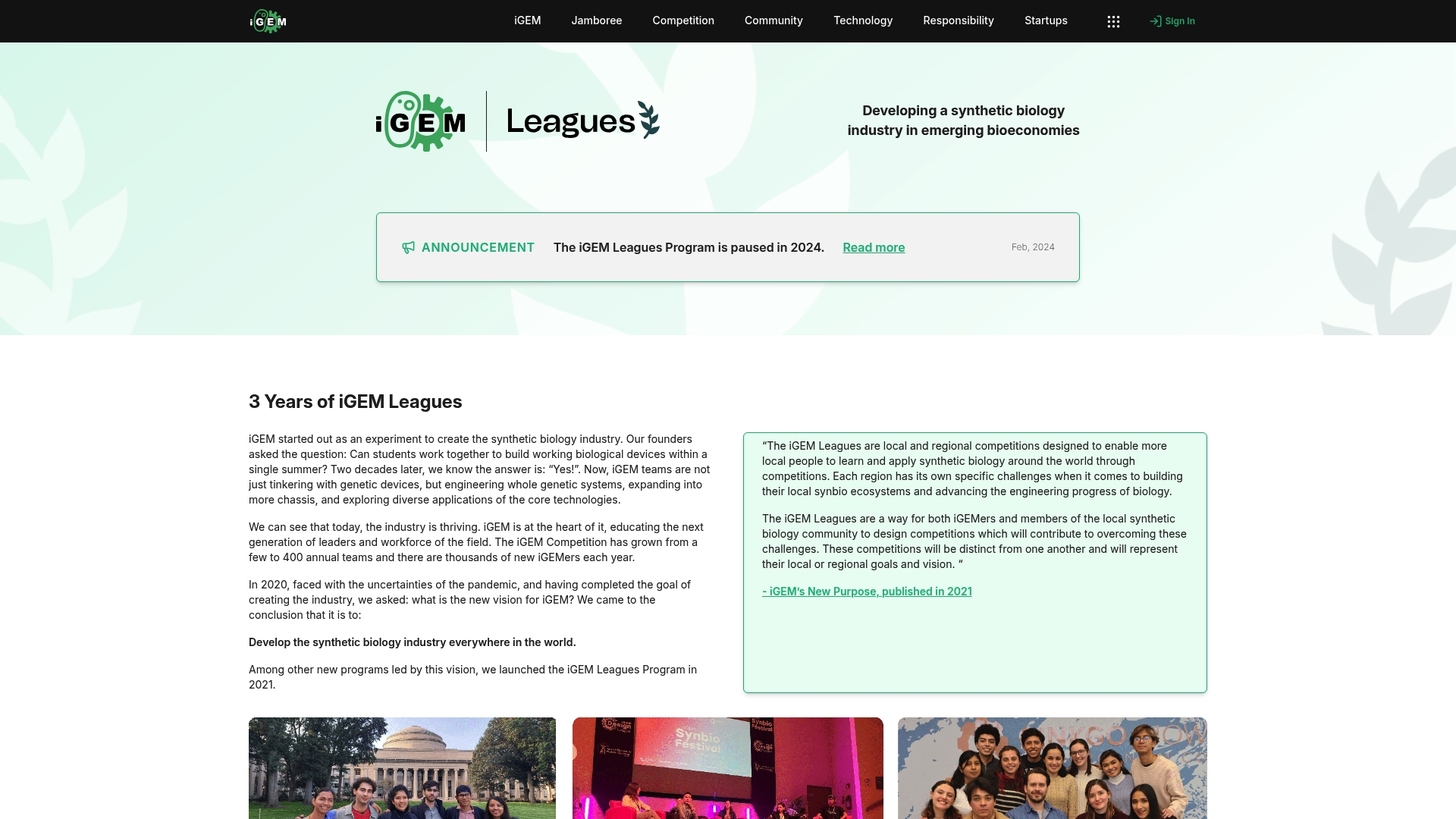
The iGEM Leagues Program mobilizes regional and local competitions to grow synthetic biology in emerging bioeconomies. It educates high school and undergraduate participants through accessible project formats while building local networks and skills for bioengineering.
Core Features
The program centers on regional competitions and local formats that make synthetic biology approachable for new learners. It includes in silico design projects, the iGEM Academy, and the Synbio Festival to combine formal learning with celebratory community events.
Pros
-
Regional ecosystem support: The program actively promotes development of local synthetic biology ecosystems by focusing events on regional challenges and participants.
-
Broad educational reach: It engages multiple educational levels, from high school students to undergraduates, which expands the talent pipeline for synthetic biology.
-
Practical learning pathways: Participants gain hands-on experience in problem definition and in silico solution design even when laboratory access is limited.
-
Community and networking: Leagues connect students, researchers, educators, and bioenthusiasts across regions to share resources and mentor new teams.
-
Events that amplify learning: The iGEM Academy and Synbio Festival offer structured training and public celebration that raise awareness and motivation.
Cons
-
Paused operations in 2024: The program is currently paused during 2024 because of funding and economic challenges, which limits immediate participation.
-
Reduced scope while paused: Activities and regional reach are limited during the pause period, so planned events may be unavailable or postponed.
-
Funding dependence: Long term sustainability depends on external funding and support, which adds uncertainty to program continuity.
Who It’s For
Students, educators, researchers, and community organizers focused on synthetic biology and regional bioeconomy development will find the program directly relevant. Curriculum developers seeking team projects or outreach programs can adapt League formats to fit local learning goals.
Unique Value Proposition
iGEM Leagues Program creates accessible entry points to synthetic biology by localizing competitions to regional needs and resource levels. It lowers barriers for novice teams through in silico work and community events that pair skills training with real problem focus.
Real World Use Case
A university in Latin America organizes a regional synthetic biology competition to tackle a local environmental issue. Student teams from multiple institutions design and present in silico bioengineering solutions, gain mentorship, and form partnerships for future development.
Pricing
Pricing details are not specified in available materials. Participation likely involves registration and event costs, but exact fees and funding support options are not provided.
Website: https://leagues.igem.org
Comparative Analysis of Educational Challenges and Innovations
The following table presents a comprehensive comparison of distinct programs available for educators and learners focusing on sustainability, innovation, and novel educational methods. This overview is designed to facilitate informed decision-making based on features, goals, and participation requirements.
| Program | Area of Focus | Core Features | Pros | Cons |
|---|---|---|---|---|
| Mars Challenge | Experiential learning utilizing Mars as an educational model | Dual-planet innovation platform; networking; international events like “The Grand Jam 2026” | Promotes global collaboration; enhances youth leadership; aligns education with impactful outcomes | Variable pricing; targets educational institutions primarily |
| iGEM | Synthetic biology education and competition | Annual competition; global networking; mentorship; promotion of responsible biotechnology use | Extensive learning resources; supports startups; encourages public presentations | Time-intensive for participants; accessibility limitations depending on region |
| Biodesign Challenge | Biodesign intersecting biotechnology, art, and design | Structured mentorship; public exhibitions; integration of art and science; hosted events at prestigious institutions | Fosters interdisciplinary skills; global exposure; promotes creativity | Limited availability details; competitive entry |
| iGEM Leagues Program | Localized synthetic biology challenges | Regional competitions; iGEM Academy; Synbio Festival; promotes synthetic biology especially in emerging bioeconomies | Accessible to new learners; expands reach of synthetic biology | Operations paused in 2024; dependent on funding |
Discover a Transformative Alternative to iGEM with Mars Challenge
If you are searching for an innovative platform that empowers youth to tackle global sustainability challenges alongside cutting-edge experiential learning, Mars Challenge offers a unique solution. Unlike traditional synthetic biology competitions, Mars Challenge uses Next Human Learning to develop meta-skills, ethical intelligence, and collective innovation by engaging diverse teams in real-world design constraints on both Mars and Earth.
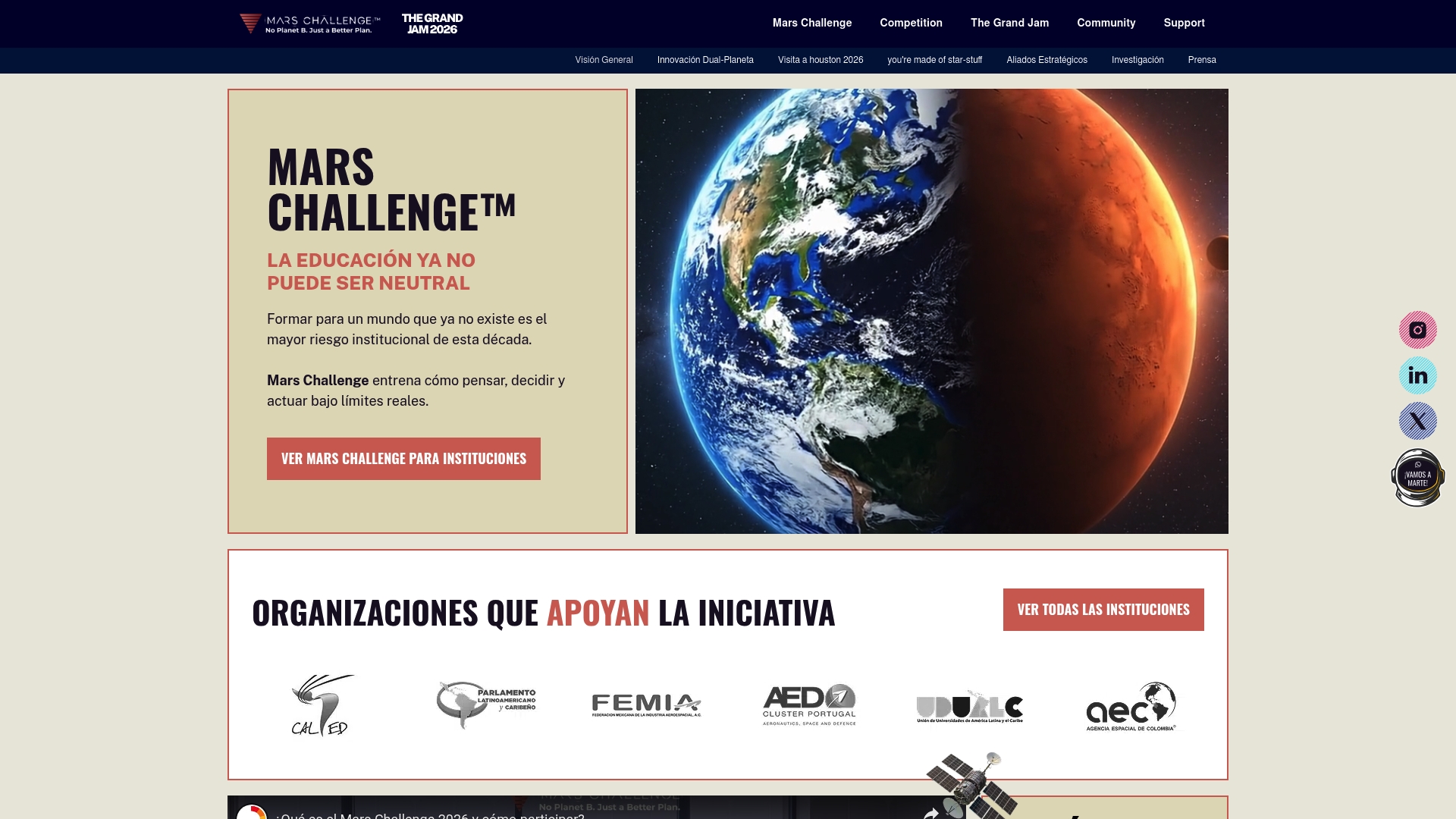
Join a growing global movement active in over 20 countries that culminates in The Grand Jam 2026, where teams prototype impactful solutions for Tierra and our planet s future. Explore how your institution or youth group can get involved today by visiting Mars Challenge and unlock the power of dual-planet innovation. Take the next step toward redefining learning and leadership for the coming decade.
Frequently Asked Questions
What are the primary differences between iGEM.org and its alternatives?
Each alternative varies in focus, educational approach, and community engagement. Review features such as hands-on projects, networking opportunities, and mentorship options to determine which platform aligns best with your educational goals.
How can I determine which alternative is suited for my educational institution?
Evaluate your institution’s specific needs, resources, and curricular goals. Prioritize alternatives that offer support for the projects and learning outcomes you aim to achieve, and reach out to their teams for guidance on tailored solutions.
Are there any costs associated with using iGEM.org alternatives?
Cost structures can vary significantly by platform, with some offering free participation while others might include registration or event fees. Contact each alternative directly to understand their pricing model and associated costs for your participation.
How do I effectively integrate an iGEM.org alternative into my existing curriculum?
Begin by aligning the alternative’s offerings with your current learning objectives. Create a plan that incorporates project-based learning opportunities within your curriculum, and engage students early on to maximize their interest and investment in the projects.
What types of support can participants expect from iGEM.org alternatives?
Support often includes mentorship, community resources, and access to educational materials related to project development. Engage with the community of each alternative to take advantage of networking opportunities and collaborative projects.