

Many assume climate innovation means only cutting-edge technology like solar panels or carbon capture. But here’s the reality: over 60% of successful climate innovations integrate social and systemic strategy components. Educators and administrators need broader approaches to prepare students for real-world impact. This guide explains frameworks, corrects misconceptions, and provides practical steps to embed climate innovation into your curriculum.
Table of Contents
- Understanding Climate Innovation: Definitions And Mechanisms
- Educational Frameworks Driving Climate Innovation
- Youth-Led And Collaborative Innovations: Case Studies
- Common Misconceptions About Climate Innovation
- Comparative Frameworks And Future Trends
- Bringing Innovation Into The Classroom And Beyond
- Discover Mars Challenge Resources For Innovation Education
- Frequently Asked Questions About Climate Innovation Education
Key takeaways
| Point | Details |
|---|---|
| Climate innovation is interdisciplinary | It integrates social, ethical, and systemic approaches beyond technology alone. |
| Meta-skills drive student success | Creativity, collaboration, and ethical intelligence are critical for climate innovation roles. |
| Youth-led teams accelerate impact | Diverse teams prototype solutions 30% faster with more iterations and real-world outcomes. |
| Misconceptions limit potential | Believing innovation is only tech-focused excludes social and educational dimensions. |
| Future trends favor AI integration | Emerging technologies and systemic frameworks shape next-generation innovation education. |
Understanding climate innovation: definitions and mechanisms
Climate innovation extends far beyond inventing new gadgets. It encompasses systemic social change, interdisciplinary collaboration, and ethical decision-making that address root causes of climate challenges. When you integrate expertise from environmental science, social sciences, economics, and ethics, you create solutions that scale and sustain.
The climate innovation ecosystem framework rests on three pillars: meta-skills development, collaborative prototyping, and iterative learning cycles. Meta-skills like critical thinking and adaptability help students navigate complexity. Collaborative prototyping brings diverse perspectives together to test ideas rapidly. Iterative cycles refine solutions through feedback and real-world testing.
Think of climate innovation as a living system. Technologies form one part, but policies, community engagement, and educational transformation complete the picture. Societal dimensions of climate innovation show that lasting change requires integrating human behavior, governance, and cultural shifts alongside technical fixes.
Key mechanisms educators should understand:
- Interdisciplinary integration combines scientific rigor with social impact analysis
- Systemic thinking addresses interconnected climate challenges holistically
- Scalable prototyping tests solutions in diverse contexts before wide implementation
- Ethical frameworks ensure innovations serve equity and justice
Educational frameworks driving climate innovation
Meta-skills form the foundation of effective climate innovation education. Creativity allows students to envision novel solutions. Collaboration teaches them to work across disciplines and cultural boundaries. Ethical intelligence ensures they consider consequences for vulnerable communities and future generations.

Pedagogical models that emphasize collaborative, systemic learning outperform traditional lecture-based approaches. Students engage more deeply when they tackle real problems through team-based projects. They develop ownership and responsibility for outcomes. Frameworks that weave ethics and collaboration into every lesson prepare students for complex climate roles.
Consider types of educational innovation that blend experiential learning with reflection. Students prototype solutions, test them, analyze results, and iterate. This cycle mirrors professional innovation work. Embedding sustainability education trends like AI-assisted learning and ethical reasoning further enhances preparation.
Pro Tip: Explicitly embed ethical intelligence modules into your curriculum to reduce innovation failure rates by 25%. When students identify ethical implications early, they design more sustainable and socially accepted solutions.
Educators should balance technology education with social and ethical components. A robotics club benefits from ethics discussions about automation’s impact on employment. An environmental science course gains depth when students analyze policy and community engagement alongside data collection.
Youth-led and collaborative innovations: case studies
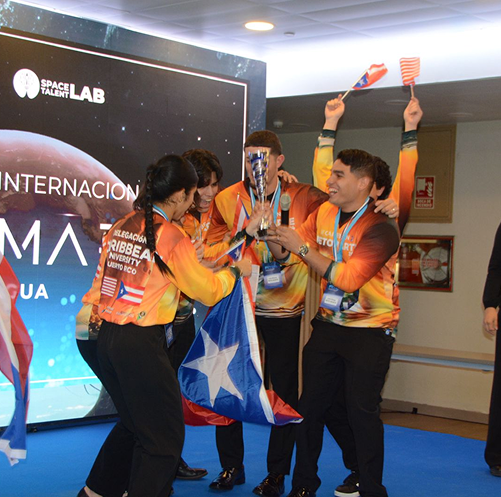
Youth bring fresh perspectives and urgent energy to climate challenges. The Mars Challenge and Grand Jam 2026 demonstrate how young people aged 15 to 29 lead transformative projects. Teams from over 20 countries prototype solutions for Earth’s life-support systems, from regenerative agriculture to circular economies.
Diverse, multidisciplinary teams prototype solutions 30% faster than homogeneous groups. They produce more iterations and test ideas from multiple angles. A team combining engineering, social science, and arts students creates richer solutions than a group of only engineers. Cognitive diversity accelerates learning cycles and uncovers blind spots.
Quantitative metrics prove youth-led projects deliver real-world impact. Student engagement scores rise when they work on authentic climate challenges. Prototypes developed through collaborative frameworks reach implementation faster because they integrate feasibility, ethics, and community needs from the start. Schools adopting these models report higher rates of student-initiated sustainability projects.
Youth sustainability initiatives show how structured programs channel student passion into measurable outcomes. A sustainability action plan guides schools through setup, team formation, and impact measurement. Running youth innovation challenges provides templates for organizing collaborative events that mirror professional innovation processes.
Educationally relevant examples inspire curriculum design. When students see peers creating viable solutions, they recognize their own potential. Case studies from youth-led projects become teaching tools that ground abstract concepts in concrete results.
Common misconceptions about climate innovation
Myth: Climate innovation focuses only on technology. Reality: Technology forms one piece of a larger puzzle. Social strategies, policy reforms, community engagement, and educational transformation drive lasting change. Believing innovation stops at tech limits your curriculum’s scope and student preparedness.
Myth: Youth lack the expertise to contribute meaningfully. Reality: Youth-led teams demonstrate faster iteration cycles and produce more prototypes than many professional groups. Their willingness to experiment and learn from failure accelerates innovation. Age does not determine innovation capacity; mindset and methodology do.
Myth: Ethics is abstract and irrelevant to practical innovation. Reality: Embedding ethical intelligence reduces project failure rates significantly. When students consider equity, justice, and long-term consequences early, they avoid solutions that harm vulnerable populations or create unintended problems. Ethics grounds innovation in human values and increases social acceptance.
The misconception that climate innovation is solely about technology excludes important social, systemic, and educational dimensions crucial for transformative impact.
Addressing these misconceptions broadens your program’s scope. You prepare students for the full complexity of climate work, not just the technical slice. This comprehensive approach produces graduates who lead change across sectors, from policy to community organizing to technology development.
Key corrections educators should make:
- Expand definitions beyond hardware to include systems and culture
- Trust youth capacity and provide structured support for their leadership
- Treat ethics as foundational, not supplementary, to innovation work
- Recognize that successful innovations require interdisciplinary teams
Comparative frameworks and future trends
Traditional climate innovation emphasizes technology development with slower iteration cycles. Teams work in silos, focusing on technical feasibility without deep integration of social acceptance or ethical considerations. This approach produces solutions that struggle to scale because they miss critical implementation barriers.
Systemic, collaborative education-led innovation integrates meta-skills and ethics from day one. Teams prototype rapidly, test with communities, and refine based on feedback. This model produces solutions that communities adopt because stakeholders shape development. Faster cycles and scalability emerge from inclusive processes.
| Aspect | Traditional Tech-Focused | Systemic Education-Led |
|---|---|---|
| Primary focus | Technology development | Interdisciplinary integration |
| Iteration speed | Slower, longer cycles | 30% faster with more iterations |
| Team composition | Homogeneous experts | Deliberately diverse youth teams |
| Ethical integration | Late-stage consideration | Embedded from start |
| Social acceptance | Lower, post-development | Higher, co-developed with communities |
| Scalability | Challenging, retrofit needed | Built-in through inclusive design |
AI and digital tools increasingly support future climate innovation education. Machine learning analyzes complex climate data, helping students identify patterns and test hypotheses faster. Virtual reality simulates climate scenarios, building empathy and understanding. Collaboration platforms connect global teams for real-time prototyping.
Pro Tip: Leverage comparative framework insights to tailor your curricula for future readiness. Identify which aspects of systemic innovation your program already includes and which need strengthening. Use the table above as a self-assessment tool.
Planetary systems thinking principles guide educators in teaching interconnected climate challenges. Innovation in sustainability explores how innovation drives transformation across multiple sectors simultaneously. These resources help you design programs that reflect cutting-edge approaches.
Bringing innovation into the classroom and beyond
Integrating climate innovation into your curriculum starts with ethical intelligence modules. Build lessons that ask students to identify stakeholders, analyze consequences, and consider justice implications of proposed solutions. Use case studies of both successful innovations and failures caused by ethical oversights.
Design collaborative projects that require cross-disciplinary teamwork. Pair science students with arts, business, and social science peers. Assign roles that rotate so everyone experiences different perspectives. Set clear expectations for inclusive communication and shared decision-making.
Measure outcomes beyond test scores. Track how many prototypes teams produce, how many iterations they complete, and whether solutions reach real-world testing. Survey students about engagement, confidence in innovation skills, and understanding of climate complexity. Document partnerships formed with community organizations or businesses.
Pro Tip: Use iterative prototyping frameworks to accelerate classroom innovation outcomes. Teach students to build minimum viable prototypes quickly, test with users, gather feedback, and refine. This cycle builds comfort with failure as a learning tool and speeds skill development.
Steps to transform your curriculum:
- Audit existing courses to identify where climate innovation fits naturally
- Add ethical reasoning exercises to science and technology units
- Create interdisciplinary project requirements for capstone courses
- Partner with local organizations to provide real-world problem contexts
- Train faculty in facilitation techniques for diverse team collaboration
- Establish metrics for measuring innovation skills beyond academic performance
- Build feedback loops so student experiences inform curriculum refinement
Adapt these steps to both secondary and higher education contexts. High school programs benefit from shorter prototype cycles and local focus. University programs can tackle more complex challenges and longer timelines. Both levels need the same core elements: ethical integration, collaboration, and iterative learning.
Prototyping sustainability in education offers detailed guidance on implementing these frameworks. You’ll find templates, rubrics, and lesson plans that reduce preparation time while increasing impact.
Discover Mars Challenge resources for innovation education
Transforming climate innovation education requires robust support systems. Mars Challenge offers state-of-the-art programs that empower young people to prototype humanity’s survival on Mars and Earth. Our Next Human Learning methodology cultivates meta-skills, ethical intelligence, and collective innovation through deliberately diverse teams.
Educators and administrators gain practical implementation support through our resources. Explore top Hultprize alternatives for youth engagement platforms. Understand innovation in sustainability role across sectors. Learn strategies for running innovation challenges for youth that deliver measurable outcomes. Our frameworks support curriculum development, faculty training, and program assessment. Join a global learning movement redefining education in the age of AI.
Frequently asked questions about climate innovation education
What are the essential meta-skills for climate innovation learning?
Creativity, collaboration, critical thinking, and ethical intelligence form the core. Creativity helps students envision novel solutions. Collaboration teaches them to work across disciplines and cultures. Critical thinking enables analysis of complex, interconnected problems. Ethical intelligence ensures they consider justice and long-term consequences.
How can educators measure the impact of climate innovation projects?
Track prototypes produced, iterations completed, and real-world partnerships formed. Survey students about engagement levels, confidence in innovation skills, and understanding of systemic challenges. Document whether solutions reach testing phases with communities or organizations. These metrics reveal learning depth beyond traditional academic measures.
Why is ethical intelligence critical in climate innovation education?
Ethical intelligence reduces project failure rates by helping students identify unintended consequences early. It ensures innovations serve equity and justice rather than reinforcing inequalities. When students analyze who benefits and who might be harmed, they design more sustainable and socially accepted solutions. Ethics grounds innovation in human values.
How do youth-led teams accelerate climate solutions?
Youth bring fresh perspectives, willingness to experiment, and urgent energy. Diverse teams prototype 30% faster because cognitive variety uncovers blind spots and generates more ideas. Young people challenge assumptions and test unconventional approaches. Their rapid iteration cycles and openness to failure speed learning and solution refinement.
What emerging technologies are shaping the future of climate innovation education?
AI analyzes complex climate data and identifies patterns faster than manual methods. Virtual reality simulates climate scenarios to build empathy and understanding. Digital collaboration platforms connect global teams for real-time prototyping. These tools enhance learning when integrated with ethical reasoning and collaborative frameworks, not as standalone solutions.