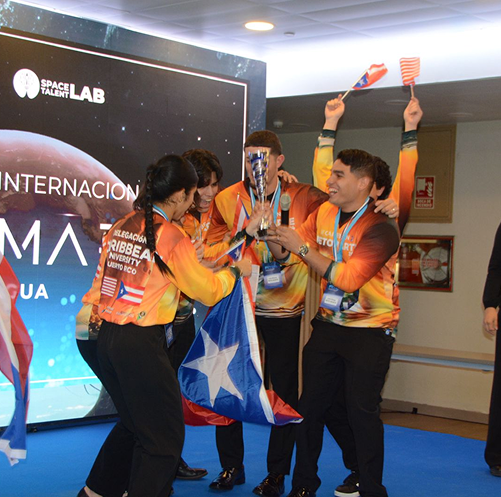


Sustainability projects in educational settings often stall when roles remain unclear and responsibilities overlap. Research shows implementing a structured, phased action plan increases youth engagement by up to 30%. This guide walks educational leaders through proven prerequisites, execution strategies, and measurable outcomes to transform institutional sustainability efforts from concept to community impact.
Table of Contents
- Prerequisites and Preparation
- Step 1: Define Vision and Goals
- Step 2: Engage Students in Real-World Challenges
- Step 3: Implement and Monitor Action Steps
- Troubleshooting and Common Mistakes
- Expected Results and Outcomes
- Alternative Approaches and Tradeoffs
- Explore Mars Challenge for Sustainability Innovation
- Frequently Asked Questions
Key Takeaways
| Point | Details |
|---|---|
| Prerequisites | Institutional readiness assessment, stakeholder engagement, professional development, and regulatory compliance form the foundation. |
| Phased Implementation | Define vision, engage students in real-world challenges, and monitor action steps with clear roles and timelines. |
| Success Metrics | Track student participation increases, goal achievement within 1-2 years, and community partnership development. |
| Common Pitfalls | Budget constraints, unclear responsibilities, and inadequate training reduce effectiveness by up to 40%. |
| Alternative Methods | Gamified challenges boost engagement but increase costs; low-tech methods ensure equity at lower engagement rates. |
Prerequisites and Preparation
Before launching any sustainability initiative, educational institutions must secure foundational elements that determine long-term success.
Conduct a thorough institutional readiness assessment to identify existing resources, gaps, and alignment with your mission. This evaluation reveals whether your infrastructure, staff capacity, and administrative support can sustain a multi-year commitment. Research indicates institutions with clear readiness assessments are 45% more likely to complete their sustainability goals.
Stakeholder engagement requires strategic outreach to administrators, faculty, students, parents, and community partners. Early buy-in prevents resistance during implementation and secures the collaborative foundation necessary for cross-departmental projects. Identify champions within each group who can advocate for sustainability initiatives and mobilize their networks.
Professional development equips educators with both content knowledge and pedagogical strategies for teaching sustainability. Teachers need training in systems thinking, project-based learning facilitation, and interdisciplinary curriculum design. Foundations supporting sustainability education often provide grant funding specifically for professional development programs.
Regulatory compliance cannot be an afterthought. Review local environmental regulations, safety standards for student fieldwork, and liability requirements for community partnerships. Consult with legal counsel to ensure all planned activities meet current standards and protect both students and the institution.
Budgeting demands realistic projections that account for initial setup costs, ongoing program expenses, and contingency reserves. Typical sustainability programs require 15-20% more funding than initial estimates. Explore diverse funding sources including grants, community partnerships, and institutional reallocations. Planetary systems thinking principles help frame budget requests within broader institutional value propositions.
Pro Tip: Create a one-page readiness scorecard rating your institution on each prerequisite using a 1-5 scale. Any area scoring below 3 needs immediate attention before launch.
Step 1: Define Vision and Goals
A clear sustainability vision serves as your north star, guiding all subsequent decisions and rallying stakeholders around shared purpose.
-
Begin with collaborative vision development sessions involving students, faculty, and community members. The process itself builds ownership and surfaces diverse perspectives that strengthen the final vision statement. Your vision should articulate both planetary impact and local relevance.
-
Align your sustainability vision and goals with institutional mission statements and strategic plans. This alignment ensures administrative support and positions sustainability as core to educational excellence rather than an optional add-on.
-
Translate broad vision into quantifiable objectives using SMART criteria. Instead of “increase student engagement,” specify “involve 60% of students in at least one sustainability project annually by 2027.” Measurable targets enable progress tracking and demonstrate accountability to funders.
-
Design a phased timeline that breaks multi-year goals into annual milestones. Year one might focus on pilot projects and infrastructure development, year two on scaling successful models, and year three on community partnerships and external recognition. This staged approach allows for learning and adaptation.
-
Build scalability and flexibility into goal structures from the start. Set minimum viable outcomes alongside stretch goals. Innovative sustainability goals incorporate contingency plans for resource fluctuations or unexpected barriers.
-
Document your vision and goals in accessible formats for different audiences. Create a visual roadmap for students, an executive summary for administrators, and detailed implementation plans for faculty. Consistent communication prevents goal drift over time.
The phased approach typically yields 40% higher success rates compared to attempting comprehensive transformation simultaneously.
Step 2: Engage Students in Real-World Challenges
Authentic problem-solving transforms sustainability from abstract concept to lived experience, driving the deep engagement that leads to lasting impact.
Project-based learning anchored in community needs generates intrinsic motivation that traditional curriculum rarely achieves. When students address actual problems affecting their neighborhoods, the work feels urgent and meaningful. Real-world sustainability projects connect classroom learning to tangible outcomes students can observe and measure.

Deliberately diverse team structures mirror the collaborative reality of professional sustainability work. Mixing ages, disciplines, backgrounds, and skill sets builds the adaptive capacity students need for complex challenges. Teams of 4-6 students optimize both collaboration and individual accountability.
Curricular integration ensures sustainability projects enhance rather than compete with existing academic requirements. Map projects to learning standards across multiple subjects. A water quality initiative can fulfill science labs, math data analysis, social studies community research, and language arts technical writing. Student engagement workflows provide templates for aligning projects with diverse curricular goals.
Ethical intelligence development happens when students grapple with tradeoffs inherent in sustainability decisions. Should a school prioritize solar panels or improved insulation? How do we balance environmental benefits against equity concerns? These tensions cultivate nuanced thinking beyond simplistic solutions.
Pro Tip: Launch with one high-visibility pilot project rather than multiple small initiatives. Success stories create momentum and provide replicable models for expansion.
Step 3: Implement and Monitor Action Steps
Execution quality determines whether ambitious plans translate into measurable results. Rigorous implementation requires systems for accountability, adaptation, and continuous improvement.
Role clarity prevents the diffusion of responsibility that derails many collaborative projects. Create RACI matrices specifying who is Responsible, Accountable, Consulted, and Informed for each project component. Students, faculty advisors, administrators, and community partners should all understand their specific contributions. Implementation and monitoring tips emphasize transparent role assignment as the primary predictor of on-time completion.
Resource management extends beyond budgets to include time, expertise, materials, and space. Develop shared tracking systems that surface resource constraints before they become crises. Weekly check-ins with project leads reveal emerging needs while solutions remain feasible.
Realistic timelines balance ambition with capacity. Student schedules, academic calendars, and seasonal factors all affect project pacing. Build buffer time between dependent tasks to accommodate inevitable delays. Most sustainability projects require 20-30% longer than initial estimates.
Compliance verification should occur at multiple checkpoints rather than only at project completion. Schedule periodic safety audits, regulatory reviews, and risk assessments. Document all compliance activities to demonstrate due diligence if questions arise later.
Adaptive monitoring uses both quantitative metrics and qualitative feedback to assess progress. Weekly student reflections, monthly data reviews, and quarterly stakeholder surveys generate the information needed for course corrections. Celebrate small wins publicly to maintain momentum during long projects.
Pro Tip: Create a simple dashboard visible to all participants showing key metrics like participation rates, milestones achieved, and resources remaining. Transparency builds trust and collective problem-solving.
Troubleshooting and Common Mistakes
Anticipating obstacles allows proactive solutions rather than reactive damage control. Data from hundreds of educational sustainability initiatives reveals recurring failure patterns.
Budget constraints cause 40% of sustainability project failures. Secure funding commitments before launch rather than hoping resources will materialize. Diversify funding sources to reduce dependence on any single stream. Build reserve funds covering at least 15% of total budget for unexpected costs.
Unclear responsibilities lead to duplicated effort, missed deadlines, and interpersonal conflict. Document who owns each deliverable and decision point. Update role assignments whenever team composition changes. Weekly coordination meetings ensure everyone remains aligned.
Inadequate educator training undermines even well-designed programs. Teachers need ongoing support, not just initial professional development. Create peer learning communities where educators share challenges and solutions. Provide access to sustainability content experts who can answer technical questions.
Ignoring safety and legal standards creates liability risks that can shut down entire programs. Consult experts early about field work protocols, student transportation, equipment use, and community partnership agreements. Insurance coverage should explicitly include sustainability activities.
Technology choices involve tradeoffs between engagement and accessibility. High-tech approaches using sensors, apps, and data platforms excite some students but exclude those lacking devices or connectivity. Low-tech methods ensure equity but may seem less innovative. Balance both approaches within your overall program.
Pro Tip: Conduct monthly “failure forums” where teams share what went wrong and lessons learned. Normalizing setbacks as learning opportunities reduces hiding problems until they become irreversible.
Expected Results and Outcomes
Realistic expectations prevent disappointment while ambitious targets drive meaningful progress. Outcomes typically emerge across multiple timeframes and impact levels.
| Outcome Category | Timeline | Measurable Indicator | Typical Result |
|---|---|---|---|
| Student Participation | 6-12 months | Percentage involved in projects | 30% increase over baseline |
| Goal Achievement | 1-2 years | Milestones completed on schedule | 70-80% of targets met |
| Leadership Development | 1-2 years | Students in ongoing roles | 15-20% continue beyond required participation |
| Community Partnerships | 1-2 years | Active external collaborations | 3-5 sustained partnerships established |
| Institutional Metrics | 2-3 years | Campus sustainability indicators | 10-25% improvement in tracked measures |
Measuring sustainability outcomes requires both quantitative data and qualitative stories. Numbers demonstrate accountability to funders and administrators, while narratives capture transformation and meaning.
Student leadership growth represents one of the most valuable long-term outcomes. Young people who lead sustainability projects develop confidence, systems thinking skills, and commitment to continued civic engagement. Track how many students pursue sustainability-focused opportunities after graduation.
Community impact extends beyond your institution to surrounding neighborhoods and ecosystems. Document both environmental improvements and relationship building with local organizations. These partnerships often generate additional resources and opportunities for students.
Institutional culture shifts as sustainability becomes embedded in identity and operations. Survey faculty, staff, and families annually to assess changing attitudes and behaviors. Culture change typically lags programmatic changes by 1-2 years but ultimately determines sustainability.
Alternative Approaches and Tradeoffs
No single methodology fits all contexts. Understanding options allows you to select approaches matching your resources, values, and goals.
| Approach | Engagement Level | Cost | Equity | Scalability | Best For |
|---|---|---|---|---|---|
| Phased Stepwise Plan | High | Medium | High | High | Institutions seeking systematic transformation |
| Gamified Challenges | Very High | High | Medium | Medium | Schools with technology access and competitive culture |
| Low-Tech Community Projects | Medium | Low | Very High | High | Resource-limited settings prioritizing inclusion |
| Intensive Immersion Programs | Very High | Very High | Low | Low | Elite institutions with significant funding |
The phased, stepwise method outlined in this guide delivers 40% higher success rates than unstructured approaches. Its strength lies in building institutional capacity progressively while maintaining flexibility for adaptation.
Gamified challenges tap competitive motivation and often incorporate sophisticated technology platforms. They excel at generating excitement and can attract external recognition. However, costs for platform licenses, prizes, and technical support run 2-3 times higher than traditional approaches. Access barriers may exclude students from lower-income backgrounds.
Low-tech community projects prioritize equity and relationship building over innovation aesthetics. Students conduct interviews, organize events, create awareness campaigns, and implement hands-on improvements using basic tools. These methods work everywhere but may not capture imaginations shaped by digital experiences.
Your choice should reflect honest assessment of institutional resources, student population characteristics, and strategic priorities. Many successful programs blend elements from multiple approaches rather than committing to a single methodology.
Explore Mars Challenge for Sustainability Innovation
Transforming sustainability education from aspiration to reality requires proven frameworks and ongoing support. Mars Challenge provides structured innovation challenges that align perfectly with the phased action plan outlined in this guide.
Our dual-planet methodology engages youth teams in reimagining life-support systems for both Earth and Mars. This approach naturally incorporates real-world problem solving, diverse collaboration, and measurable outcomes. Programs operate in over 20 countries, providing tested models that drive innovation in sustainability learning.
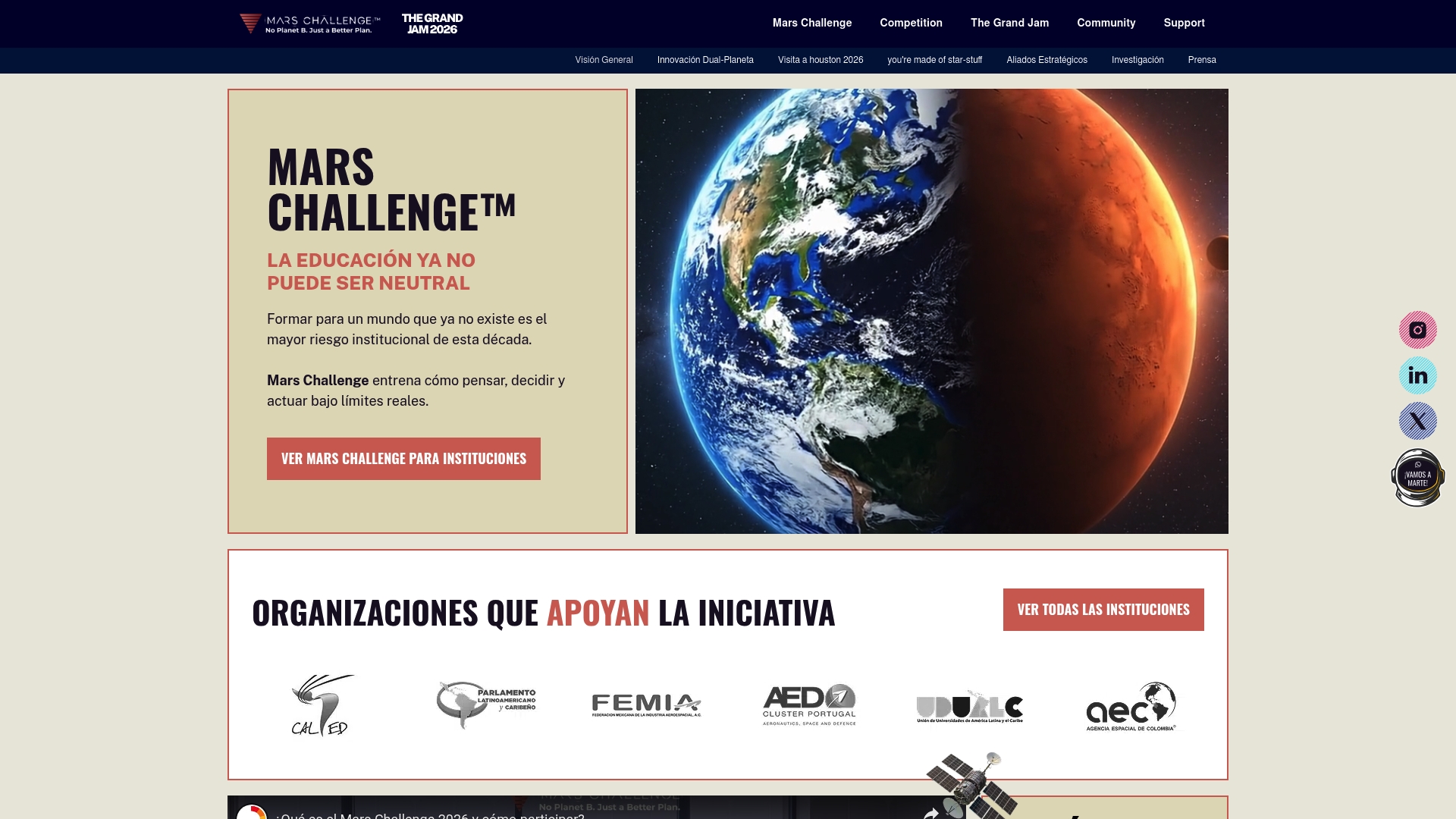
Educational leaders implementing sustainability initiatives gain access to resources supporting every phase from vision development through community impact measurement. Our Next Human Learning framework cultivates the meta-skills and ethical intelligence your students need to navigate complex challenges. Whether you are running youth innovation challenges for the first time or scaling existing programs, Mars Challenge provides the structure and community to amplify your impact.
Explore alternative innovation programs in 2026 to find the right fit for your institutional context and goals. The Grand Jam 2026 offers a culminating showcase where student teams present solutions alongside peers from around the world.
Frequently Asked Questions
What are the essential prerequisites to start a sustainability action plan?
Institutional readiness assessment, stakeholder engagement, and professional development form the critical foundation. You also need budget security and regulatory compliance verification before launching projects. Without these prerequisites, initiatives typically stall within the first year regardless of student enthusiasm.
How long does it take to see measurable results from a sustainability action plan?
Student participation increases appear within 6-12 months of launch. Achieving substantive sustainability goals typically requires 1-2 years of consistent implementation. Cultural shifts and institutional metric improvements emerge over 2-3 years as programs mature and expand.
How can educators effectively engage students in sustainability projects?
Connect projects to authentic community problems that students care about solving. Use diverse team structures that mirror real-world collaboration. Integrate sustainability challenges into existing curricula rather than treating them as add-ons competing for time.
What metrics best measure the success of a sustainability action plan in education?
Track student participation rates, milestone completion percentages, and development of ongoing leadership roles. Measure community partnerships established and institutional sustainability indicators like energy use or waste reduction. Balance quantitative data with qualitative stories capturing transformation.
How do we maintain momentum in sustainability initiatives over multiple years?
Celebrate visible wins publicly and frequently to reinforce progress. Rotate student leadership to prevent burnout while ensuring continuity. Conduct annual program reviews that adapt strategies based on data and feedback. Secure multi-year funding commitments that provide stability through inevitable challenges.