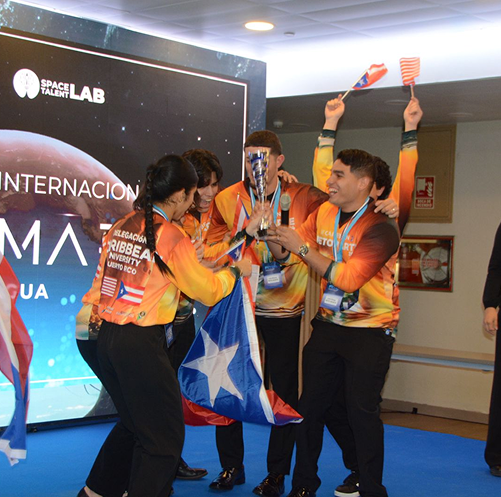


Foundations do more than write checks. Over 40% of large foundations prioritize sustainability education, driving innovation and systemic change in how we prepare learners for planetary challenges. This guide reveals how educational leaders can harness foundation partnerships to build impactful planetary futures education programs that transform classrooms and communities.
Table of Contents
- Foundations’ Funding Roles And Focus Areas
- Pedagogical Innovations Enabled By Foundations
- Foundations’ Role In Policy Advocacy And Systemic Change
- Common Misconceptions About Foundation Roles
- Case Studies Of Foundation-backed Planetary Futures Programs
- Challenges And Limitations Faced By Foundations
- Conceptual Framework: The Funding-Advocacy-Capacity Model
- Bridging To Practical Application: Leveraging Foundations For Educational Impact
- Partner With Mars Challenge For Planetary Futures Education
Key Takeaways
| Point | Details |
|---|---|
| Strategic Resource Allocation | Foundations deploy funding, advocacy, and capacity building to advance sustainability education priorities. |
| Pedagogical Innovation | Foundation support enables active, interdisciplinary learning that develops collaboration and ethical intelligence. |
| Policy Influence | 30% of foundation initiatives target systemic education policy change through research and advocacy. |
| Partnership Value | Foundations offer strategic networks and capacity building beyond financial grants. |
| Measurable Impact | Foundation-backed programs show 25% improvements in learner collaboration skills. |
Foundations’ Funding Roles and Focus Areas
Foundations shape sustainability education through strategic resource allocation. Over 40% of large foundations prioritize sustainability education, focusing on climate, energy, urban systems, and ethical leadership. These organizations recognize that preparing young people for planetary futures requires more than traditional curriculum.
Funding takes multiple forms beyond simple grants. Foundations provide capacity building support, policy advocacy resources, and innovation partnerships. This multifaceted approach enables educational institutions to experiment with new pedagogies while building long-term systemic change capacity.
Key thematic areas guide foundation priorities:
- Climate adaptation and mitigation education programs
- Energy systems innovation and renewable technology learning
- Urban resilience and sustainable cities curriculum development
- Ethical intelligence and collective decision-making frameworks
- Cross-cultural collaboration and global citizenship skills
Foundations balance innovation with measurable impact. They fund pilot programs that test new approaches, then scale successful models across regions. This strategy reduces risk for educational institutions while accelerating the adoption of proven sustainability education priorities.
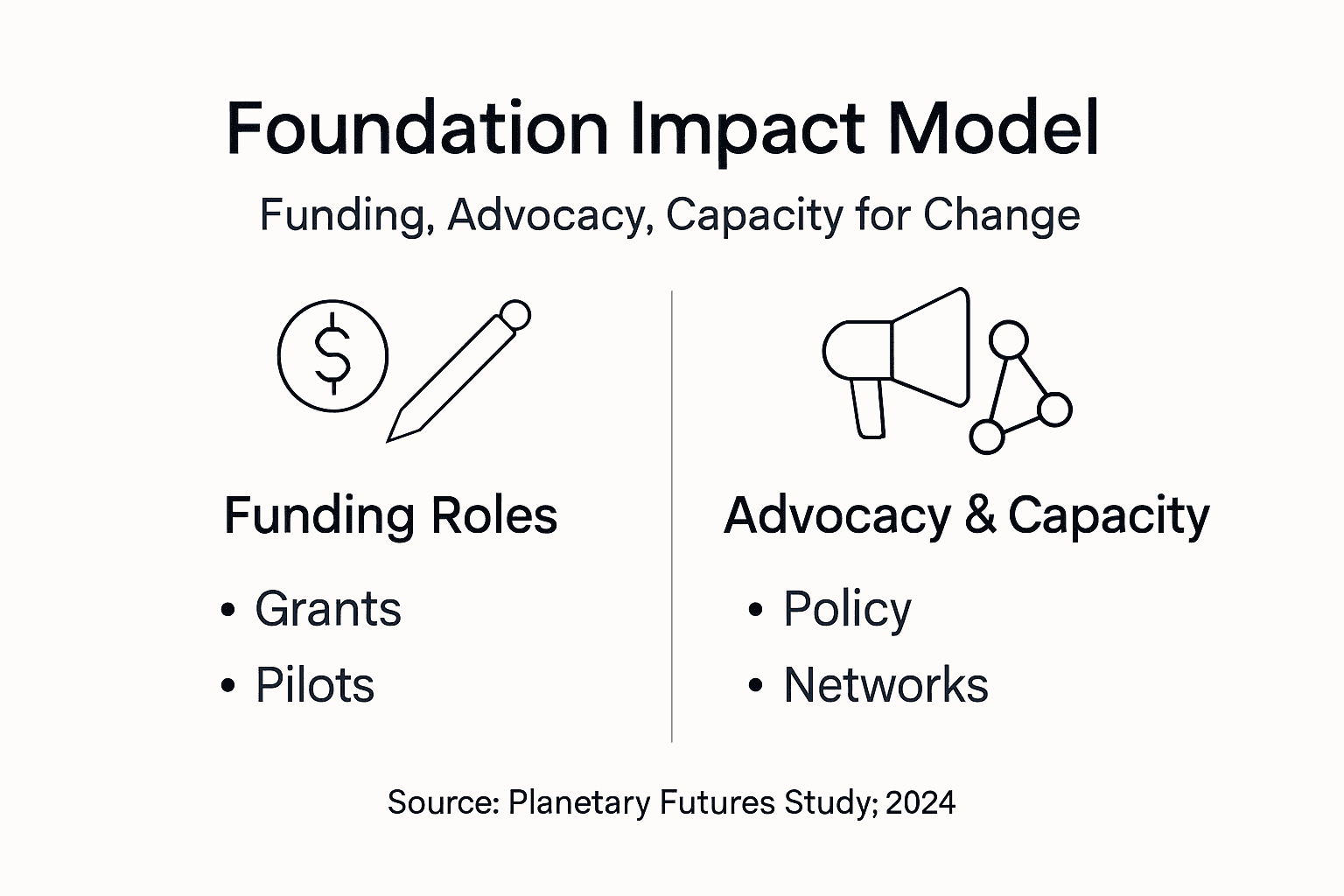
Funding strategies align with systemic educational change goals. Rather than supporting isolated projects, foundations invest in initiatives that transform how institutions design curriculum, train educators, and assess learner outcomes. This coordination ensures resources create lasting change rather than temporary interventions.
Pedagogical Innovations Enabled by Foundations
Foundation funding unlocks transformative teaching methods. Active, project-based learning replaces passive lecture formats, engaging learners in real-world problem solving. Interdisciplinary approaches break down subject silos, reflecting how planetary challenges demand integrated thinking.
Foundation-backed projects show 25% increases in collaboration skills among learners. This improvement stems from structured team challenges where diverse groups tackle complex sustainability problems. Learners develop meta-skills like systems thinking, ethical reasoning, and adaptive leadership.
Innovations integrate multiple support layers:
- Research partnerships connecting classrooms with universities and think tanks
- Capacity building for educators learning facilitation and assessment methods
- Real-world challenges linking learners with community and industry partners
- Technology platforms enabling global collaboration and knowledge sharing
- Impact measurement frameworks tracking learner growth and program outcomes
Foundations enable pedagogical innovations in sustainability education by funding experimentation. Educators test new approaches without risking institutional budgets. Successful methods get documented and shared, accelerating adoption across networks.
Pro Tip: Embed foundation partners early in program design phases. Early collaboration ensures innovation aligns with funder priorities and builds relationships that support scaling efforts. This approach also helps secure multi-year commitments rather than single-year grants.
Programs funded by foundations demonstrate measurable learner outcomes. Beyond collaboration improvements, participants show enhanced critical thinking, increased engagement with sustainability topics, and stronger commitment to civic action. These example projects enabled by foundations serve as models for replication.
Foundations’ Role in Policy Advocacy and Systemic Change
Foundations extend impact beyond individual programs through policy influence. They fund research documenting education gaps, commission reports on best practices, and support advocacy campaigns pushing for curriculum reforms. This work creates enabling environments where innovative programs can thrive at scale.

30% of foundation projects target education policy change through strategic advocacy and capacity building. These initiatives recognize that sustainable transformation requires changing institutional structures, not just funding pilot programs. Foundations invest in long-term systemic shifts.
Steps foundations take to influence policy and build capacity:
- Commission research studies documenting the need for sustainability education integration across curriculum frameworks.
- Fund policy fellowships placing experts in government agencies to shape education standards and assessment guidelines.
- Support educator training programs building capacity to deliver interdisciplinary, active learning approaches.
- Convene multi-stakeholder dialogues bringing together policymakers, educators, and community leaders to align priorities.
- Finance advocacy campaigns mobilizing public support for education reforms that embed planetary futures thinking.
Capacity building accelerates systemic change. Foundations invest in professional development for educators, leadership training for administrators, and institutional assessment tools. This support helps schools and universities adopt innovative pedagogies sustainably rather than as temporary experiments.
Foundations also build networks connecting institutions. They fund communities of practice where educators share lessons learned, convene annual conferences showcasing successful programs, and maintain online platforms for resource sharing. These networks amplify individual program impact across entire education systems.
The combination of funding, advocacy, and capacity building creates multiplier effects. Systemic education policy change happens when multiple interventions reinforce each other, shifting culture and practice simultaneously. Foundations orchestrate this coordination.
Common Misconceptions About Foundation Roles
Misunderstandings about foundations limit productive partnerships. Educational leaders often hold outdated assumptions about how foundations operate, what they fund, and how they engage with grantees. Clarifying these myths opens opportunities for more effective collaboration.
Myth 1: Foundations only provide money. Reality: More than 60% of foundations offer strategic partnerships including network access, capacity building, and thought leadership. They connect grantees with experts, facilitate peer learning, and provide implementation support beyond financial grants.
Myth 2: Funding biases agendas. Reality: Participatory grantmaking increased by 40% to reduce donor bias and include community voices. Foundations now involve youth, educators, and local leaders in funding decisions, ensuring resources align with actual needs rather than donor preferences.
Myth 3: Grant renewal is automatic. Reality: 45% of sustainability grants face renewal challenges due to impact measurement gaps, not lack of interest. Foundations want to continue supporting effective programs but need evidence of outcomes. Clear metrics improve renewal chances significantly.
Common misconceptions include:
- Believing foundations fund only large, established institutions rather than innovative startups
- Assuming foundation staff lack education expertise or field experience
- Thinking grant applications require extensive bureaucracy when many foundations streamline processes
- Expecting foundations to fund operational costs when many now embrace flexible funding models
Addressing foundation funding misconceptions helps leaders engage more effectively. Understanding what foundations actually offer, how they make decisions, and what they expect from partners enables productive conversations and stronger proposals.
Case Studies of Foundation-backed Planetary Futures Programs
Real programs demonstrate foundation impact. UN SDG education initiatives reached 50 million learners with foundation support, integrating sustainability across curriculum worldwide. These programs link research, capacity building, and pedagogical innovation.
Mars Challenge engages youth in 20+ countries fostering innovation and sustainability through dual-planet learning. Foundation partnerships enable the program to scale globally while maintaining quality. Participants develop solutions for climate, energy, food, and urban systems challenges.
| Program | Geographic Reach | Learners Engaged | Key Foundation Roles | Measurable Outcomes |
|---|---|---|---|---|
| UN SDG Education | Global (150+ countries) | 50 million | Policy advocacy, curriculum development funding | 35% increase in sustainability literacy |
| Mars Challenge | 20+ countries | 15,000+ annually | Capacity building, innovation challenge funding | 25% improvement in collaboration skills |
| Regional Climate Academies | Latin America, Africa | 100,000+ | Educator training, network building | 40% of participants launch community projects |
Foundation support enables programs to experiment and iterate. Early-stage funding tests new approaches, data collection documents what works, and scaling investments expand successful models. This cycle accelerates innovation adoption across education systems.
Case studies serve as replication models. Educational institution participation examples show how diverse contexts adapt core principles. Foundations document lessons learned and share implementation guides, reducing barriers for new institutions.
Challenges and Limitations Faced by Foundations
Foundations confront significant obstacles despite good intentions. 45% of grants face renewal challenges due to impact measurement gaps. Short-term funding cycles conflict with education’s long-term nature, making sustained transformation difficult.
Only 35% of foundations use ecosystem-based impact frameworks. Most rely on simpler metrics that fail to capture systemic change complexity. This limitation slows program scalability because foundations struggle to identify which interventions create lasting effects.
Key challenges include:
- Limited data infrastructure making outcome tracking expensive and inconsistent across grantees
- Competing priorities within foundation boards leading to shifting focus areas
- Risk aversion preventing investment in truly experimental or controversial approaches
- Coordination difficulties when multiple foundations fund overlapping initiatives without alignment
- Staff capacity constraints limiting relationship building and hands-on support
Complexity in systemic evaluation slows program scaling. Education outcomes emerge over years, making attribution difficult. External factors like policy changes or economic conditions influence results, complicating impact assessment.
Pro Tip: Incorporate impact measurement frameworks early in program design. Clear metrics established upfront improve data collection, enable adaptive management, and strengthen grant renewal applications. Many foundations offer measurement support as part of capacity building.
Challenges in foundation-supported education programs often stem from misaligned expectations. Foundations want breakthrough innovation but need proof of concept. Grantees need flexible funding but face reporting requirements. Open communication about constraints improves partnership outcomes.
Conceptual Framework: The Funding-Advocacy-Capacity Model
Understanding how foundations operate requires a clear framework. The Funding-Advocacy-Capacity Model explains how foundations integrate three core functions to support planetary futures education effectively. This approach guides 70% of major foundations in sustainability education.
The model coordinates distinct but complementary activities. Funding provides resources for program implementation. Advocacy shapes policy environments enabling programs to scale. Capacity building ensures institutions can sustain innovations long-term.
| Function | Primary Activities | Impact Timeframe | Success Metrics | Foundation Investment |
|---|---|---|---|---|
| Funding | Grants, scholarships, infrastructure | 1-3 years | Program reach, participant outcomes | 50-60% of resources |
| Advocacy | Research, policy briefs, stakeholder convening | 3-7 years | Policy adoption, institutional change | 15-25% of resources |
| Capacity Building | Training, networks, technical assistance | 2-5 years | Educator skills, institutional capability | 20-30% of resources |
The funding-advocacy-capacity model enables systemic impact. Isolated funding creates temporary programs. Combined with advocacy and capacity building, funding catalyzes lasting transformation.
Educational leaders benefit from understanding this framework. Proposals addressing all three functions align with foundation strategies. Programs designed to build educator capacity while generating policy insights attract multi-year commitments.
Bridging to Practical Application: Leveraging Foundations for Educational Impact
Strategic engagement maximizes foundation partnerships. Educational leaders must align institutional goals with foundation priorities, demonstrate capacity for impact measurement, and build relationships beyond transactional grant applications.
Steps for maximizing foundation collaboration:
- Research foundation priorities thoroughly, identifying alignment between your educational goals and their sustainability focus areas before approaching.
- Engage foundation program officers early in planning, seeking input on program design rather than presenting completed proposals.
- Build impact measurement into program foundations, establishing clear metrics and data collection systems that demonstrate outcomes.
- Leverage foundation networks by participating in convenings, joining communities of practice, and connecting with other grantees.
- Communicate regularly with foundation partners, sharing both successes and challenges to build trust and enable adaptive support.
- Plan for sustainability beyond initial grants, developing revenue diversification and capacity building that ensures long-term viability.
Align educational goals with leveraging foundations strategically. Foundations fund programs addressing genuine needs with clear theory of change. Demonstrating how your work fits their portfolio increases approval chances.
Engage beyond funding requests. Attend foundation events, contribute to their research, and offer expertise. These interactions build relationships that lead to partnership opportunities, not just grant transactions.
Adopt impact measurement early. Foundations increasingly require evidence of outcomes. Programs with robust evaluation frameworks secure renewals and attract additional funders. This step-by-step collaboration process guides systematic partnership development.
Partner with Mars Challenge for Planetary Futures Education
Educational leaders seeking to leverage foundation support can accelerate impact through strategic partnerships. Mars Challenge offers pioneering planetary futures education programs that align with foundation priorities and demonstrate proven outcomes.
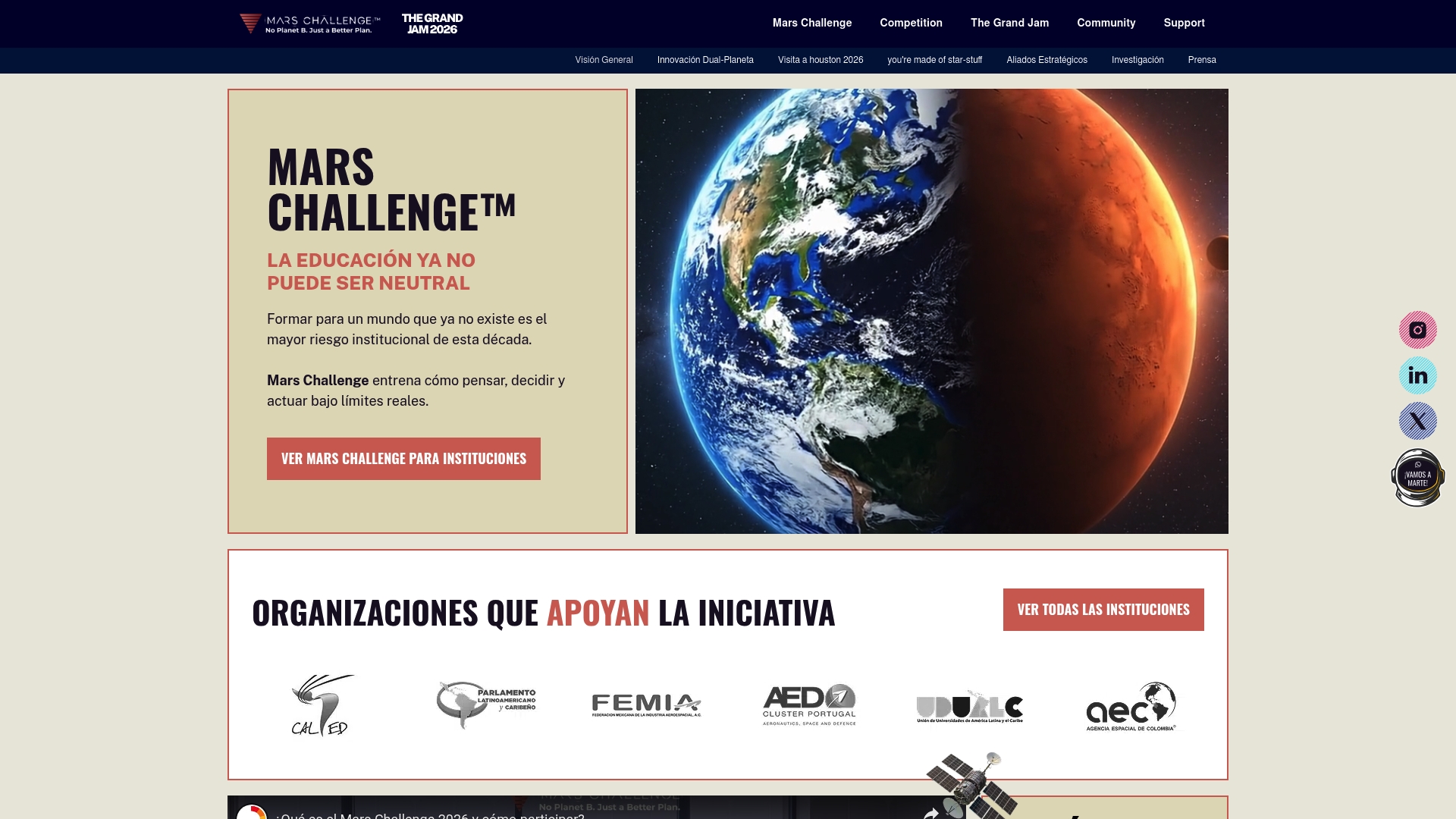
The Innovación Dual-planeta program empowers classrooms with active, team-based challenges addressing climate, energy, food, and urban systems. Students develop meta-skills, ethical intelligence, and collective innovation capabilities that foundations prioritize.
Partnerships with Mars Challenge provide access to global networks spanning 20+ countries, proven pedagogical frameworks, and impact measurement tools. Leaders can scale initiatives within their institutions while connecting to a worldwide movement redefining education for planetary futures. The program’s dual-planet learning benefits align perfectly with foundation goals for systemic education transformation.
Frequently Asked Questions
What do foundations fund beyond financial grants in sustainability education?
Foundations provide capacity building including educator training, network access connecting institutions globally, technical assistance for program design, and thought leadership through research partnerships. Over 60% now offer these strategic supports alongside funding.
How can educational programs measure impact to improve grant renewal chances?
Establish clear metrics during program design tracking learner outcomes, educator capacity growth, and institutional change. Use mixed methods combining quantitative data with qualitative stories. Share results regularly with foundation partners, not just in final reports.
Are foundation priorities really influenced by grantee communities?
Yes. Participatory grantmaking increased by 40% in recent years, involving youth, educators, and local leaders in funding decisions. This approach reduces donor bias and ensures resources address actual needs rather than assumed priorities.
What are best practices for approaching foundations as an educational institution?
Research foundation priorities thoroughly before contact. Engage program officers early seeking input on design, not just funding. Demonstrate clear alignment between your work and their strategy. Build relationships through events and networks, not just grant applications.
Why do many foundation-supported education programs struggle to scale?
Limited impact measurement frameworks make it hard to identify successful elements worth replicating. Short-term funding cycles prevent sustained implementation. Only 35% of foundations use ecosystem-based evaluation capturing systemic change complexity needed for scaling decisions.
How do foundations balance innovation with risk in education funding?
Foundations fund pilot programs testing new approaches with small cohorts, collect rigorous data on outcomes, then scale proven models. They increasingly use flexible funding allowing grantees to adapt as they learn, reducing pressure for perfect initial designs.