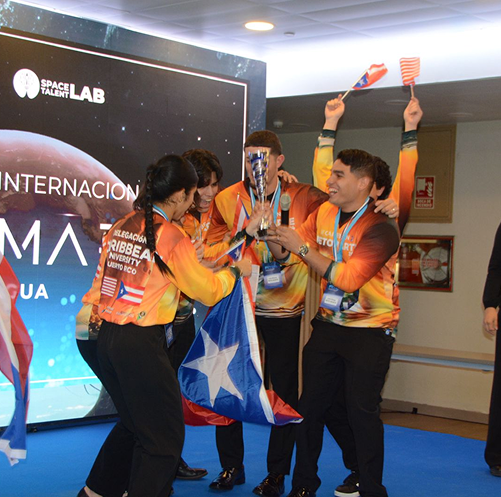


Educational innovators across Europe face a mounting challenge: selecting sustainability initiatives that genuinely engage young people while delivering measurable environmental impact. With limited budgets and competing priorities, choosing the wrong initiative type can waste resources and miss opportunities to develop ethical intelligence in youth. This guide examines five major initiative categories, helping you match program goals with the right sustainability approach for maximum impact.
Table of Contents
- How To Choose The Right Sustainability Initiative: Selection Criteria
- Community-Based Sustainability Initiatives
- Technology-Driven Sustainability Initiatives
- Comparative Analysis Of Initiative Types
- Choosing The Best Initiative For Your Youth Program: Situational Recommendations
- Explore Mars Challenge For Innovative Youth Sustainability Programs
- Frequently Asked Questions
Key takeaways
| Point | Details |
|---|---|
| Initiative types vary significantly | Sustainability initiatives can be categorized into community-based, technology-driven, policy-driven, education-led, and corporate social responsibility approaches, each with distinct impact timelines and resource requirements. |
| Selection criteria matter | Impact timeframe, ethical intelligence development, cost, measurable outcomes, and scalability determine which initiative fits your youth program goals. |
| Community versus technology tradeoffs | Community initiatives cost under €10,000 and build deep social responsibility but show slower results, while technology initiatives require €50,000+ and deliver faster environmental benefits. |
| Strategic matching optimizes outcomes | Aligning initiative type with available resources, desired impact speed, and youth development priorities maximizes program effectiveness. |
How to choose the right sustainability initiative: selection criteria
Before exploring specific initiative types, you need a structured framework to evaluate sustainability initiatives effectively. The most critical factor is impact timeframe, meaning how quickly your youth program will see tangible environmental or social results. Some initiatives deliver measurable benefits within one to two years, while others require three or more years to show substantial outcomes.
Ethical intelligence and meta-skills development rank second in importance. These initiatives teach young people to navigate complexity, understand interconnected systems, and make decisions that balance multiple stakeholder needs. Programs emphasizing these competencies prepare youth for leadership roles in an uncertain future.
Cost and accessibility shape what’s feasible for your organization. Different sustainability initiatives categories range from volunteer-driven projects under €10,000 to technology investments exceeding €50,000. Understanding your budget constraints helps narrow options quickly.
Measurable environmental and social outcomes ensure your program creates real-world impact beyond feel-good activities. Look for initiatives with documented metrics like waste reduction percentages, energy savings, or behavior change indicators. Scalability and systemic change potential matter when you want your youth program to influence broader communities or policy environments.
Pro Tip: Create a weighted scoring matrix using these criteria, assigning points based on your program’s priorities. This quantitative approach removes guesswork and helps justify initiative choices to stakeholders.
Community-based sustainability initiatives
Community-based initiatives focus on local participation and grassroots empowerment, making them ideal for youth programs emphasizing social responsibility and collective action. These projects engage neighborhoods in waste reduction, local food systems, urban greening, or community energy cooperatives. Community-based sustainability innovation builds networks of trust while addressing environmental challenges.
The cost effectiveness of community-based sustainability initiatives stands out clearly. Research shows these programs achieved 30% waste reduction in European urban pilots with costs under €10,000, leveraging volunteer efforts and donated materials. This accessibility makes them perfect for schools and youth organizations operating on tight budgets.
Ethical intelligence gains represent the strongest benefit of community initiatives. Young people learn to navigate diverse perspectives, build consensus across different stakeholder groups, and understand how individual actions create collective impact. They develop empathy by working directly with community members affected by environmental challenges.
The primary tradeoff involves impact timelines. Community initiatives typically require three to five years to show substantial environmental outcomes because behavior change happens gradually. You’re building cultural shifts rather than implementing technical fixes.
- Local empowerment develops youth leadership through direct community engagement
- Volunteer-driven models keep costs low while building social capital
- Slower measurable impact requires patience and long-term commitment
- Deep ethical intelligence development through diverse stakeholder interaction
Pro Tip: Partner with local government sustainability offices to access free resources, venues, and expertise that amplify your community initiative without adding costs.
Technology-driven sustainability initiatives
Technology-driven initiatives leverage innovations in clean energy, smart agriculture, water management systems, and circular economy applications to deliver rapid environmental benefits. These programs appeal to youth interested in STEM fields and provide hands-on experience with cutting-edge sustainability tools.

The speed of measurable impact makes technology-driven sustainability compelling for programs seeking quick wins. Technological sustainability initiatives report 20-35% energy savings in European Union projects, with benefits appearing within one to two years of implementation. This rapid feedback loop keeps youth engaged and demonstrates concrete environmental progress.
Financial requirements present the main barrier. Technology initiatives typically require upfront investments around €50,000 or more for equipment, installations, and technical expertise. Grant funding often becomes necessary, adding complexity to program planning and administration.
Youth gain valuable technical skills and innovation experience through technology projects. They learn systems thinking by understanding how different components interact, and they practice problem-solving with real-world constraints. However, ethical intelligence development may receive less emphasis compared to community-based approaches unless deliberately integrated.
- Clean energy installations, smart agriculture systems, and water management technologies provide hands-on STEM learning
- Measurable environmental benefits appear within one to two years
- Significant upfront costs require grant funding or institutional support
- Technical skill development balances against potentially lower ethical intelligence gains
- Rapid impact timelines maintain youth engagement and demonstrate program effectiveness
Comparative analysis of initiative types
Understanding how different initiative types vary significantly in cost, impact timelines, ethical intelligence gains, scalability, and meta-skill development helps you make strategic choices. The table below synthesizes key differences to support your decision making.
| Initiative Type | Cost Range | Impact Timeline | Ethical Intelligence | Scalability | Meta-Skills Development |
|---|---|---|---|---|---|
| Community-based | Under €10,000 | 3-5 years | Very High | Moderate | High in collaboration |
| Technology-driven | €50,000+ | 1-2 years | Moderate | High | High in systems thinking |
| Policy-driven | €20,000-40,000 | 4-7 years | High | Very High | High in strategic thinking |
| Education-led | €5,000-15,000 | 2-4 years | Very High | High | Very High across all meta-skills |
| CSR partnerships | Variable (leveraged) | 1-3 years | Moderate | Very High | Moderate to High |
Policy-driven initiatives influence regulations, institutional practices, and systemic structures. Young people engage in advocacy, research, and stakeholder engagement to shift larger systems. These initiatives offer the highest scalability potential because policy changes affect entire regions or sectors. However, impact timelines extend to four to seven years, and outcomes depend on political processes beyond youth control.
Education-led initiatives focus on curriculum development, peer-to-peer learning, and sustained behavior change. They excel at developing comprehensive meta-skills across multiple domains while maintaining moderate costs. The initiative types comparison shows education-led approaches balance multiple priorities effectively.
Corporate social responsibility partnerships leverage business resources and expertise to amplify youth program impact. These initiatives provide variable costs depending on partnership structures, and they scale well through corporate networks. Ethical intelligence development depends on partnership design and how authentically young people engage with business decision making.
- Technology initiatives deliver fastest measurable environmental benefits but require substantial investment
- Community initiatives maximize ethical intelligence development with minimal budget requirements
- Policy-driven approaches create broadest systemic change but demand patience with long timelines
- Education-led initiatives balance multiple development goals across meta-skills, ethics, and environmental impact
- CSR partnerships offer resource leverage but variable ethical intelligence outcomes
Choosing the best initiative for your youth program: situational recommendations
After examining initiative types and comparison factors, you can select sustainability initiatives strategically based on your specific situation. Start by clarifying your primary program goal: deep ethical intelligence development, rapid environmental impact, broad systemic change, or comprehensive meta-skills cultivation.
If your budget stays under €15,000 and you prioritize ethical intelligence and social responsibility, community-based initiatives provide the best fit. Research confirms that matching initiative types to goals and contexts significantly improves program outcomes and youth engagement. These grassroots projects build profound understanding of collective action while delivering documented waste reduction and local empowerment.
For programs with access to €50,000 or more in funding and stakeholders demanding measurable environmental results within two years, technology-driven initiatives justify the investment. The 20-35% energy savings documented in European Union projects provide concrete evidence of impact that satisfies institutional requirements and maintains youth engagement through visible progress.
When you want to influence broader systems and can commit to multi-year timelines, policy-driven initiatives create lasting structural change. Young people develop strategic thinking and advocacy skills while potentially affecting regulations that impact entire regions. Partner with established advocacy organizations to increase success probability.
Education-led initiatives suit programs balancing moderate budgets with goals for sustained behavior change and comprehensive meta-skills development. These approaches integrate well with existing educational structures and create ripple effects through peer networks.
- Assess your available budget realistically, including potential grants and partnerships
- Define your primary goal: ethical intelligence, rapid impact, systemic change, or balanced development
- Consider your organizational capacity for multi-year commitment versus need for quick wins
- Evaluate youth interests and existing skills to match initiatives with participant engagement
- Examine potential partnerships that could provide resources, expertise, or leverage
- Select the initiative type aligning most closely with your prioritized criteria
Pro Tip: Consider hybrid approaches combining two initiative types, such as pairing a low-cost community project with a technology component. This strategy balances ethical intelligence development with measurable environmental impact while managing budget constraints.
Explore Mars Challenge for innovative youth sustainability programs
If you’re ready to implement sustainability initiatives that develop ethical intelligence while creating environmental impact, Mars Challenge offers proven programs designed specifically for youth aged 15 to 29. Our dual-planet innovation platform engages young people across more than 20 countries in team-based challenges that reimagine life-support systems for Earth and Mars.
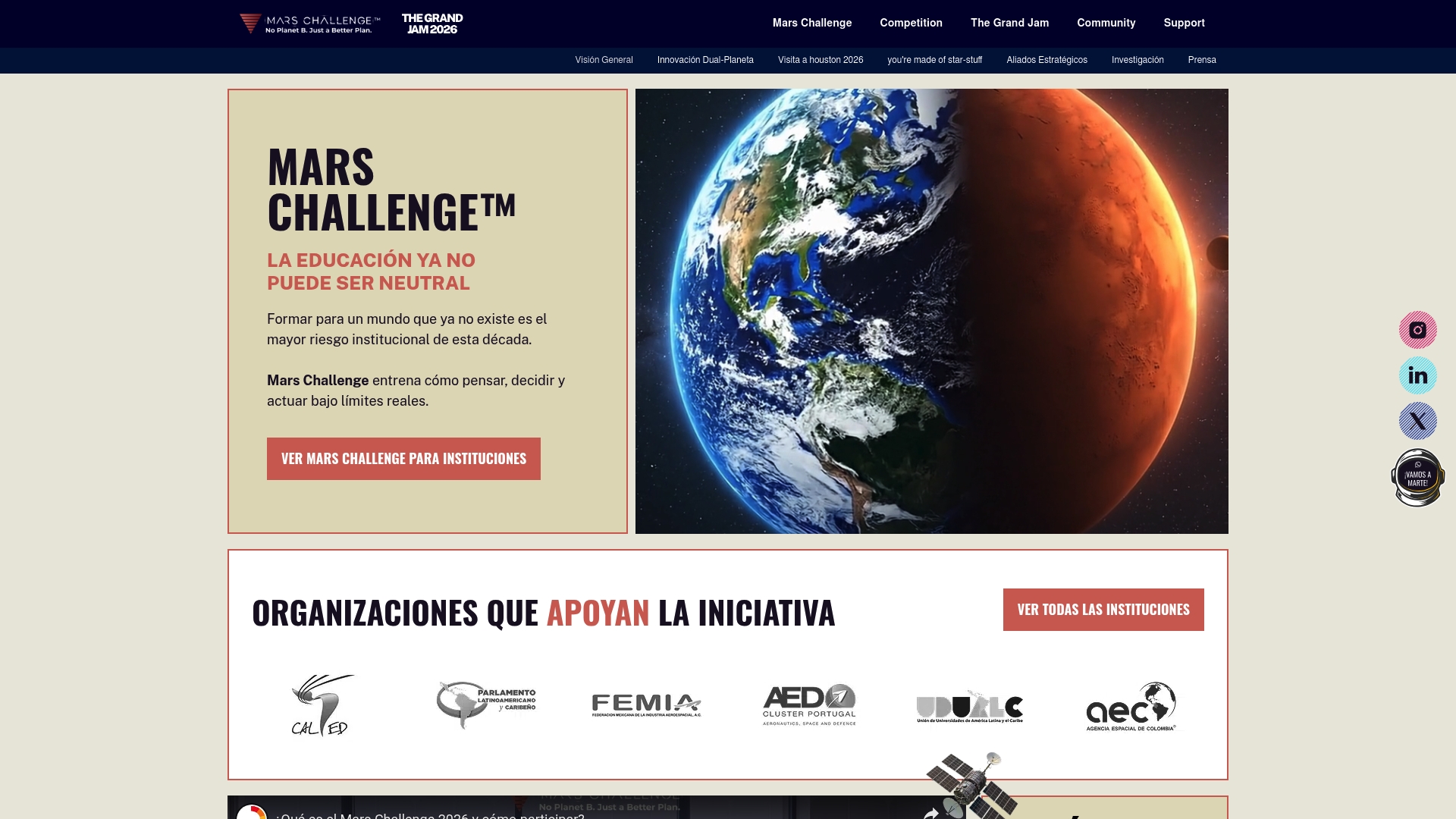
Through our Next Human Learning methodology, participants develop meta-skills, ethical intelligence, and collective innovation capabilities while working on real-world sustainability solutions. The structured challenges provide exactly the kind of guided experience that helps youth navigate complexity and uncertainty. Teams tackle challenges in climate, energy, food systems, cities, and technology, gaining hands-on experience with multiple initiative types.
The Grand Jam 2026 (Divergence Global Expo) brings winning teams together to prototype and present solutions focused on Tierra, reimagining Earth’s future. Your youth program can access this global learning movement and dual-planet learning benefits that combine educational rigor with transformative sustainability action. Explore how to run innovation challenge youth teams and join educators worldwide redefining what it means to learn, create, and serve in the age of artificial intelligence.
Frequently asked questions
What are the main types of sustainability initiatives relevant to youth programs?
Community-based, technology-driven, policy-driven, education-led, and corporate social responsibility initiatives represent the five main categories. Each type offers distinct benefits regarding cost, impact speed, ethical intelligence development, and scalability. Your program goals and available resources determine which type fits best.
How can educators evaluate which sustainability initiative is best for their youth program?
Educators should evaluate sustainability initiatives using six criteria: cost and accessibility, ethical intelligence impact, meta-skills development, measurable environmental outcomes, scalability potential, and desired impact timeframe. Creating a weighted scoring matrix based on your program priorities provides a systematic selection approach. Consider youth interests and existing organizational capacity when making final decisions.
What are the benefits of community-based versus technology-driven sustainability initiatives?
Community-based and technology initiatives offer complementary strengths. Community initiatives develop deeper ethical intelligence and social responsibility through direct stakeholder engagement, costing under €10,000 but requiring three to five years for substantial impact. Technology initiatives deliver 20-35% energy savings within one to two years with measurable environmental benefits, but require investments exceeding €50,000. Choose based on whether you prioritize ethical development and affordability or rapid environmental impact with technical skill building.
How long does it typically take to see results from different sustainability initiative types?
Technology-driven initiatives show measurable environmental benefits fastest, within one to two years of implementation. Education-led and corporate social responsibility initiatives typically require two to four years. Community-based initiatives need three to five years for substantial outcomes, while policy-driven approaches demand four to seven years due to regulatory processes. Balance your stakeholder expectations for quick wins against the deeper, lasting impact that longer timelines provide.
Can youth programs combine multiple initiative types effectively?
Yes, hybrid approaches combining two or more initiative types often maximize benefits while managing constraints. Pair a low-cost community project with a technology component to balance ethical intelligence development with measurable impact. Alternatively, combine education-led initiatives with corporate social responsibility partnerships to leverage resources while maintaining comprehensive meta-skills development. Ensure adequate organizational capacity exists before pursuing multiple initiatives simultaneously.