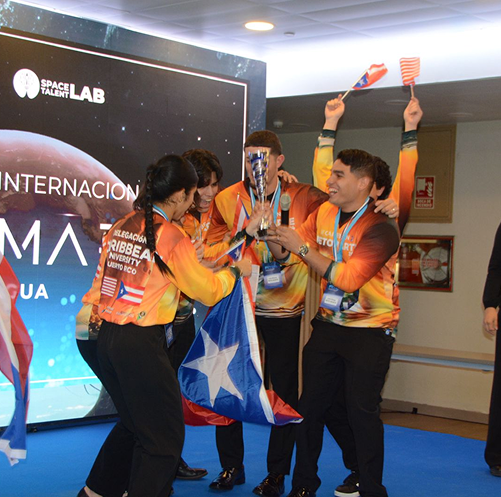


Sustainability education often gets reduced to environmental facts and future predictions, missing its true transformative potential. In 2026, youth face urgent interconnected crises requiring interdisciplinary thinking, ethical judgment, and immediate action. Traditional lecture-based approaches fail to engage learners meaningfully or cultivate the meta-skills essential for solving today’s complex global challenges. Reimagining sustainability education empowers educators to foster genuine changemakers who act now, not decades later.
Table of Contents
- Understanding The Urgent Need To Reimagine Sustainability Education
- Core Competencies: Meta-Skills And Ethical Intelligence In Sustainability Learning
- Innovative Pedagogies: Interdisciplinary, Experiential, And Technology-Enhanced Learning
- Youth Engagement: From Future Leaders To Present-Day Changemakers
- Common Misconceptions About Sustainability Education
- Practical Frameworks And Case Studies For Implementing Reimagined Sustainability Education
- Empower Your Sustainability Education Journey With Mars Challenge
- Frequently Asked Questions
Key takeaways
| Point | Details |
|---|---|
| Reimagined sustainability education integrates meta-skills, ethics, and interdisciplinary learning | This approach moves beyond environmental facts to develop critical thinking, adaptability, and values-based decision-making. |
| Traditional methods fail to engage youth effectively | Lecture-based instruction lacks real-world application and meaningful student involvement. |
| Youth are present-day sustainability leaders | Young people already lead impactful initiatives and must be empowered immediately, not prepared for a distant future. |
| Experiential and team-based methods boost engagement | Hands-on, problem-based learning increases student participation and deepens understanding. |
| Practical frameworks support implementation | Educators can apply validated models, case studies, and action plans to overcome barriers. |
Understanding the urgent need to reimagine sustainability education
The environmental and societal crises of 2026 demand more than traditional classroom instruction. Climate change, resource depletion, inequality, and technological disruption require interdisciplinary, action-oriented learning that prepares students to navigate complexity. Yet most sustainability education remains lecture-based, detached from real-world problems, and fails to inspire meaningful engagement.
Youth are not future leaders waiting to inherit problems. They are already driving climate activism, launching social enterprises, and shaping policy discussions worldwide. Education systems must recognize this reality and shift from preparing students for a distant future to empowering them as present-day agents of change. Experiential learning increases engagement by up to 30% in sustainability topics, demonstrating the power of hands-on approaches.
Traditional sustainability education often presents isolated environmental facts without connecting them to social justice, economics, or technology. Students memorize concepts but lack opportunities to apply knowledge, collaborate on solutions, or develop the adaptive thinking required for uncertain futures. This disconnection reduces motivation and limits impact.
Several factors drive the urgency for reimagined approaches:
- Accelerating global crises require immediate, not delayed, responses
- Youth engagement peaks when education connects to real-world action
- Interdisciplinary problems demand interdisciplinary learning methods
- Traditional pedagogy fails to cultivate essential meta-skills like systems thinking
“Education must evolve from information transfer to transformation, equipping learners to create solutions for challenges we cannot yet fully anticipate.”
Educators face a critical choice: continue outdated methods or embrace innovative pedagogies for sustainability education that honor youth capacity and urgency. The shift requires commitment but delivers profound benefits for students, communities, and planetary health.
Core competencies: Meta-skills and ethical intelligence in sustainability learning
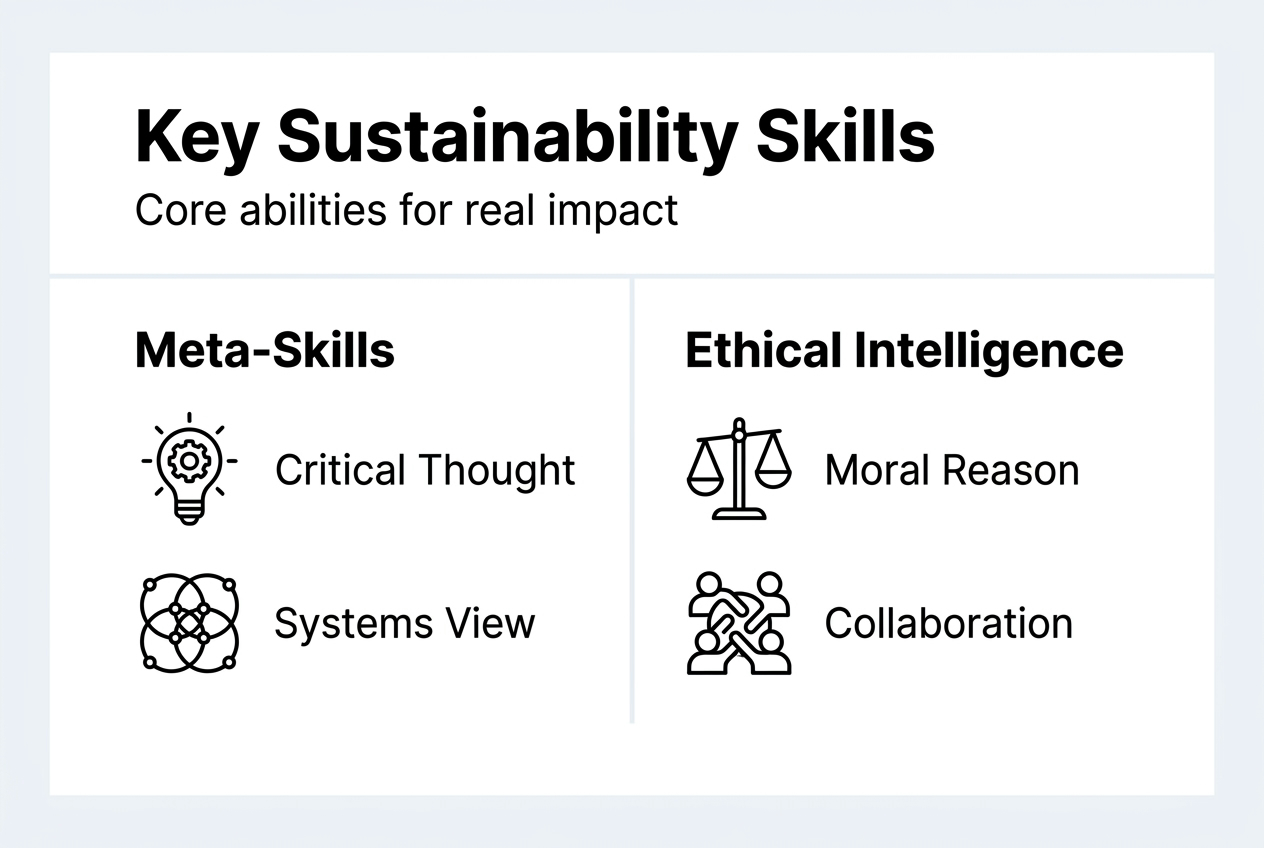
Effective sustainability education develops capacities beyond content knowledge. Meta-skills such as critical thinking, problem-solving, collaboration, and adaptability enable learners to navigate complexity and uncertainty. These skills prove essential whether addressing climate adaptation, food security, or technological ethics.
Ethical intelligence ensures students make responsible, values-based decisions amid competing interests and incomplete information. Sustainability challenges rarely have simple right answers. Learners must weigh environmental protection against economic needs, individual rights against collective welfare, and short-term gains against long-term consequences. Developing ethical judgment prepares students to lead with integrity.
Research identifies six critical constructs of sustainable learning validated through student engagement studies:
- Systems thinking to understand interconnections and unintended consequences
- Futures literacy to envision and create alternative scenarios
- Values reflection to clarify personal and collective priorities
- Strategic action competence to design and implement solutions
- Interpersonal competence to collaborate across differences
- Integrated problem-solving to address multidimensional challenges
These competencies overlap and reinforce each other. A student analyzing water scarcity must think systemically about agriculture, urbanization, and climate while collaborating with diverse stakeholders and making ethically grounded choices. Fragmenting these skills into separate lessons misses their integrated nature.
Pro Tip: Design learning experiences that require students to apply multiple meta-skills simultaneously, mirroring real-world complexity rather than artificial simplification.
Educators should intentionally cultivate meta-skills alongside content knowledge. This means structuring activities that demand collaboration, present authentic problems without predetermined solutions, and require students to articulate their reasoning and values. Climate innovation education exemplifies this integrated approach.
| Competency | Development Method | Learning Outcome |
|---|---|---|
| Critical thinking | Analyze case studies with incomplete data | Evaluate evidence and question assumptions |
| Collaboration | Team-based sustainability projects | Navigate diverse perspectives effectively |
| Adaptability | Respond to changing project parameters | Adjust strategies based on feedback |
| Ethical judgment | Debate values in resource allocation scenarios | Articulate and defend ethical positions |
By prioritizing these competencies, educators prepare students not just to understand sustainability challenges but to actively address them with skill, judgment, and resilience.
Innovative pedagogies: Interdisciplinary, experiential, and technology-enhanced learning
Teaching methods profoundly shape learning outcomes. Passive lectures about sustainability produce passive understanding. Active, experiential approaches generate engaged problem-solvers. Research shows experiential and problem-based learning improve critical thinking and sustainability skills by approximately 30%.
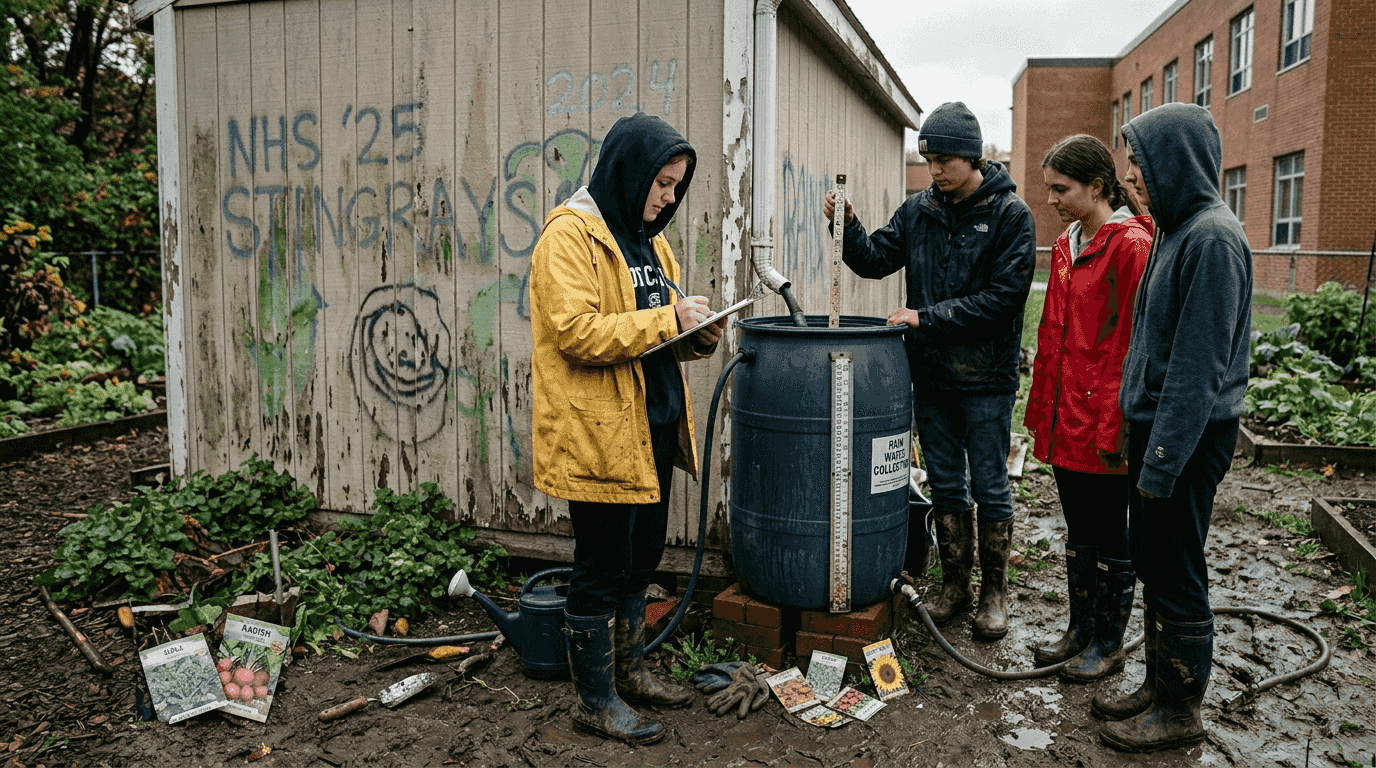
Experiential learning places students directly into authentic challenges. Rather than reading about water conservation, students might audit school water use, design reduction strategies, and implement solutions. This hands-on engagement deepens understanding and builds confidence. Problem-based learning presents complex, open-ended scenarios that require research, collaboration, and creative thinking.
Technology creates immersive learning opportunities previously impossible. Virtual reality simulations allow students to experience climate impacts firsthand, explore renewable energy systems, or design sustainable cities. These tools make abstract concepts tangible and emotionally resonant. Digital platforms also connect classrooms globally, enabling cross-cultural collaboration on shared challenges.
Interdisciplinary projects break down artificial subject boundaries. A sustainability challenge might require scientific analysis, economic modeling, ethical reasoning, community engagement, and communication skills. Students recognize how knowledge domains interconnect in real problem-solving. This integration mirrors professional practice and prepares learners for complex careers.
Community-driven learning connects education to local impact. Students partner with organizations, municipalities, or businesses to address actual sustainability needs. These partnerships provide authentic audiences for student work, increasing motivation and accountability. Communities benefit from fresh perspectives and energetic support.
Effective pedagogical approaches include:
- Project-based learning focused on real community needs
- Simulations and role-playing to explore stakeholder perspectives
- Design thinking to prototype and iterate solutions
- Reflective practice to connect experience with conceptual understanding
“Learning happens not through passive absorption but active construction, where students build understanding by engaging directly with problems that matter.”
These methods align with how humans naturally learn and retain information. Active learning strategies leverage curiosity, collaboration, and creativity to maximize engagement. When students co-create knowledge rather than consume it, education becomes transformative.
Technology should enhance rather than replace human interaction. Digital tools work best when supporting collaboration, providing immersive experiences, or connecting learners across distances. The goal remains developing human capacities for empathy, judgment, and collective action.
Youth engagement: From future leaders to present-day changemakers
Young people worldwide already lead significant sustainability initiatives. They organize climate strikes, design innovative technologies, influence corporate practices, and shape policy debates. Education must recognize and amplify this existing leadership rather than postponing it to some distant future. Youth climate advocacy and policy impacts increased by 40% since 2020.
Treating youth as future leaders implies they lack agency now. This perspective misses their current contributions and wastes critical years when their energy, creativity, and moral clarity could drive change. Sustainability education should position students as present-day changemakers with real power to shape outcomes.
Meaningful youth participation improves education relevance and effectiveness. When students help design curricula, identify priority challenges, and evaluate program success, learning aligns with their lived experiences and concerns. This collaboration transforms education from something done to students into something created with them.
Policy participation by youth enhances democratic processes and ensures decisions consider long-term impacts. Young people bring unique perspectives on intergenerational equity, technological possibilities, and systemic change. Their involvement makes governance more responsive and visionary.
Educational programs should include:
- Student leadership roles in program design and governance
- Opportunities to present work to authentic audiences beyond classroom walls
- Connections to youth networks addressing similar challenges globally
- Recognition and celebration of student-initiated sustainability projects
Mobilizing youth networks amplifies individual efforts into collective impact. When students connect across schools, regions, and countries, they share strategies, inspire each other, and coordinate action at scale. Digital platforms make these connections easier than ever.
Sustainability initiatives for youth demonstrate the breadth of student-led work, from renewable energy projects to food systems redesign. These examples prove young people possess both the creativity and competence to address complex challenges effectively.
Educators play a crucial support role by creating space for student agency, providing resources and mentorship, and connecting youth to broader networks. This facilitation differs from traditional instruction, requiring educators to share power and trust student capacity. The shift can feel uncomfortable but generates remarkable results.
Youth sustainability action plans provide frameworks for students to move from ideas to implementation. These tools scaffold the journey from identifying problems to prototyping solutions to measuring impact, building confidence along the way.
Common misconceptions about sustainability education
Several persistent myths limit sustainability education’s scope and effectiveness. Addressing these misconceptions clears space for more impactful approaches. More than 50% of educators and students conflate sustainability solely with climate science, missing social and ethical dimensions.
Misconception: Sustainability equals environmentalism. Reality: Sustainability integrates environmental, social, economic, and ethical dimensions. Focusing only on ecology ignores justice, equity, governance, and culture. True sustainability education examines how these domains interconnect and sometimes conflict.
Misconception: Sustainability is about the distant future. Reality: Today’s decisions and actions shape outcomes now and ahead. Youth experience climate impacts, inequality, and technological disruption in the present. Education must address current challenges while building capacity for ongoing adaptation.
Misconception: Lectures and textbooks suffice for sustainability education. Reality: Passive information transfer fails to develop the skills, values, and agency required for meaningful action. Sustainability demands experiential, collaborative, and reflective learning that engages students as active participants.
Misconception: Sustainability education is only for science classes. Reality: Every discipline contributes essential perspectives. Literature explores values and narratives. Mathematics models systems and scenarios. History reveals patterns and alternatives. Art communicates urgency and possibility. Interdisciplinary integration mirrors real-world complexity.
| Misconception | Reality | Educational Implication |
|---|---|---|
| Sustainability is only environmental | Integrates environmental, social, economic, and ethical dimensions | Design interdisciplinary curricula addressing multiple domains |
| Youth are future leaders | Youth are present-day changemakers | Provide immediate opportunities for meaningful action and leadership |
| Information transfer builds capacity | Active engagement develops skills and agency | Use experiential, problem-based, and collaborative methods |
| Sustainability is a science topic | All disciplines contribute essential perspectives | Foster cross-curricular collaboration and integration |
Clarifying these misconceptions helps educators design more comprehensive and effective programs. Sustainability education that honors complexity, urgency, and youth capacity generates far greater impact than narrow, passive, or future-focused approaches.
Another common pitfall involves presenting sustainability as sacrifice or limitation. While addressing overconsumption matters, framing sustainability primarily through loss rather than possibility dampens motivation. Education should emphasize opportunities for innovation, creativity, and improved quality of life alongside necessary constraints.
Finally, some educators hesitate to address sustainability because they lack specialized expertise. This concern misunderstands the role. Educators need not be experts in every sustainability dimension. They facilitate student inquiry, connect learners to resources and networks, and cultivate essential capacities. Co-learning alongside students often produces deeper engagement than top-down instruction.
Practical frameworks and case studies for implementing reimagined sustainability education
Moving from theory to practice requires concrete frameworks and inspiring examples. Several proven models help educators implement interdisciplinary, experiential, and youth-centered approaches effectively. Case studies from Finland, Seychelles, and VR programs illustrate effective models emphasizing diversity, ethics, and problem-solving.
Finland’s education system integrates sustainability across subjects through phenomenon-based learning. Students explore real-world topics like energy transitions or food security, drawing on multiple disciplines naturally. This approach mirrors how knowledge applies outside academic boundaries and builds systems thinking.
Seychelles developed ocean literacy programs connecting marine science with culture, economics, and governance. Students engage with local fishing communities, tourism operators, and conservation organizations to understand ocean sustainability holistically. This community integration makes learning relevant and actionable.
Virtual reality programs create immersive experiences of climate impacts, sustainable cities, or ecosystem dynamics. Students virtually visit melting glaciers, explore renewable energy installations, or design green buildings. These simulations generate emotional connection and spatial understanding difficult to achieve through traditional media.
Implementing these approaches requires:
- Collaborative planning across departments to identify interdisciplinary opportunities
- Partnerships with community organizations for authentic project contexts
- Professional development supporting experiential pedagogy
- Flexible scheduling allowing extended project work
Pro Tip: Start small with a single interdisciplinary project or community partnership, then expand based on lessons learned rather than attempting system-wide transformation immediately.
Common barriers include resource limitations, institutional resistance to change, assessment challenges, and time constraints. Educators overcome these through incremental implementation, leveraging free digital tools, emphasizing transferable skills valued in standardized assessments, and demonstrating student engagement improvements.
Planet-friendly student projects showcase diverse approaches from renewable energy prototypes to waste reduction campaigns. These examples inspire educators and students while providing practical templates adaptable to local contexts.
Systems thinking sustainability guide offers frameworks for analyzing interconnections, feedback loops, and leverage points in complex challenges. This thinking skill applies across sustainability topics and helps students avoid simplistic solutions.
Sustainability prototyping in education demonstrates iterative design processes where students create, test, and refine solutions. This approach builds resilience, creativity, and practical problem-solving skills while generating tangible outcomes.
Continuous evaluation ensures programs remain effective and improve over time. Collect data on student engagement, skill development, knowledge retention, and real-world impact. Use feedback to adjust approaches, celebrate successes, and address weaknesses. Involve students in evaluation design and interpretation to honor their perspectives.
Scaling successful pilots requires documenting processes, sharing lessons learned, and building communities of practice among educators. When teachers collaborate, they accelerate learning, share resources, and provide mutual support through challenges. Professional networks multiply individual efforts into collective transformation.
Empower your sustainability education journey with Mars Challenge
Reimagining sustainability education requires practical frameworks, inspiring examples, and supportive networks. Mars Challenge provides all three through its dual-planet innovation mission that engages youth in prototyping solutions for Earth and Mars.
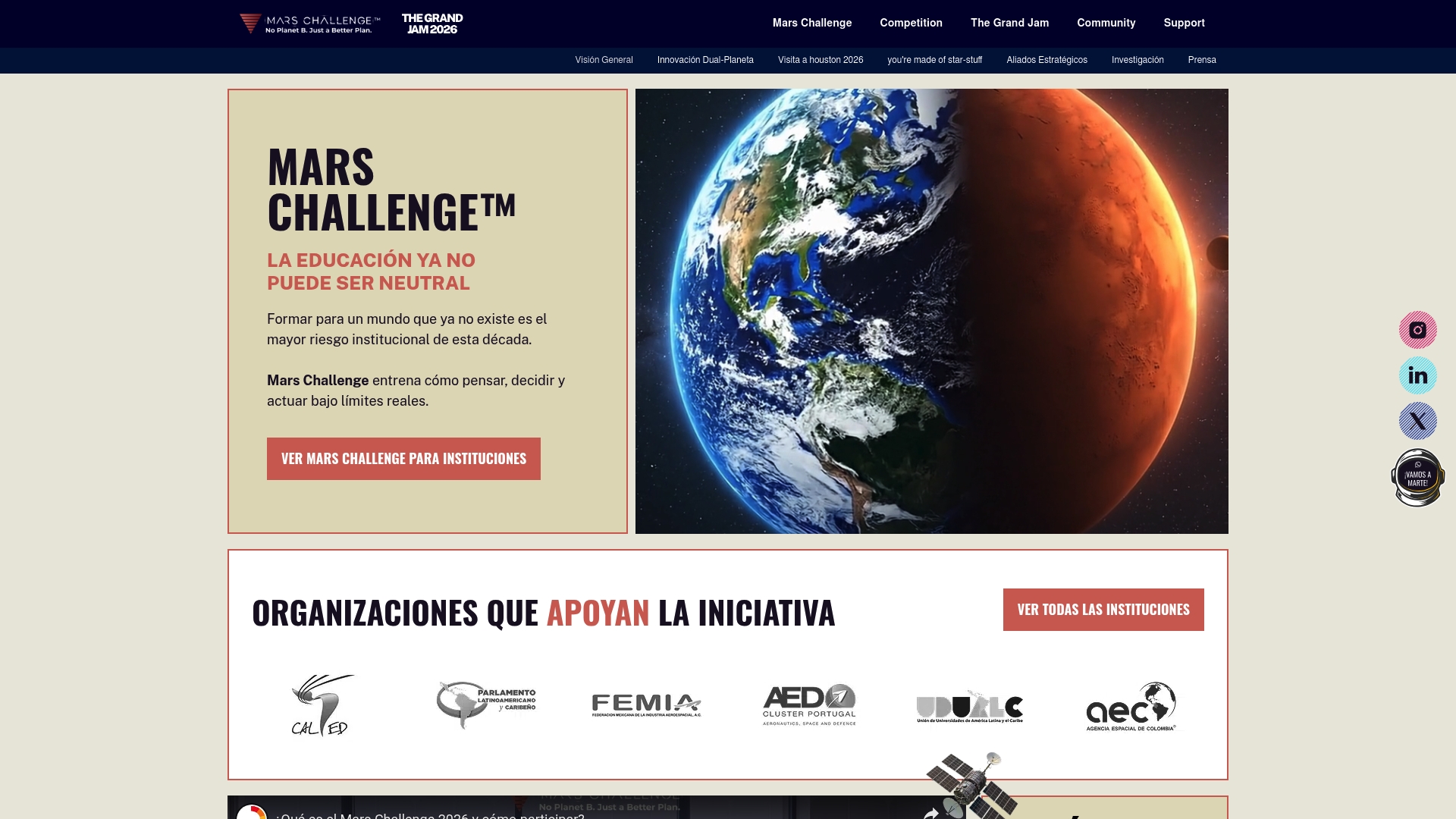
Their Next Human Learning methodology cultivates the meta-skills, ethical intelligence, and collaborative capacities essential for sustainability leadership. Educators access comprehensive sustainability action plans for youth that guide students from challenge identification through solution prototyping to impact measurement. The platform connects classrooms across 20+ countries, enabling global collaboration on shared challenges. Explore planet-friendly student projects demonstrating what becomes possible when young people receive the frameworks, support, and agency to address real problems. Join this movement redefining learning for meaningful impact.
Frequently asked questions
What is sustainability education reimagined?
Sustainability education reimagined moves beyond traditional environmental science to integrate social, economic, and ethical dimensions through experiential, interdisciplinary methods. It positions youth as present-day changemakers rather than future leaders, cultivating meta-skills like systems thinking, collaboration, and ethical judgment. This approach emphasizes real-world problem-solving, community engagement, and technology-enhanced learning that prepares students to navigate complexity and drive meaningful impact now.
How can educators effectively integrate ethical intelligence into sustainability curricula?
Embed discussions on values and ethics directly within real-world sustainability challenges rather than treating ethics as separate content. Use case studies requiring students to weigh competing interests, facilitate debates on resource allocation dilemmas, and incorporate reflective activities where learners articulate their reasoning and assumptions. Design projects that surface ethical tensions inherent in sustainability decisions, helping students develop judgment alongside knowledge.
What are common pitfalls to avoid when teaching sustainability?
Avoid narrowing focus to environmental science alone, which misses crucial social, economic, and ethical dimensions. Relying on passive lectures fails to develop the skills and agency students need for meaningful action. Presenting sustainability primarily as sacrifice rather than opportunity dampens motivation. Postponing student leadership to a distant future wastes their present capacity and energy. Instead, incorporate active, experiential, and interdisciplinary learning modalities that honor youth as current changemakers.
How does youth engagement enhance sustainability learning outcomes?
Youth bring fresh perspectives, moral clarity, and intrinsic motivation to sustainability challenges because they directly experience and inherit the consequences. Their active involvement ensures curricula stay relevant, meaningful, and connected to lived realities rather than abstract concepts. When students participate in program design, lead initiatives, and connect with global networks, engagement deepens, skill development accelerates, and real-world impact multiplies. Research shows policy participation by youth improves both democratic processes and educational effectiveness simultaneously.