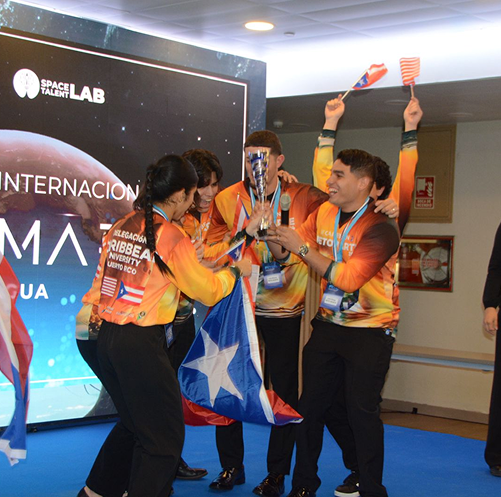


Educators often struggle to connect climate issues to student engagement. Traditional curricula frequently fail to inspire action or deep understanding of environmental challenges. Climate challenge education transforms learning into practical real-world problem-solving, where students develop solutions to actual sustainability issues. This approach shifts from passive knowledge absorption to active innovation, fostering ownership and community concern. This guide explains how to implement effective climate challenge programs that boost engagement and prepare students for meaningful climate action.
Table of Contents
- Understanding The Climate Challenge Education Model
- Benefits Of Climate Challenge Education For Student Engagement And Learning
- Comparing Climate Challenge Education With Traditional Curricula
- Implementing Effective Climate Challenge Education Programs
- Discover Innovative Climate Challenge Programs With Mars Challenge
- Frequently Asked Questions About Climate Challenge Education
Key takeaways
| Point | Details |
|---|---|
| Project-based learning drives engagement | Climate challenge education uses real-world problems to foster collaboration and deeper understanding. |
| Students develop ownership and responsibility | Participants gain personal investment in community solutions and environmental stewardship. |
| Cross-disciplinary approaches enhance learning | Integrating multiple subjects creates comprehensive skill development and practical innovation. |
| Implementation requires strategic planning | Successful programs need clear structures, community partnerships, and supportive resources. |
Understanding the climate challenge education model
Climate challenge education represents a shift from traditional environmental studies to hands-on innovation. Students engage with actual sustainability problems, researching solutions, building prototypes, and presenting findings to real stakeholders. This project-based format facilitates cross-disciplinary collaboration and deeper learning, moving beyond theoretical knowledge to practical application.
The model integrates multiple disciplines naturally. A single climate challenge might require scientific research, mathematical modeling, design thinking, communication skills, and ethical reasoning. Students work in teams, mirroring professional innovation environments where diverse perspectives strengthen solutions.
Typical activities in climate challenge programs include:
- Conducting community environmental assessments
- Researching existing climate solutions and gaps
- Developing prototype technologies or policy proposals
- Testing solutions with community partners
- Presenting findings to local decision makers
- Iterating based on feedback and data
These experiences build competencies that traditional curricula often miss. Students learn to navigate uncertainty, collaborate across differences, and persist through setbacks. They develop systems thinking, recognizing how environmental, social, and economic factors interconnect. The future of climate innovation depends on these meta-skills as much as technical knowledge.

Educational benefits extend beyond content mastery. Students gain confidence as problem solvers, seeing themselves as capable change agents rather than passive observers. They practice communication skills by explaining complex ideas to diverse audiences. They develop empathy by understanding how climate issues affect different communities. This holistic development prepares students for careers in sustainability, policy, technology, and social innovation.
Benefits of climate challenge education for student engagement and learning
Research demonstrates that climate challenge programs significantly increase student motivation and investment. When students work on authentic problems affecting their communities, they express greater ownership over learning and concern for local environmental issues. This emotional connection drives sustained engagement that traditional assignments rarely achieve.
Critical thinking skills flourish in challenge-based environments. Students must analyze complex systems, evaluate competing solutions, and make evidence-based decisions. They learn to question assumptions, identify biases in data, and recognize trade-offs between different approaches. These analytical capacities transfer to other academic areas and professional contexts.
Problem-solving abilities develop through iterative design processes. Students experience failure as a learning opportunity, testing hypotheses and refining solutions based on results. This resilience proves invaluable in careers and life challenges. They discover that innovation requires persistence, creativity, and willingness to pivot when initial approaches fail.
Social-emotional benefits emerge naturally from collaborative work on meaningful challenges:
- Empathy grows as students understand diverse community perspectives
- Responsibility develops through accountability to team members and stakeholders
- Communication skills strengthen through presenting complex ideas clearly
- Leadership emerges as students take initiative on different project aspects
- Cultural competence builds through working with diverse teams
These benefits translate into measurable academic improvements. Students demonstrate stronger retention of scientific concepts when applying them to real problems. Writing quality improves when communicating findings to authentic audiences. Mathematical skills advance when calculating actual environmental impacts. The sustainability action plan boost shows how structured challenges enhance learning outcomes across disciplines.
Engagement metrics reveal the power of this approach. Schools implementing climate challenge programs report higher attendance, increased participation in STEM activities, and greater student interest in environmental careers. The student engagement boost demonstrates quantifiable improvements in motivation and academic performance.
Comparing climate challenge education with traditional curricula
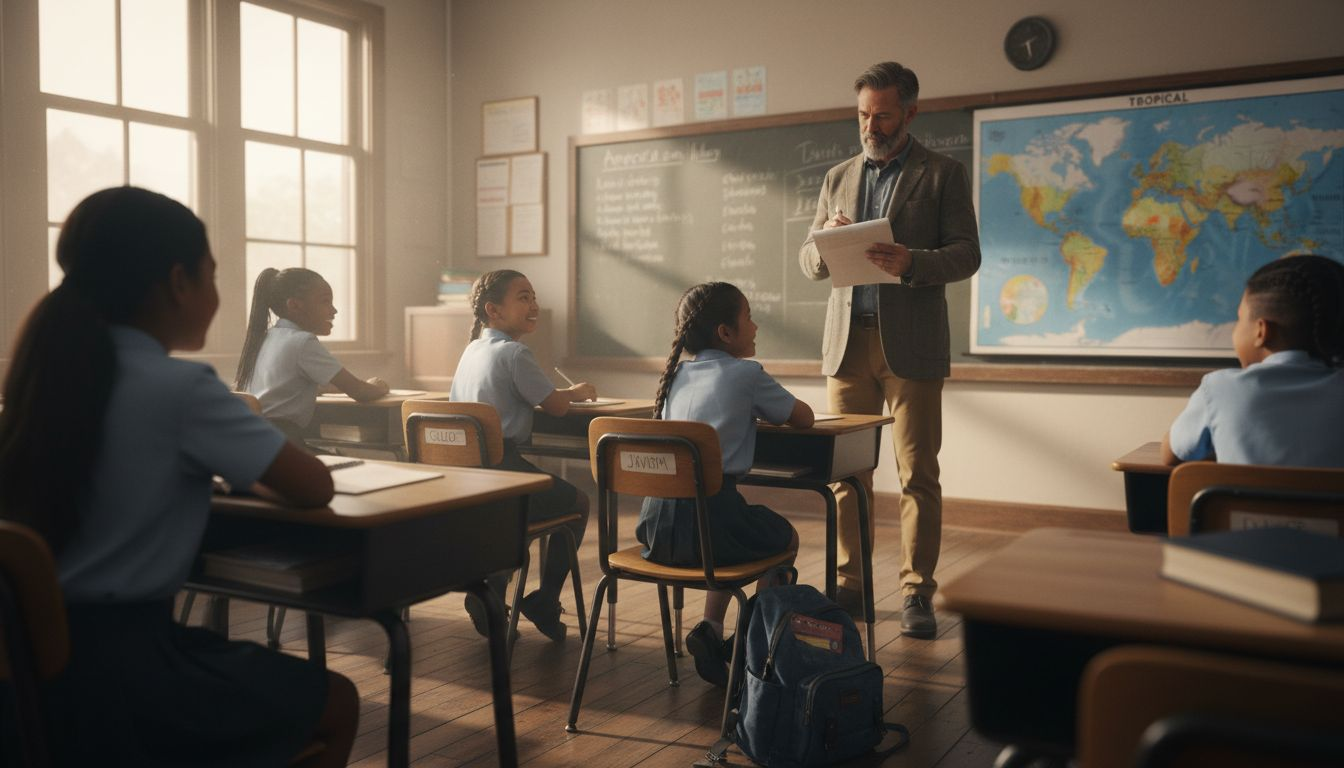
Traditional environmental education typically relies on lecture-based instruction, textbook readings, and standardized assessments. Students learn facts about climate science, ecosystems, and environmental policies through passive consumption of information. While this approach builds foundational knowledge, it rarely inspires action or deep engagement.
Climate challenge education inverts this model. Students encounter real problems first, then acquire knowledge as needed to develop solutions. This just-in-time learning proves more memorable and relevant. When students need to understand carbon cycles to design a community composting system, they engage with the concept differently than when memorizing it for a test.
| Aspect | Traditional Curricula | Climate Challenge Education |
| — | — |
| Learning mode | Passive reception | Active creation |
| Assessment | Standardized tests | Real-world prototypes |
| Collaboration | Individual work | Team-based projects |
| Application | Hypothetical scenarios | Actual community problems |
| Motivation | External grades | Intrinsic purpose |
The project-based format facilitates collaboration and deeper learning that siloed subject instruction cannot match. When students work on climate challenges, they naturally integrate science, technology, engineering, mathematics, social studies, and communication. This multidisciplinary approach mirrors how professionals actually work on sustainability issues.
Pro Tip: Start small by converting one unit into a challenge-based project before transforming entire curricula. This allows educators to build confidence and refine approaches without overwhelming existing structures.
Challenges in implementing climate challenge education include:
- Time constraints within rigid schedules
- Limited resources for materials and community partnerships
- Teacher preparation and professional development needs
- Assessment alignment with standardized requirements
- Administrative support and institutional buy-in
Addressing these obstacles requires strategic planning. Schools can integrate challenges into existing project periods, leverage community partnerships for resources, and align assessments with both innovation outcomes and standard benchmarks. The multidisciplinary education benefits justify the initial investment in restructuring.
Successful programs demonstrate that climate challenge education enhances rather than replaces traditional learning. Students still acquire core knowledge, but apply it immediately to meaningful work. This application reinforces retention and understanding while building practical skills that standardized curricula often neglect.
Implementing effective climate challenge education programs
Launching a successful climate challenge program requires systematic planning and clear structures. Follow these steps to design and implement effective initiatives:
- Identify authentic local climate challenges through community consultations
- Establish partnerships with environmental organizations and local government
- Develop clear learning objectives aligned with curriculum standards
- Create team structures that ensure diverse perspectives and skills
- Design milestone checkpoints for feedback and iteration
- Secure resources including materials, space, and expert mentors
- Plan culminating events where students present solutions to stakeholders
- Establish assessment criteria that value both process and outcomes
Key roles include program coordinators who manage logistics, teacher facilitators who guide learning, community partners who provide expertise and resources, and student leaders who drive team initiatives. Resource requirements vary by program scale but typically include workspace, prototyping materials, technology access, and time for community engagement.
Fostering student motivation requires connecting challenges to personal values and community impact. Students express greater ownership and concern when they see direct connections between their work and real-world change. Regular interaction with community stakeholders reinforces this relevance and provides authentic accountability.
Pro Tip: Build in reflection periods where students document learning, challenges, and growth. This metacognitive practice deepens understanding and provides valuable assessment data beyond final products.
Common program models and their impacts:
| Program Model | Duration | Team Size | Typical Impact |
| — | — | — |
| Semester Challenge | 12-16 weeks | 4-6 students | 1-2 refined prototypes |
| Year-Long Initiative | 24-32 weeks | 5-8 students | Community implementation |
| Intensive Sprint | 2-4 weeks | 3-5 students | Multiple concept tests |
| Multi-School Collaboration | Variable | 6-10 students | Regional solutions |
Successful implementation also requires addressing equity considerations. Ensure all students can participate regardless of socioeconomic background by providing necessary materials and removing barriers to after-school engagement. Design challenges that value diverse forms of knowledge and contribution, not just technical skills.
Community partnerships prove essential for authentic learning. Local environmental organizations can provide expertise, data, and real-world context. Government agencies offer policy insights and potential implementation pathways. Businesses contribute resources and professional mentorship. These connections transform student projects from academic exercises into genuine innovation opportunities.
Guides for running innovation challenges provide detailed frameworks for structuring programs. Dual-planet challenge examples demonstrate how ambitious thinking can inspire student creativity while maintaining educational rigor.
Discover innovative climate challenge programs with Mars Challenge
Mars Challenge supports educators in launching transformative climate challenge programs that engage students in real-world problem solving. The platform provides structured methodologies, community connections, and resources designed specifically for 2026 educational contexts. Whether you’re exploring innovation challenge youth guides or seeking Hultprize alternatives 2026, Mars Challenge offers comprehensive support.
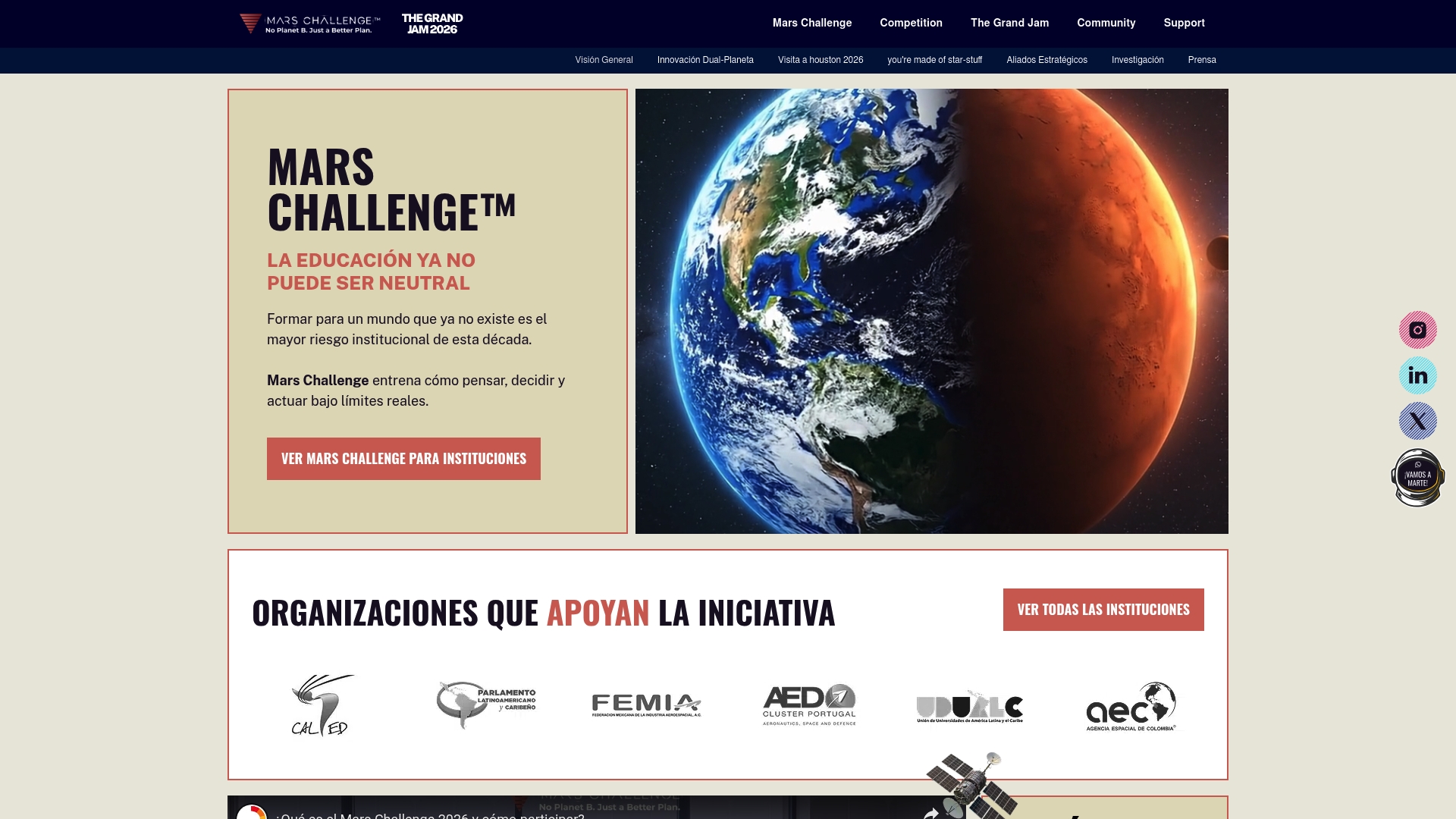
The program connects schools across 20+ countries, enabling students to collaborate on dual-planet challenges that reimagine Earth’s life-support systems. Through Next Human Learning methodology, participants develop meta-skills, ethical intelligence, and collective innovation capacities. Discover how innovation in sustainability can transform your educational approach and prepare students for meaningful climate action.
Frequently asked questions about climate challenge education
What is climate challenge education?
Climate challenge education is a project-based learning approach where students develop real solutions to environmental problems. Unlike traditional environmental studies, it emphasizes hands-on innovation, community engagement, and practical prototyping.
How does it differ from traditional teaching?
Traditional teaching focuses on passive knowledge acquisition through lectures and textbooks. Climate challenge education centers on active problem solving, where students learn by doing and apply knowledge to authentic community issues.
What resources do schools need to start?
Schools need dedicated time within schedules, space for collaborative work, basic prototyping materials, and community partnerships. Many programs start small with existing resources before scaling up.
How do these programs impact student skills?
Students develop critical thinking, collaboration, communication, and problem-solving abilities. They gain systems thinking skills, resilience through iteration, and confidence as change agents.
Can universities implement these programs effectively?
Universities excel at climate challenge programs by leveraging research facilities, diverse expertise, and community connections. Students can tackle more complex challenges and develop implementable solutions with greater resources and autonomy.