
Most people think Mars is humanity’s backup plan, a place to escape when Earth becomes uninhabitable. That’s backward. Mars is not an escape plan; it is a mirror to rethink how we live on Earth. Dual-planet innovation uses the extreme challenges of Mars to inspire breakthrough solutions for Earth’s sustainability crisis. Young innovators aged 15 to 29 are leading this movement, prototyping systems that work on both planets. This approach transforms how we solve critical problems like water scarcity, renewable energy, and regenerative agriculture. Understanding why dual-planet innovation matters empowers you to create real-world impact.
Table of Contents
- Understanding Dual-Planet Innovation: Bridging Earth And Mars Challenges
- Mobilizing Young Innovators Worldwide Through The Mars Challenge
- Learning From The Kepler-90 System: Planetary Insights Shaping Innovation
- Applying Dual-Planet Innovation: Practical Steps For Young Innovators
- Join The Mars Challenge And Drive Dual-Planet Innovation
- Frequently Asked Questions
Key takeaways
| Point | Details |
|---|---|
| Dual-planet innovation solves extreme Mars challenges for Earth’s benefit | Designing for Mars constraints like water scarcity drives breakthrough sustainability solutions applicable on Earth. |
| Mars Challenge engages youth from over 30 countries in collaborative design | Young innovators aged 15 to 29 work in diverse teams to prototype life-support systems for both planets. |
| Mars acts as a mirror, inspiring sustainable systems on Earth | Addressing Mars’ harsh environment reveals smarter ways to manage Earth’s resources and ecosystems. |
| Kepler-90 system mirrors solar system’s planet count with diverse planet types | Understanding planetary diversity enriches design thinking for habitability and sustainability innovations. |
| Innovations for Mars address critical resource scarcity like water and energy | Prototypes focus on renewable energy, clean water purification, breathable air systems, and regenerative agriculture. |
Understanding dual-planet innovation: bridging Earth and Mars challenges
Dual-planet innovation is a design approach that uses Mars’ extreme environmental constraints to inspire solutions benefiting Earth’s sustainability. You tackle the hardest problems first. Dual-planet innovation leverages extreme challenges like water scarcity, energy generation, breathable air production, and food cultivation to develop breakthrough systems. These constraints force you to rethink resource efficiency, waste reduction, and closed-loop systems in ways that directly address Earth’s climate crisis.
Mars presents four critical environmental challenges that serve as innovation catalysts:
- Water scarcity requiring extraction from ice or atmospheric moisture
- Energy generation without fossil fuels in low-sunlight conditions
- Breathable air production from a carbon dioxide atmosphere
- Food cultivation in nutrient-poor soil with limited space
These constraints push innovators to create regenerative systems that minimize waste and maximize efficiency. When you design a water purification system for Mars, you’re simultaneously creating technology that helps communities facing drought on Earth. Prototyping for Mars and Earth sharpens problem-solving skills because you must account for extreme variables. This dual focus ensures innovations are robust, scalable, and adaptable to diverse environments.
The dual-planet innovation focus transforms how young innovators approach sustainability. Instead of incremental improvements, you’re forced to reimagine entire systems from scratch. A greenhouse designed for Mars must be completely self-sustaining, using hydroponics, LED lighting optimized for plant growth, and atmospheric recycling. These same principles create ultra-efficient urban farms on Earth that use 90% less water than traditional agriculture.

Pro Tip: Start with Mars challenges to sharpen problem-solving skills valuable on Earth. The constraints force creative thinking that breaks conventional assumptions about resource use.
Every prototype designed for Mars has immediate Earth applications. Solar panels optimized for Mars’ dusty, low-light environment perform better in polluted urban areas. Air filtration systems that extract oxygen from carbon dioxide help reduce greenhouse gases in Earth’s atmosphere. This reciprocal relationship makes dual-planet innovation uniquely powerful for addressing climate change, resource depletion, and environmental degradation simultaneously.
Mobilizing young innovators worldwide through the Mars Challenge
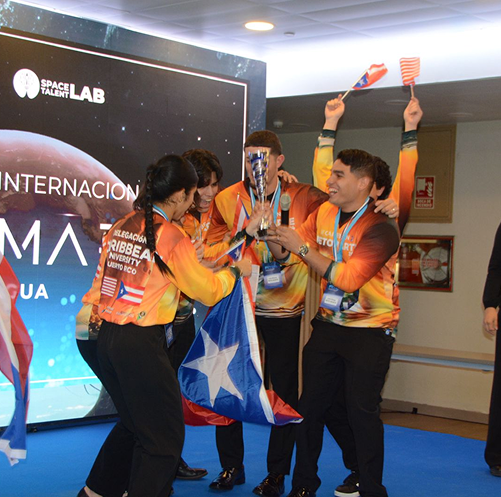
Mars Challenge is a global platform that connects young innovators from over 30 countries to collaboratively design dual-planet solutions. The Mars Challenge mobilizes Zers aged 15 to 29 to participate in high-impact, team-based challenges that reimagine life-support systems. You work alongside universities, governments, and companies to prototype solutions for climate, energy, food, cities, and technology. This diversity of participants creates a unique learning environment where different perspectives drive breakthrough innovations.
The Mars Challenge youth community operates through collaborative design challenge formats that encourage creativity and real-world impact. Teams tackle specific problems like renewable energy generation, water purification, or regenerative agriculture using the Next Human Learning methodology. This structured approach cultivates meta-skills, ethical intelligence, and collective innovation while you navigate complexity, paradox, and uncertainty. You’re not just solving technical problems but learning how to collaborate across cultures and disciplines.
Participating in Mars Challenge offers young innovators several transformative benefits:
- Develop systems thinking and problem-solving skills applicable to any field
- Build a global network of peers, mentors, and industry partners
- Create prototypes with measurable real-world impact on sustainability
- Gain hands-on experience with cutting-edge technologies and methodologies
- Access resources, funding, and mentorship from leading experts
The program culminates in The Grand Jam 2026 (Divergence Global Expo), where winning teams from multiple countries present solutions focused on Tierra, reimagining Earth’s life-support systems. This isn’t a traditional competition. It’s a global learning movement redefining what it means to learn, create, and serve in the age of AI. You’re part of a generation prototyping humanity’s survival on both planets.
Youth sustainability initiatives within Mars Challenge range from small-scale prototypes to large-scale implementations. Some teams focus on developing modular solar arrays that work in extreme conditions. Others create vertical farming systems that maximize food production in minimal space. Dual-planet challenge examples show how these projects translate classroom learning into tangible solutions addressing climate change, food security, and energy access.

With over 30 countries engaged and thousands of young innovators participating, Mars Challenge demonstrates the scale and momentum of this movement. You’re not working in isolation but as part of a coordinated global effort to solve the most pressing challenges facing humanity. This collective approach amplifies individual contributions and creates systemic change that no single innovator could achieve alone.
Learning from the Kepler-90 system: planetary insights shaping innovation
The Kepler-90 system offers valuable insights into planetary diversity and habitability that enrich dual-planet innovation thinking. The Kepler-90 system has eight planets, more compact than our solar system with inner rocky planets and outer gaseous giants. This near-twin configuration helps scientists understand how planetary systems form and evolve, providing context for designing habitable environments on Mars and Earth.
Comparing Kepler-90 to our solar system reveals important patterns about planetary characteristics and habitability:
| Feature | Kepler-90 System | Solar System |
|---|---|---|
| Planet count | 8 planets | 8 planets |
| System size | More compact, all within Earth’s orbit | Spans 4.5 billion miles |
| Inner planets | Rocky, similar to terrestrial planets | Mercury, Venus, Earth, Mars |
| Outer planets | Gaseous giants | Jupiter, Saturn, Uranus, Neptune |
| Habitability potential | Unknown, requires further study | Earth confirmed habitable |
Planetary types fall into two main categories: inner rocky planets and outer gaseous giants. Rocky planets like Earth and Mars have solid surfaces, atmospheres of varying density, and potential for liquid water. Gaseous giants lack solid surfaces and have thick atmospheres composed primarily of hydrogen and helium. Understanding these distinctions matters because habitability depends on specific conditions like atmospheric composition, temperature range, and presence of water.
The Kepler-90 system’s compact arrangement means planets orbit much closer to their star than in our solar system. This proximity affects temperature, radiation exposure, and atmospheric stability. For dual-planet innovators, these variations illustrate how different environmental conditions require different survival strategies. What works on Earth won’t necessarily work on Mars, and solutions must adapt to local conditions.
Systems thinking for sustainability benefits from understanding planetary diversity. When you study how different planets maintain or lose atmospheres, regulate temperature, or cycle water, you gain insights into Earth’s climate systems. Mars lost most of its atmosphere billions of years ago, teaching us about atmospheric retention and the importance of magnetic fields. This knowledge informs how we protect Earth’s atmosphere and design closed-loop systems for space habitats.
Pro Tip: Use planetary analogies to inspire holistic, systems-based innovation approaches. Comparing Earth to other planets reveals what makes our home unique and fragile.
Planetary science also reveals the interconnectedness of systems. A planet’s magnetic field protects its atmosphere from solar wind. Atmospheric pressure determines whether water can exist as liquid. Temperature gradients drive weather patterns and energy distribution. These relationships mirror the complex systems you must consider when designing sustainable solutions for Earth or Mars. Every variable affects multiple outcomes, requiring integrated thinking rather than isolated fixes.
Applying dual-planet innovation: practical steps for young innovators
You can start leveraging dual-planet innovation principles today through systematic, actionable steps. Here’s how to transform theory into impactful projects:
- Research Mars challenges by studying NASA missions, scientific papers, and Mars Challenge resources to understand specific environmental constraints.
- Identify Earth parallels by finding communities or ecosystems facing similar problems like water scarcity, energy access, or food security.
- Prototype solutions using iterative design, starting with simple models and progressively refining based on testing and feedback.
- Test and iterate by gathering data, analyzing performance, and making improvements to increase efficiency and scalability.
- Share your work through Mars Challenge platforms, connecting with mentors and peers who can provide guidance and collaboration opportunities.
Focus your innovation efforts on these critical areas where Mars and Earth challenges converge:
- Renewable energy systems that function in low-light or extreme weather conditions
- Water purification technologies that extract and recycle water from minimal sources
- Breathable air systems that filter pollutants and produce oxygen from carbon dioxide
- Regenerative agriculture methods that restore soil health while maximizing yield in limited space
Mars Challenge prototypes focus on renewable energy, clean water, and regenerative agriculture, creating practical solutions with immediate Earth applications. Collaboration and iterative design are essential. You rarely solve complex problems alone or on the first attempt. Work in diverse teams where different perspectives challenge assumptions and reveal blind spots. Test your prototypes in real-world conditions, gather feedback, and refine your approach continuously.
“Young innovators hold the power to prototype humanity’s survival. Every solution designed for Mars teaches us how to live better on Earth.”
Linking Mars solutions back to Earth sustainability maximizes impact. When you develop a solar panel optimized for Mars’ dust storms, consider how it could power remote villages on Earth lacking grid access. A hydroponic system for Mars becomes an urban farming solution reducing food miles and water consumption. This reciprocal thinking ensures your innovations serve both planets simultaneously.
Supporting dual-planet solutions requires understanding the broader context of innovation in sustainability. Your work contributes to a global movement reimagining how humanity interacts with planetary resources. Following a step-by-step sustainability action plan helps you structure projects for maximum effectiveness and measurable outcomes.
The key is starting small and scaling up. You don’t need a massive budget or advanced laboratory to begin. Many successful Mars Challenge projects started with simple prototypes built from recycled materials. What matters is the thinking process, the willingness to test and fail, and the persistence to iterate until you achieve breakthrough results. Your generation has the tools, knowledge, and urgency to create solutions previous generations couldn’t imagine.
Join the Mars Challenge and drive dual-planet innovation
Ready to turn your ideas into real-world impact? Join the Mars Challenge global innovation community and collaborate with thousands of young innovators solving humanity’s biggest challenges. You’ll gain access to expert mentorship, cutting-edge resources, and a worldwide network of peers passionate about sustainability.
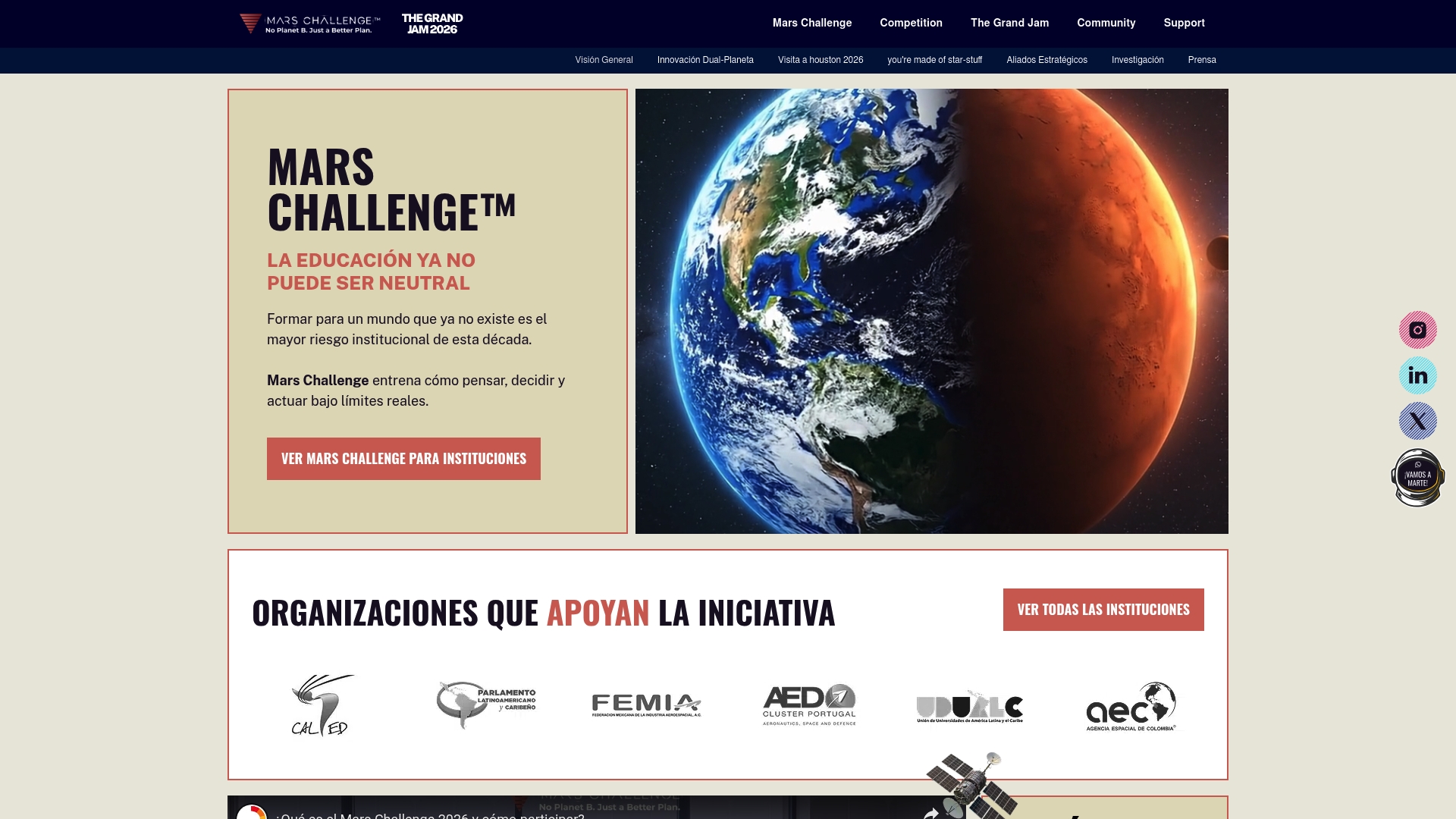
Mars Challenge offers programs designed specifically for youth teams, companies, and sustainability initiatives. You’ll benefit from:
- Expert mentorship from scientists, engineers, and sustainability leaders
- Access to prototyping tools, funding opportunities, and technical resources
- Global networking with innovators from over 30 countries
- Real-world impact through projects addressing climate, energy, food, and water challenges
Whether you’re an individual innovator or part of a team, Mars Challenge provides the structure and support to transform your vision into tangible solutions. Running innovation challenges through the platform connects you with mentors who guide your development process. The program emphasizes empowering next-gen impact through collaborative learning and prototype iteration.
Mars Challenge companies partner with youth teams to scale successful prototypes and bring innovations to market. This creates pathways from classroom projects to commercial solutions with measurable environmental benefits. You’re not just learning, you’re building the future.
Frequently asked questions
What is dual-planet innovation and why does it matter?
Dual-planet innovation uses Mars’ extreme environmental constraints as design challenges to inspire breakthrough sustainability solutions for Earth. By solving problems like water scarcity, energy generation, and food production in Mars’ harsh conditions, you create robust, efficient systems applicable to Earth’s climate crisis. This approach matters because it forces innovative thinking beyond incremental improvements, leading to transformative solutions.
How does participating in Mars Challenge benefit young innovators?
Participating in Mars Challenge develops critical meta-skills like systems thinking, collaborative problem-solving, and ethical intelligence while you work on real-world sustainability projects. You gain hands-on experience prototyping solutions, access to expert mentorship, and connections with a global network of innovators, universities, and companies. The program culminates in The Grand Jam 2026, where you present solutions with measurable impact on Earth’s life-support systems.
Is Mars colonization the goal of dual-planet innovation?
No, Mars colonization is not the primary goal. Dual-planet innovation explained shows that Mars serves as a design constraint and testing ground for sustainability solutions that benefit Earth. The focus is using Mars challenges to inspire breakthrough thinking about resource efficiency, closed-loop systems, and regenerative practices applicable to solving Earth’s environmental crisis.
How does planetary science like the Kepler-90 system inform sustainability innovation?
Studying planetary systems like Kepler-90 reveals patterns about habitability, atmospheric retention, and environmental conditions that inform Earth and Mars innovation. Understanding how planets maintain or lose atmospheres, regulate temperature, and cycle water provides insights into protecting Earth’s climate systems and designing sustainable habitats. This comparative approach enriches systems thinking essential for holistic sustainability solutions.
What are the first steps to start a dual-planet innovation project?
Start by researching specific Mars challenges like water scarcity or energy generation, then identify parallel problems on Earth such as drought-affected communities or off-grid energy needs. Prototype simple solutions using iterative design, test them in real conditions, and refine based on feedback. Join Mars Challenge to access mentorship, resources, and collaboration opportunities that accelerate your project from concept to working prototype with measurable impact.